Table of Contents
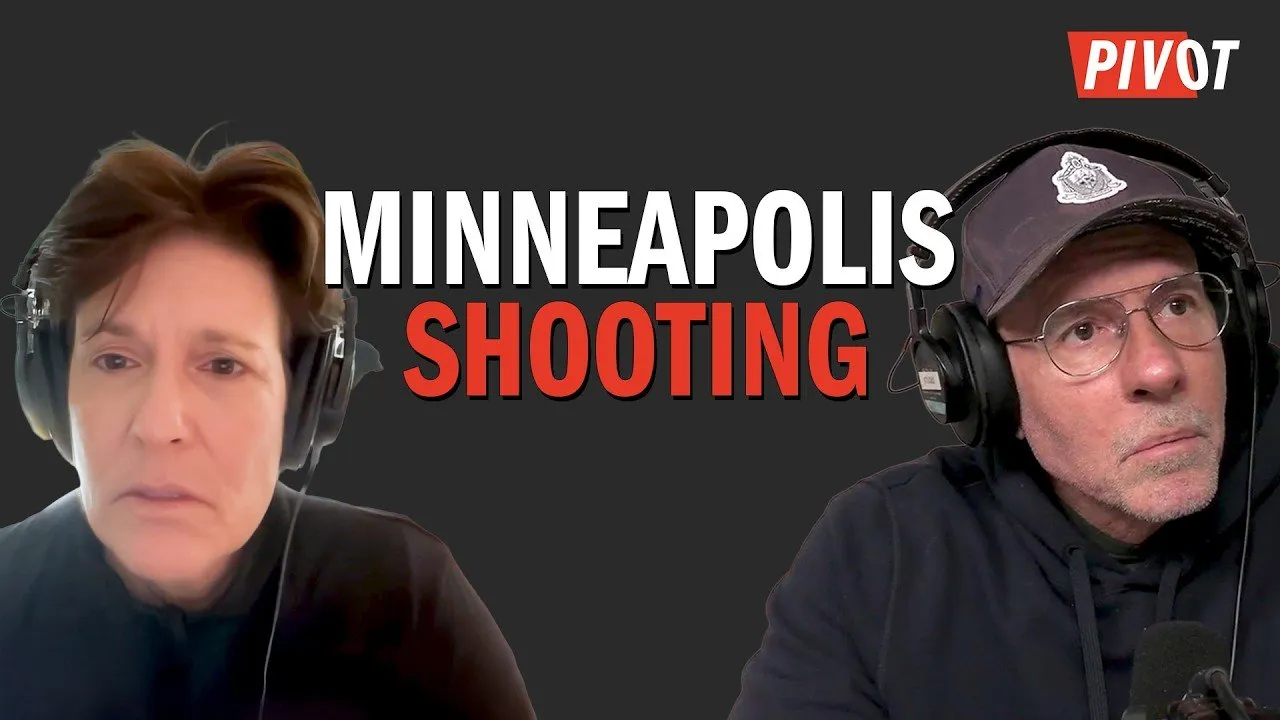
The tragic shooting of Alex Pretti by federal agents in Minneapolis has ignited a fierce national debate, bringing to the forefront critical questions about government authority, constitutional rights, and the nature of public accountability. This incident, marked by widespread citizen documentation and conflicting official narratives, has been dubbed a "turning point" by many, exposing deep fissures in societal trust and prompting urgent calls for systemic change. What began as a local confrontation has quickly escalated into a symbol of broader concerns, challenging the efficacy of traditional protest and inspiring new discussions on effective resistance in a volatile political climate.
Key Takeaways
- The fatal shooting of Alex Pretti by federal agents in Minneapolis triggered widespread outrage and accusations of constitutional rights violations.
- The incident highlighted a severe crisis of trust in government institutions, with immediate official narratives clashing with extensive citizen-recorded video evidence.
- Political reactions varied sharply, with Democrats condemning the actions and calling for accountability, while the Trump administration sought to deflect blame.
- Experts proposed novel strategies for change, including "economic strikes" and coordinated consumer withdrawals, as potentially more impactful than traditional protests in influencing market-driven administrations.
- The events underscored the critical role of citizen documentation and called for renewed leadership from both politicians and the general public in upholding democratic principles.
The Minneapolis Incident: A Flashpoint of Tensions
In a weekend that sent shockwaves across the nation, federal agents shot and killed 37-year-old ICU nurse Alex Pretti in Minneapolis. This marked the second fatal shooting by federal agents within the month, prompting Minnesota Governor Tim Walls to demand a halt to all ICE operations in the state.
The incident quickly became a symbol of escalating tensions, exacerbated by the Trump administration's attempts to cast blame on the victim and local Democratic lawmakers. Border Patrol Command Gregory Bavino's appearance on CNN's State of the Union, where he claimed Pretti was "actively impeding and assaulting law enforcement," was sharply countered by host Dana Bash, who highlighted video evidence:
All of the video that we have seen shows him documenting it with his cell phone, which is a lawful thing to do.
Eyewitness accounts and numerous videos from citizens across multiple angles depicted Pretti peacefully filming the scene and attempting to assist an individual who had been pushed down by law enforcement. The collective digital evidence directly contradicted official claims, fueling public anger and calls for immediate transparency.
Erosion of Trust and Constitutional Concerns
The shooting exposed a profound crisis of trust in the institutions responsible for upholding justice and conducting impartial investigations. Critics argued that the very entities expected to investigate such incidents could no longer be relied upon to deliver fair outcomes.
Scott Galloway, co-host of Pivot, articulated the perceived constitutional violations:
- First Amendment Rights: Pretti was exercising his right to free speech by filming the events. There was no evidence he was inciting violence. He moved to help comfort someone who had been knocked down.
- Second Amendment Rights: Pretti was legally carrying a weapon for which he had a license. The gun was removed from his waistband, and he did not brandish it or threaten anyone before the shooting.
Further disturbing observations were made regarding the federal agents' conduct post-shooting. According to Galloway, the agents "scattered" after the gunshot, failing to follow standard procedure of securing the scene or identifying the shooter. Representative Seth Moulton, a veteran, drew a stark comparison:
If this had happened in the middle of a combat zone and a combatant, enemy combatant who had been disarmed was treated this way, the officers and the enlisted men involved in that murder would be court marshaled.
This comparison suggested that the rules of engagement in a Minneapolis suburb had become more reckless and violent than in an active war zone, raising serious questions about training, accountability, and the perceived impunity of federal agents.
Political Fallout and Media Scrutiny
The political response to Pretti's killing was immediate and sharply divided. Democrats, including AOC, called for Senate Democrats to block ICE spending, contemplating a partial government shutdown to achieve this. Representative Robin Kelly of Illinois initiated articles of impeachment against DHS Secretary Christy Nome.
Conversely, the Trump administration's approach was characterized by deflection and blame. Attorney General Pam Bonnie issued three conditions to Governor Walls to "restore the rule of law," including demands for state welfare program information, access to voter rolls, and the repeal of sanctuary policies, with the voter roll demand being seen by many as politically motivated in anticipation of midterm elections.
Media figures also weighed in, with some like Megan Kelly controversially suggesting that ICE should pull out of Minnesota entirely, encouraging "illegals" to move there, only to be deported if found elsewhere. This was widely condemned as cruel and divisive. Meanwhile, the silence from the business community, particularly tech CEOs who attended a White House screening of Melania Trump's documentary shortly after the shooting, drew sharp criticism for their perceived moral compromise.
Cara Swisher emphasized the power of pervasive video evidence in changing public opinion and holding authorities accountable:
It changes people's minds because people are... it's horrifying and everyone, we can see you. We see you is a really powerful thing.
She also called for the press to prioritize truth over neutrality, asserting that "truthful, not neutral" should be the guiding principle in reporting such events, particularly when official narratives diverge so starkly from undeniable visual evidence.
Pathways to Accountability: Economic and Political Resistance
Amidst the outrage, a crucial discussion emerged about the most effective forms of resistance and pathways to accountability. Traditional protests, while powerful and symbolic, were questioned for their short-term impact on an administration perceived as unresponsive to public outcry.
Scott Galloway proposed a more disruptive strategy: the "economic strike." This concept involves a short-term, coordinated withdrawal from spending and potentially work, on a national scale. Given that the U.S. economy is 70% consumer-driven, even a small shift in consumer behavior could have enormous, immediate consequences. He argued that "power fears withdrawal more than resistance because resistance is noisy but withdrawal is expensive."
- Targeted Economic Pressure: This could involve consumers cancelling subscriptions (e.g., OpenAI, Anthropic), delaying purchases (e.g., iPhones), or transferring funds from major banks to local institutions.
- Market Impact: Such actions, if widely adopted, would directly impact the financial health of major corporations and, by extension, the S&P 500 – an area where the administration is demonstrably responsive.
Cara Swisher, while acknowledging the potential of economic resistance, maintained that protests remain vital. She argued that the visibility of citizens putting their lives on the line in the streets, particularly with omnipresent video, directly influences public perception and holds policing accountable. The debate centered on the difference between being "right" and being "effective," with both avenues presenting distinct strengths.
Beyond economic leverage, the discussion also touched upon political accountability. The hosts lamented the "cowardice" of Republican senators who, despite widespread public disapproval of the administration's actions, failed to collectively challenge the president. It was suggested that even a small bloc of 20 senators could, through unified action, compel a change in policy or support impeachment proceedings, yet they remain "nowhere to be found."
The Call for Citizen Leadership and Lasting Change
The events surrounding Alex Pretti's death served as a stark reminder that true leadership often emerges from the citizenry, especially when political institutions appear gridlocked or complicit. The countless individuals who documented the incident, placing themselves in harm's way, exemplified this grassroots leadership.
The conversation also highlighted the need to identify and hold accountable not just top officials, but also key architects of controversial policies, such as Stephen Miller, whom Cara Swisher unflinchingly described as having "blood on his hands." The hosts stressed that the focus should be on systemic corruption and the "morality" of actions, not just their legality.
In a deeply moving moment, Pretti's parents issued a dignified statement, simply pleading: "Please get the truth out about our son. He was a good man." This plea resonated powerfully, particularly as a clip of Alex Pretti, in his role as an ICU nurse, honoring a deceased veteran, was played. His words — "Freedom is not free. We have to work at it, nurture it, protect it, and even sacrifice for it" — took on a chilling new resonance in the wake of his own death.
Ultimately, the Minneapolis shooting is seen by many as a pivotal moment, a "turning point" that demands more than just outrage. It calls for a multifaceted approach to resistance, combining vigilant citizen action, strategic economic pressure, and a renewed commitment from political leaders to uphold the constitutional rights and dignity of all citizens. The message is clear: the path to freedom requires constant vigilance, active participation, and a collective refusal to accept depravity as the new normal.