Table of Contents
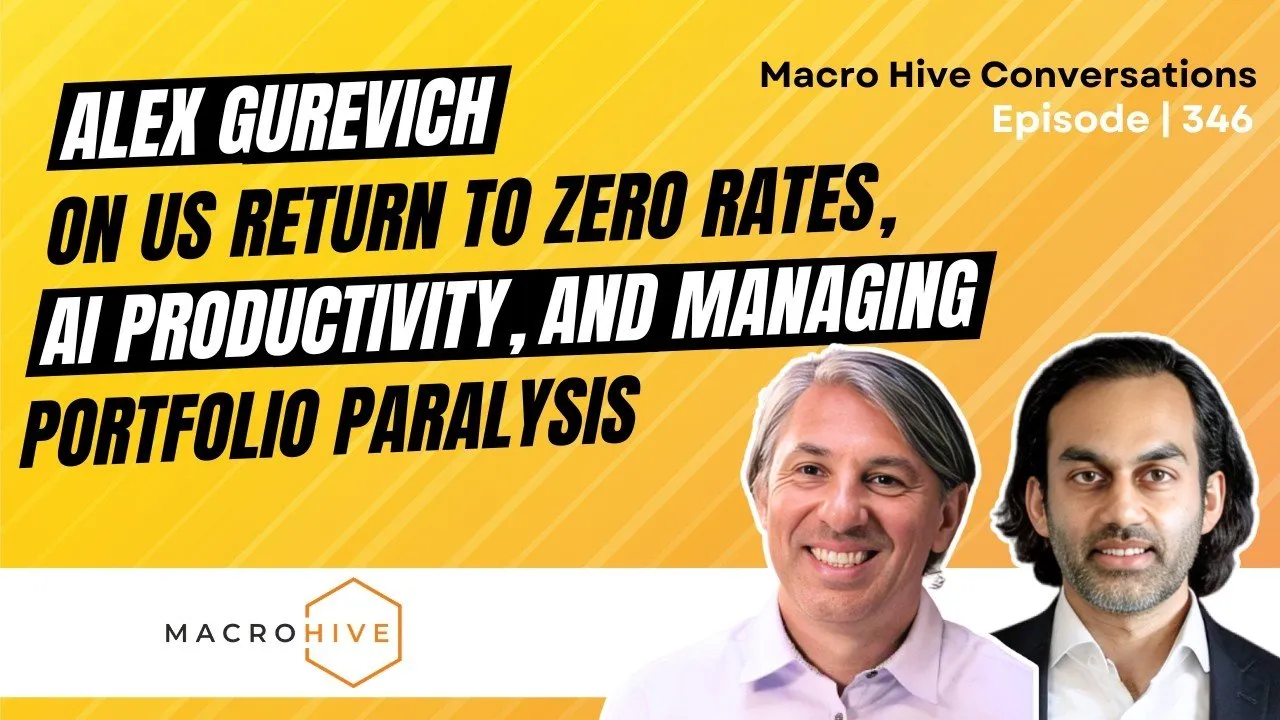
In the fast-moving world of global macro trading, few voices command as much respect for their rigorous, mathematically-driven approach as Alex Gurevich. The founder of Honte Investments and former star trader at JP Morgan recently joined the Macrohive podcast to discuss the re-release of his seminal work, The Next Perfect Trade. Unlike many authors who scrub their past mistakes in new editions, Gurevich has taken the courageous step of leaving his original 2015 text intact, adding modern commentary to evaluate how his principles survived a decade of unprecedented volatility. From the structural shifts in Japan to the potential return of zero interest rates in the US, Gurevich provides a masterclass in separating market noise from signal.
Key Takeaways
- The "Swim with the Tide" Framework: High-probability trades should align with carry, momentum, valuation, and global growth regimes.
- Redefining Risk Management: Successful trading is less about "tight stops" and more about avoiding "portfolio paralysis" and gamblers’ ruin.
- The Case for US Zero Rates: Despite the current consensus on "higher for longer," cyclical job market deterioration and AI-driven productivity shifts could force the Fed back to the zero bound.
- Japan as the Next Frontier: A unique opportunity is emerging in the "concurrent necessity" of Yen strength and JGB curve dynamics.
- AI as an Economic Eraser: Unlike previous technological shifts that transformed industries, AI may entirely erase certain categories of economic activity, creating hidden headwinds for GDP.
The Integrity of Financial Principles
Most financial literature suffers from survivorship bias. Authors typically write books after a period of success, framing their past wins as the inevitable result of a flawless strategy. Gurevich seeks to dismantle this narrative by providing total transparency. By re-issuing The Next Perfect Trade with his original 2015 predictions and logic untouched, he allows readers to judge his framework based on its real-world durability.
I wanted to submit myself to as objective judgment as conceivably possible.
This commitment to objectivity extends to his trading logs. In his previous book, The Trades of March 2020, Gurevich included full transcripts of internal trade chatter. This level of disclosure reveals the "messy" reality of macro trading—the errors, the surprises, and the psychological hurdles—providing an authentic look at how a top-tier macro hedge fund operates under pressure.
Swimming with the Tide: The Perfect Trade Framework
Gurevich’s core philosophy is built on the "Swim with the Tide" principle. In any given trade, the goal is to ensure as many fundamental forces as possible are pushing in your direction. When these forces align, the trader moves from being a "player" in the casino to being the "house."
The Four Pillars of Alignment
Gurevich identifies several key factors that increase the odds of a trade's success:
- Carry: Favouring high-yielding assets while borrowing in low-yielding ones. Carry is often a strong predictor of total return performance.
- Momentum and Trend: Aligning with secular trends rather than trying to time every reversal.
- Valuation: Identifying when an asset is objectively cheap or expensive relative to historical patterns.
- Growth Regime: Ensuring the trade makes sense within the current global growth and technological trajectory.
While Gurevich admits he occasionally trades against these tides—particularly when valuation becomes extreme—he stresses that fighting the trend is often the recipe for "getting chopped up." The most robust trades are those that remain profitable across the broadest range of economic outcomes.
Rethinking Risk and Portfolio Paralysis
Modern "pod shop" culture often emphasizes extremely tight stop-losses as a sign of discipline. Gurevich challenges this, arguing that tight stops are a specific strategy, not a universal rule for risk management. True risk management is about portfolio architecture and avoiding the "gambler's ruin."
Risk management is the idea to avoid whatever it is that the catastrophic loss would mean to you.
A significant danger for macro traders is portfolio paralysis. This occurs when a trader’s positions are at their limits during a drawdown, leaving them unable to capitalize on new, even better opportunities. Gurevich suggests that the solution is a rigorous, mechanical risk framework. By employing a Chief Risk Officer to impose guidelines, a trader can separate their market opinions from the necessity of capital preservation.
The Search for the Next Perfect Trade: Japan
Japan is currently the focal point of Gurevich's research. He sees a potential "perfect trade" in the relationship between Japanese Government Bonds (JGBs) and the Yen. His thesis rests on the concept of "concurrent necessity."
The JGB and Yen Connection
The Japanese yield curve is currently steep. Gurevich argues that being long-dated JGBs (30-40 years) while being long the Yen creates a resilient position. If the Bank of Japan (BOJ) becomes aggressive and raises short-term rates to 3%, the Yen would likely strengthen dramatically, potentially returning to the 100-110 level. In this scenario, the bond curve would flatten, protecting the capital value of long-dated bonds. Conversely, if rates stay low, the carry on the bonds remains attractive. This "heads I win, tails I don't lose much" structure is the hallmark of his strategic approach.
Why Zero Rates Remain a Distinct Possibility
While the market is currently debating whether the Fed will settle at 2% or 3%, Gurevich remains open to the possibility of a return to zero. He views the economy as a dynamic system with significant feedback loops. If the Fed remains "behind the curve" by keeping real rates too high while the job market deteriorates, the resulting damage may require a return to the zero bound to fix.
AI Displacement vs. Economic Erasure
The role of Artificial Intelligence adds a new layer to this deflationary thesis. Gurevich distinguishes between two types of technological shifts:
- Efficiency Gains: Technologies like Uber or self-driving cars make an existing activity (transportation) cheaper, often leading people to use it more.
- Economic Erasure: AI may entirely remove certain activities from the economy. Tasks like basic legal research or medical second opinions, which once cost hundreds of dollars, are becoming "free" via LLMs.
This "erasure" of economic activity could create a persistent headwind for GDP growth and employment. While AI may eventually fuel a productivity miracle, the transition period is likely to be characterized by job market softening and cyclical pressure on interest rates.
Conclusion: The Value of a Disciplined Framework
Alex Gurevich’s insights serve as a reminder that successful macro trading is as much about philosophy as it is about data. By sticking to a framework that emphasizes alignment with major trends and rigorous portfolio management, investors can navigate a world where traditional correlations are breaking down. Whether it is the energy bottleneck facing AI or the structural shift in Japanese yields, the principles found in The Next Perfect Trade provide a compass for those looking to find signal in the noise. As markets evolve, the ability to remain objective and adhere to proven principles remains the ultimate edge.