Table of Contents
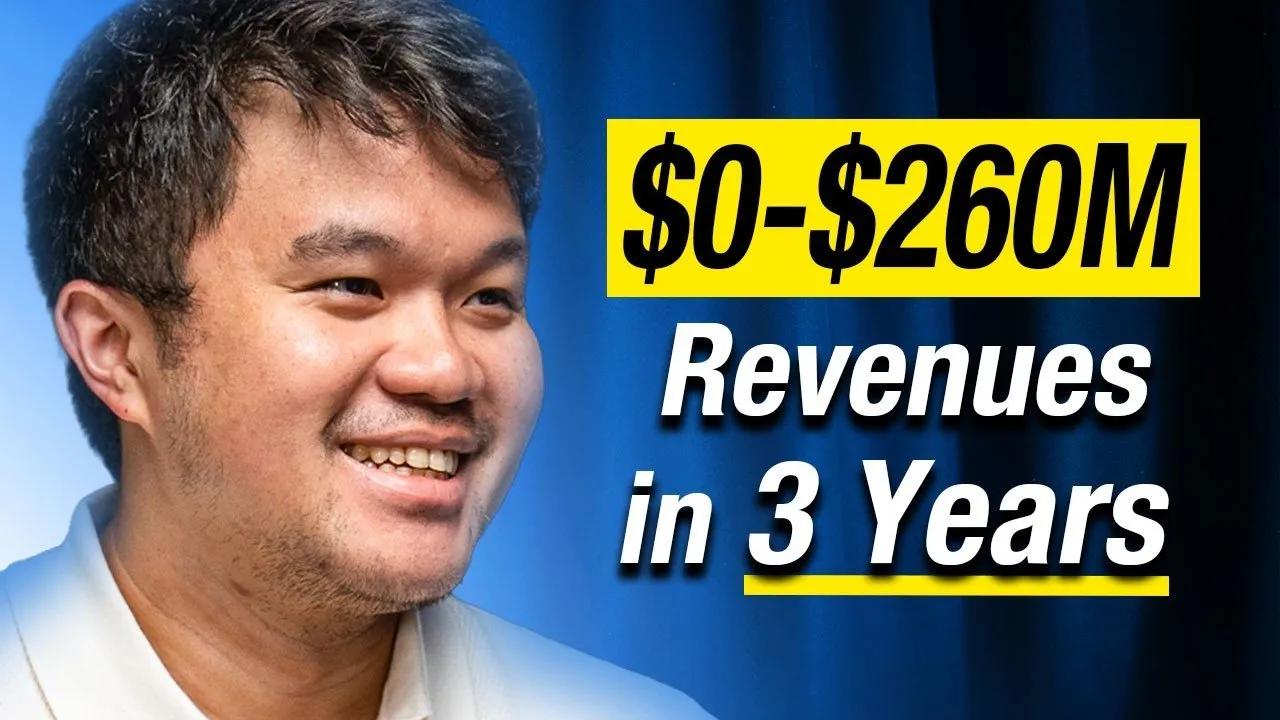
In the world of high-growth startups, few cultures are as legendary—or as controversial—as Revolut’s. Known for relentless speed and uncompromising standards, the fintech giant produced a generation of operators who are now applying those same principles to new industries. Leading this charge is Alan Chang, the former Chief Revenue Officer of Revolut and current co-founder and CEO of Fuse Energy. Chang is not interested in merely participating in the energy market; he intends to own it, aiming to build a company larger than Shell by applying a "brute force" execution strategy to a stagnant sector.
In a candid discussion about his transition from fintech to energy, Chang dismantles modern notions of work-life balance, exposes the inefficiencies of Western energy policy, and explains why most founders simply aren’t ambitious enough. His philosophy is not for the faint of heart, but it offers a rare glimpse into the mindset required to build a generational company.
Key Takeaways
- Speed is the primary differentiator: In commoditized markets like banking or energy, the product roadmaps are often identical. The winner is determined solely by ambition and the speed of execution.
- The "No Excuses" leadership model: Chang applies a strict hierarchy of accountability. While junior staff can make mistakes, leaders are judged solely on results. As you ascend, reasons for failure cease to matter.
- Vertical integration is essential for energy: Fuse aims to beat incumbents by owning the entire stack—from power generation to the customer app—mirroring the strategies of Tesla or Netflix.
- Hiring based on skills, not pedigree: Chang advocates for blind skill assessments over resume prestige, favoring short, data-driven CVs and rejecting the "credentialism" often found in corporate hiring.
- The expansionist mindset: Most founders limit their company's throughput by failing to hire enough leaders. Chang argues for an expansionist approach where parallel work streams are limited only by leadership density, not focus.
The Revolut Standard: Speed and Intensity
When Chang joined Revolut, the team consisted of a handful of people in a co-working space. While other startups clocked out at 7:00 PM, the Revolut team worked late into the night and through weekends. This wasn't accidental; it was the core strategy. Chang posits that in the early days of challenger banks, Monzo, N26, and Revolut had virtually identical product roadmaps. Revolut won not because their ideas were unique, but because they executed them faster.
To maintain this velocity at scale, Chang utilizes a mental model that many would find extreme. He challenges his teams to evaluate their output through a lens of absolute necessity.
"I used to ask my team at Revolut: If you had a gun pointed to your head today, would you have done more? If the answer is yes, that means you're not doing a good job."
For Chang, the concept of work-life balance is often incompatible with building a "generational company." He acknowledges that this intensity isn't for everyone, and he is transparent about it during the hiring process. He believes that to beat incumbents with billions in revenue and massive balance sheets, a startup’s only leverage is a superior work ethic.
The "Never Settle" Culture
While Revolut had multiple corporate values, the one that Chang carried over to Fuse is "Never Settle." This manifests in a refusal to accept delays or sub-par execution. However, Chang offers a nuance: you must pick your battles. You cannot settle on the performance of critical roles, but you can accept 80% quality in areas that do not drive the company’s core mission. The art of leadership lies in distinguishing between the two.
Radical Accountability and Talent Management
Chang’s approach to people management is binary and results-oriented. He rejects the "feedback sandwich" and Performance Improvement Plans (PIPs), viewing them as a waste of time. In his view, high performers are self-aware; they know when they are failing before they are told. If a formal warning doesn't correct the trajectory, the fit isn't there.
The Janitor vs. The VP
To explain his stance on accountability, Chang references an analogy often attributed to Steve Jobs regarding the difference between a janitor and a Vice President. If a janitor fails to empty the trash because the door was locked, that is a reasonable excuse. The barrier was physical and outside their control.
However, as you move up the corporate ladder, the allowance for "reasons" evaporates. A VP cannot say a project failed because a vendor didn't deliver or the market shifted. It is the VP's job to foresee obstacles and navigate around them.
"If you're a leader of an area in the company, excuses don't matter. If you succeed, you get all the praise. If you fail, you get all the blame. And it does not matter why you fail."
Hiring for Deep Caring
When analyzing hiring mistakes, Chang admits he previously overvalued IQ and undervalued "deep caring." Intelligence is a prerequisite, but without a genuine obsession with the mission, smart people will not endure the grueling requirements of a high-growth startup. He looks for candidates who "lean in" during the interview—people who are bored by corporate stagnation and are desperate for a challenge.
His hiring process is equally unconventional:
- Skill-based bidding: Fuse grades candidates purely on technical assessments (e.g., coding challenges, system design). A candidate’s offer is based on this grade, not their previous salary or expectations.
- The One-Page Rule: Chang is suspicious of long CVs. He believes if Elon Musk can fit his achievements on one page, so can a marketing manager. He looks for data-driven attribution (e.g., "Increased revenue by 38% via X channel") rather than fluffy descriptions of responsibilities.
Disrupting the Energy Sector
Chang’s ambition for Fuse Energy is to correct what he sees as a broken market. He argues that the West is facing an energy crisis characterized by declining consumption per capita and rising prices—historically indicators of a declining civilization.
The Vertical Integration Play
Most modern energy startups are merely software layers sitting on top of legacy infrastructure. Fuse aims to be vertically integrated, owning renewable generation assets (solar and wind farms), the trading floor, and the consumer-facing technology. This mirrors the "Tesla" or "Netflix" approach: do not rely on incumbents for your supply chain.
Chang critiques the current narrative around renewables, specifically the claim that energy companies offer "100% renewable" tariffs. Because wind and solar are intermittent and highly correlated (e.g., when the sun shines, it shines for everyone), no grid can run 100% on renewables without massive, currently expensive battery storage. Companies claiming otherwise are simply trading paper certificates.
Policy: The West vs. China
When asked about exemplary energy policy, Chang points to China. While the UK and US debate the merits of different energy sources, China is building everything: nuclear, renewables, and grid infrastructure. The result is energy that costs a fraction of what it does in Europe, driving industrial growth.
Chang’s prescription for the UK is drastic deregulation. He argues that the difficulty of building physical infrastructure—exemplified by requirements to count birds for multiple winters before breaking ground—is strangling the economy. He also advocates for the removal of all subsidies, believing that the free market should dictate which energy sources are viable to ensure the lowest cost for the ratepayer.
The Expansionist Founder Mindset
A common piece of advice for founders is to "focus"—to do one thing exceptionally well before moving to the next. Chang disagrees. He believes founders often lack ambition and operate with a zero-sum mindset.
He argues for an "expansionist" view. The number of projects a company can pursue is not limited by an abstract rule of focus, but by the number of high-quality leaders inside the organization. If you have enough strong leaders, you can pursue banking, crypto, and stock trading simultaneously, as Revolut did. The bottleneck is talent, not strategy.
Timing, Talent, and Luck
Despite his emphasis on hard work, Chang ranks timing as the most critical factor in a startup’s success, followed by talent, and then luck. He notes that Fuse would not have been possible ten years ago because renewable penetration was too low to create the volatility that makes their business model work. Similarly, Revolut relied on specific regulatory changes regarding electronic money institutions.
Chang’s journey underscores a stark reality of high-performance business: transformative results rarely come from balanced efforts. They come from timing the market correctly and attacking the opportunity with an intensity that incumbents cannot match.
Conclusion
Alan Chang’s philosophy is a testament to the power of brute-force execution. Whether in fintech or energy, his playbook remains consistent: hire people who care deeply, ignore excuses, move faster than the competition, and refuse to accept the status quo. While his methods may be polarizing, his track record suggests that in the race to build generational companies, intensity is a feature, not a bug.