Table of Contents
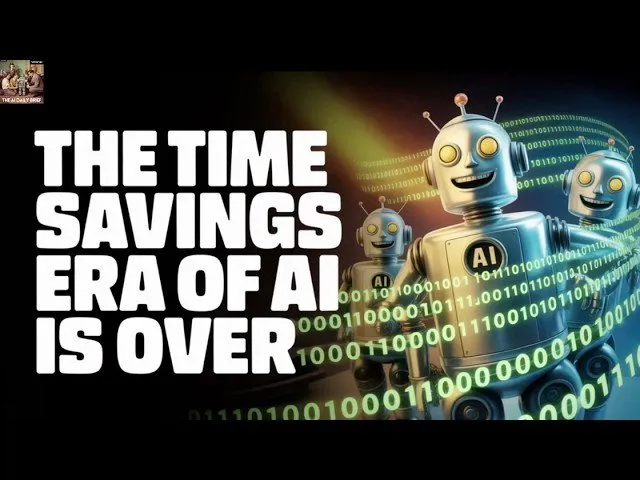
A new survey of advanced artificial intelligence users reveals a pivotal shift in the technology’s enterprise value, moving beyond simple time savings toward creating entirely new capabilities and increased output. The January AIDB Intel AI Usage Pulse Survey indicates that while OpenAI’s ChatGPT retains broad market reach, Anthropic’s Claude has emerged as the primary tool for power users, driving a surge in "vibe coding" and agentic workflows across non-technical roles.
Key Insights
- Value Shift: Time savings has dropped to the third most-cited benefit, replaced by increased output (38%) and new capabilities (22%).
- Model Preference: While ChatGPT has 87% reach, 45.8% of respondents cited Claude as their primary model, compared to 31% for ChatGPT.
- Vibe Coding: 69% of users are utilizing AI for coding, with nearly half of those users (49.5%) working outside of engineering and IT roles.
- Agentic Adoption: More than a third of users (37.6%) reported using "agentic" AI, where the software figures out steps and executes tasks independently.
- Multi-Model Norms: The average power user utilizes 3.5 different models, indicating a shift toward a portfolio approach rather than a single-platform winner.
The Shift from Efficiency to Capability
For the past year, the dominant narrative surrounding generative AI has been efficiency. However, data from January suggests the "time savings era" may be concluding for advanced users. In late 2023, 76.7% of users cited time savings as a primary benefit. In January 2024, that figure dropped significantly, landing behind increased output/throughput and new capabilities.
The survey suggests an inverse correlation between usage intensity and the focus on speed. Among those using AI for more than 10 hours per week, only 10% cited time savings as their primary benefit. Instead, 49% focused on output and 27% on new capabilities.
"The time savings era of AI is very quickly giving way to some higher order benefits. We are no longer just talking about doing the same things faster. Instead, we're talking increasingly about 'I produce more and I can do things that I couldn't do before.'"
This transition implies that organizations measuring AI ROI solely through the lens of efficiency hours saved may be missing the technology's actual value proposition: the ability to execute tasks that were previously impossible for the existing workforce.
Claude Overtakes ChatGPT Among Power Users
The survey of 583 highly enfranchised users—described as a "vanguard" of industry trends—reveals a fractured model landscape. While users remain "polyamorous" with their model selection, Anthropic’s Claude has captured the builder and practitioner segment.
When comparing primary users of Claude versus ChatGPT, significant behavioral differences emerge:
- Usage Intensity: 53% of Claude primary users utilize AI for 10+ hours weekly, compared to 40% of ChatGPT users.
- Agentic Workflows: 52% of Claude users report agentic usage, more than double the 24% reported by ChatGPT users.
- Coding Application: 87% of Claude users engage in "vibe coding" (using AI to generate code via natural language), compared to 52% of ChatGPT users.
Google’s Gemini also maintains a strong footprint. While it serves as the primary model for only 16% of respondents, it holds an 80% overall reach, suggesting its workspace integration has made it a ubiquitous secondary tool.
The Rise of Non-Technical 'Vibe Coding'
One of the most disruptive findings is the democratization of software development. Coding was identified as the number one use case in the survey (36%), delivering the highest cited value. Crucially, this activity is no longer confined to the IT department.
Nearly half (49.5%) of the individuals using AI to write code work outside of engineering. Adoption is spreading rapidly across the organizational chart:
- Leadership: 34% of executives and directors are coding.
- Product: 13% of product roles utilize AI coding tools.
- Operations & Sales: 11% and 8% respectively are building their own solutions.
This trend suggests a future where organizational design and hiring criteria must adapt to a workforce where "builder" skills are not limited to technical roles. As noted in the report, this capability is "redrawing job roles" and "obliterating" the traditional lines of what employees are expected to know.
Barriers to Entry and Future Outlook
Despite the high engagement of the survey group, barriers to wider adoption remain. The primary hurdle cited was not a lack of interest, but a lack of time to learn complex workflows. Furthermore, 18% of respondents reported a skills gap, and 17% cited policy and approval barriers within their organizations.
Interestingly, restrictive organizational policies appear to have a tangible cost. In companies with restrictive AI stances, only 29% of employees reached the "heavy user" threshold (10+ hours/week), compared to 47% in organizations that encourage AI use. This creates a proficiency gap, where employees in restrictive environments fall behind their peers in developing agentic and technical AI skills.
Looking ahead, the data points to a continued acceleration of agentic AI. With 37.6% of users already crossing the "agentic threshold"—where AI plans and executes steps independently—and leadership driving this adoption, enterprise infrastructure and governance frameworks will need to evolve rapidly to support autonomous workflows and multi-model portfolios.