Table of Contents
The rapid evolution of artificial intelligence has moved into its "second moment"—a phase characterized by higher capabilities, broader adoption, and a increasingly frenetic public discourse. As the industry shifts from simple chat interfaces to complex, agentic systems, the disconnect between mainstream perception and technological reality has widened, fueling a climate where high-stakes predictions and viral anecdotes often overshadow nuanced analysis.
Key Points
- AI's Second Moment: The industry has transitioned from the initial ChatGPT-led hype of 2022 to a 2026 landscape defined by sophisticated agentic systems and reasoning models.
- The Sentiment Gap: A divergence exists between widespread public anxiety over job displacement and the practical utility experienced by users managing dozens of autonomous AI agents.
- Viral Misinterpretation: A recent project by Andre Karpathy regarding AI "job exposure" was widely misinterpreted as a forecast of mass unemployment, despite the author’s insistence that it was a basic visualization tool rather than a predictive diagnosis.
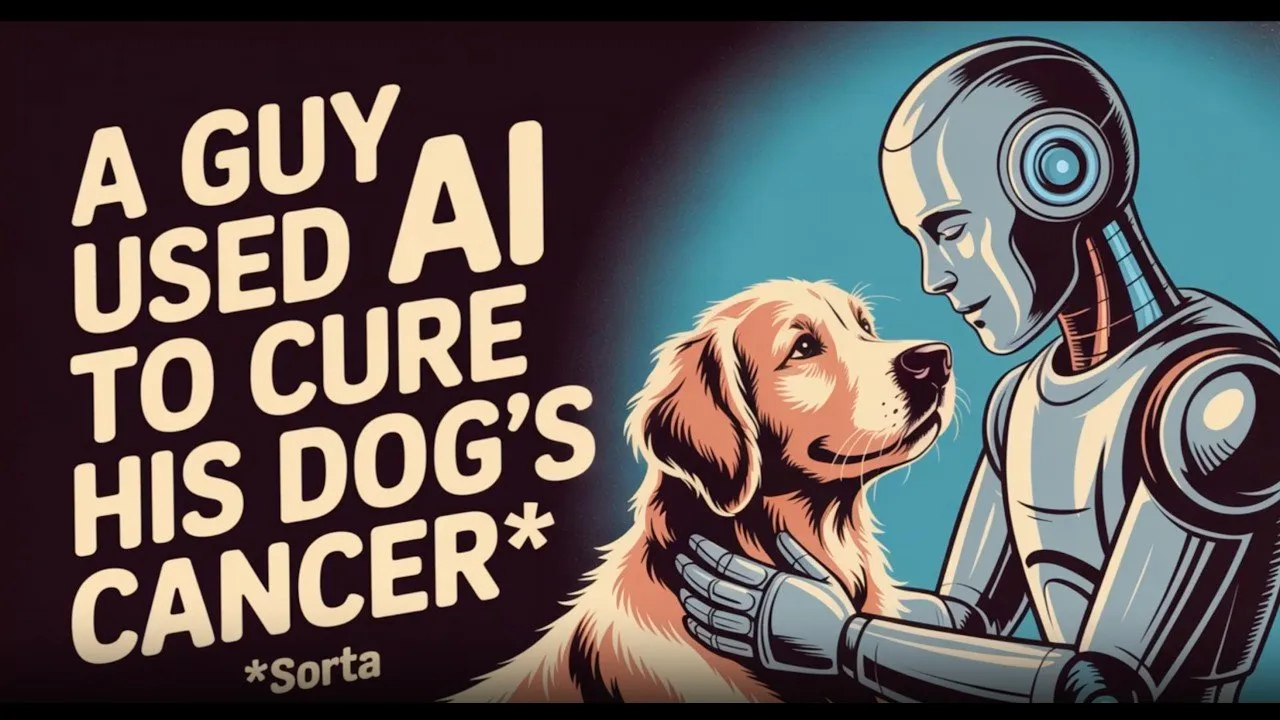
- The Promise of Personalized Medicine: A high-profile case involving a cancer-stricken dog treated with an mRNA vaccine designed via AlphaFold highlights the potential for democratizing medical breakthroughs, though experts caution that it remains a proof-of-concept rather than a standardized cure.
The Anatomy of AI's Second Moment
The current AI discourse is operating at a heightened state of intensity compared to the initial breakthroughs of 2022. This shift is driven by four primary factors: increased technical capabilities, a significantly larger user base, heightened economic stakes involving massive infrastructure buildouts, and the use of AI as a convenient narrative for corporate restructuring. Unlike the first wave of excitement, the current environment is also deeply entangled with geopolitical volatility, creating a "noise" level that frequently drowns out constructive discussion.
Industry observers argue that the AI sector has struggled to communicate its trajectory to the general public. By framing the conversation exclusively around job destruction rather than potential human augmentation, companies have inadvertently cultivated deep-seated negative sentiment. This friction was recently illustrated by the reaction to Andre Karpathy’s research into job market exposure, which triggered alarmist headlines before the developer eventually withdrew the project.
"This was a Saturday morning 2-hour vibecoded project... It’s been wildly misinterpreted which I should have anticipated even despite the readme doc so I took it down," Andre Karpathy stated regarding the public reaction to his data visualization.
From Speculation to Clinical Application
While the broader discourse remains fixated on labor market disruption, the tangible benefits of generative AI and AlphaFold were showcased in a recent, widely circulated story from Australia. Entrepreneur Paul Coiningham utilized ChatGPT and AlphaFold to identify protein mutations in his dog’s tumor, eventually collaborating with researchers to develop a bespoke mRNA vaccine. While not a definitive "cure," the case demonstrated that tools previously reserved for high-level laboratories can be leveraged to accelerate medical discovery.
Pali Thorderson, director of the RNA Institute at the University of New South Wales, emphasized that the project serves as a signpost for the future of personalized medicine. He noted that while genomic analysis and RNA production remain specialized fields, the ability to automate portions of the design process could eventually transform how pharmaceutical pipelines operate.
"While genomic analysis and RNA production will continue to be specialized, they could turn into pure service provision, especially as automation increases," said Pali Thorderson.
Looking Ahead: Navigating the New Paradigm
The path forward for the AI industry involves reconciling its rapid technical progress with the realities of regulatory frameworks and public trust. As the distinction between "exposure" to AI—which can lead to wage growth and increased productivity—and "displacement" becomes more critical, economists and technologists are calling for more precise metrics to measure the true impact on the labor force.
For stakeholders, the immediate challenge lies in filtering out the hyper-sensationalized discourse that characterizes this "second moment." As the industry continues to iterate on agentic systems, the focus is expected to shift toward how these tools integrate into existing workflows, whether in pharmaceutical research or software development. Observers should expect continued regulatory debates as the line between experimental research and practical, scalable medicine begins to blur.