Table of Contents
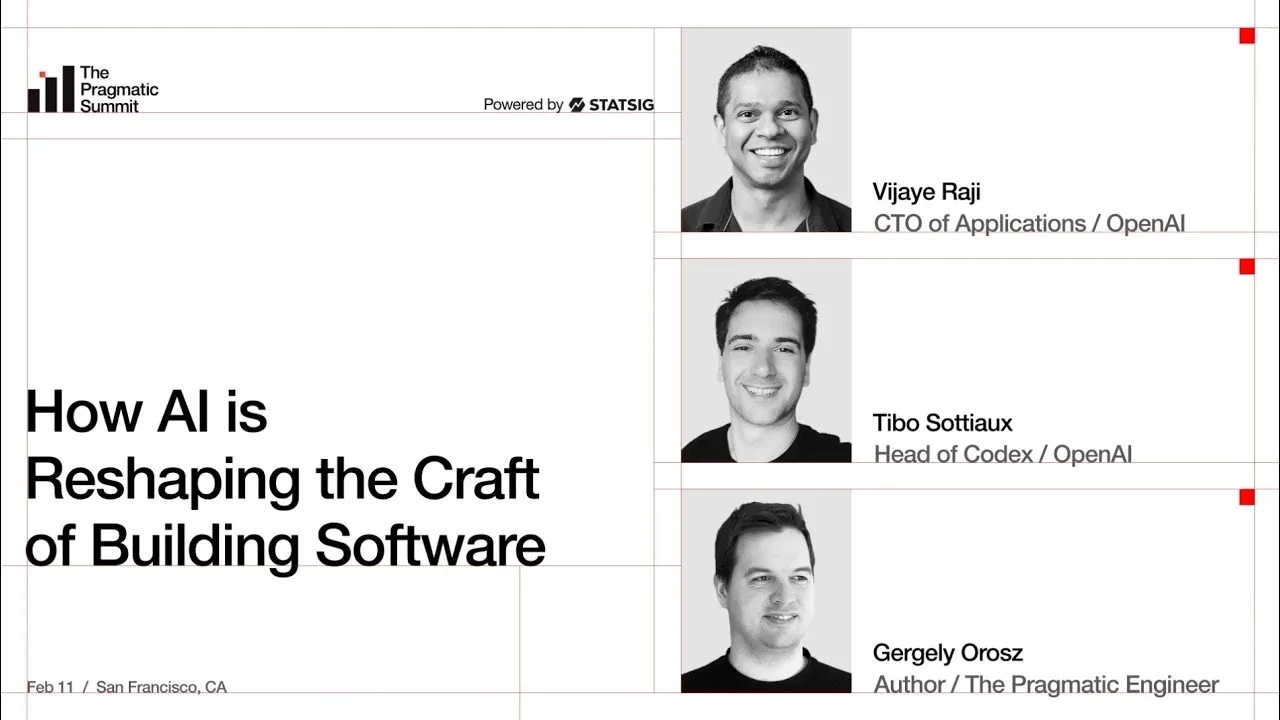
The landscape of software development is undergoing a seismic shift, moving far beyond simple autocomplete suggestions. Inside the walls of OpenAI, the transition from AI as a tool to AI as a teammate is already a daily reality. This evolution is not just about writing code faster; it is about a fundamental reimagining of the engineering workflow, where human developers act as orchestrators of autonomous agents. As these agents begin to handle complex, long-running tasks overnight, the very definition of a "software engineer" is being rewritten for an AI-native generation.
Key Takeaways
- The Evolution of AI Roles: AI has transitioned from a basic extension to a sophisticated agent and, ultimately, a teammate that engineers now name and collaborate with.
- Shifting Bottlenecks: As code generation becomes instantaneous, the primary bottlenecks in development are moving toward code review, security audits, and CI/CD integration.
- The Rise of AI-Native Engineers: OpenAI is heavily investing in "AI-native" new grads and interns who leverage these tools naturally from day one, rather than treating them as an add-on.
- Increased Abstraction: Future engineering will focus less on manual syntax and more on managing systems through "symptoms" and high-level guardrails.
From Tools to Autonomous Teammates
The speed of change within OpenAI suggests that the industry is moving toward a model where engineers no longer work in isolation. VJ, a veteran with over 25 years in the industry, notes that in just six months, the internal perception of Codex has shifted dramatically. It is no longer viewed as a peripheral utility but as a core member of the development team. Engineers are now reserving dedicated "dev boxes" on servers to fire off complex prompts, allowing agents to perform substantive work while the human engineer moves on to other tasks.
The "Codex Box" Workflow
One of the most significant internal developments is the use of "Codex Box," a system that allows engineers to orchestrate work from their laptops and then disconnect. While the engineer is in a meeting or away from their desk, the agent continues to execute the job in parallel. This represents a move away from "synchronous" coding, where the developer must be present for every line written, toward an "asynchronous" model of oversight.
"the way we write software has fundamentally changed... even in the last 6 months I've seen us go from codex as a tool to an extension to an agent now to a teammate"
The End of Manual Command Lines
The reliance on AI has also started to erode the need for memorizing complex syntax for specialized tools. For example, engineers working with media files no longer need to master the intricate flags of ffmpeg. Instead, they describe the desired outcome to the AI, which crafts and executes the command line. This shift allows developers to focus on high-level logic rather than the idiosyncratic "tribal knowledge" of specific command-line interfaces.
Navigating the New Development Bottlenecks
When one part of a system becomes five times more productive, the pressure inevitably shifts elsewhere. In the traditional software lifecycle, writing the initial code was often the most time-consuming phase. With AI, that phase is collapsing, revealing new blockers in the pipeline. Notably, the volume of code being produced is now outstripping the human capacity for traditional code reviews.
The Productivity Paradox
As agents generate more code, the demand for rigorous security and peer reviews increases. OpenAI's internal teams are already seeing this transition. Once the "coding problem" is solved, the bottleneck moves to integration and deployment (CI/CD). This creates a cycle of constant adaptation, where engineering leaders must find AI-driven solutions for the review process itself to keep pace with the generation speed.
Autonomous Quality Assurance
To combat these bottlenecks, the Codex team has begun implementing long-running autonomous tasks. Tibo, the lead of the Codex team, describes scenarios where the model runs for multiple hours or even overnight. These agents are capable of fully autonomously testing themselves, performing QA in a loop, and flagging regressions. This allows the human team to wake up to a detailed report of findings rather than spending their day manually hunting for bugs.
Empowering the AI-Native Generation
A common concern in the industry is whether junior engineers will lose the "foundations" of coding if they rely too heavily on AI. However, OpenAI is leaning into this shift by hiring "AI-native" engineers—individuals who have never known a workflow without these tools. The company is currently scaling a robust internship and New Grad program, betting that these developers will reach peak productivity much faster than previous generations.
Foundations in a High-Abstraction World
While the tools have changed, the importance of architectural foundations remains. Senior leaders argue that while AI handles the "how," the human engineer must still understand the "why." Strong product intuition and the ability to move up and down the technical stack are still the primary markers of a great engineer. The difference is that today's juniors use AI to bridge the gap between their theoretical knowledge and practical implementation.
"I actually truly believe that the new software engineers that are being created are going to be AI native. They're going to know these tools in a native way."
The Blurring of Roles
The democratization of code is also breaking down the traditional silos between designers, product managers, and engineers. Designers are now shipping functional code that is "merge-ready," and product managers are using AI to run "bug bashes" and automatically file tickets in tools like Linear. This cross-pollination means that "product sense" is becoming just as valuable as technical syntax for everyone on the team.
The Future: Multi-Agent Systems and Symptom-Based Debugging
Looking ahead, the complexity of software systems is expected to increase exponentially. As systems become more sophisticated, they also become harder to debug through traditional line-by-line inspection. We are entering an era where software may have so many layers of abstraction that engineers will rely on "symptoms" to identify issues, much like a physician diagnoses a complex biological system.
Managing the Agent Network
In the next two years, the industry is likely to move toward multi-agent collaboration. Instead of an engineer interacting with one AI, they will manage a network of agents working on different goals. Tibo suggests that we will eventually have a "personal assistant" agent that summarizes the work of hundreds of smaller, specialized agents, providing a high-level interface for the human lead.
"software has been increasing in abstraction makes it easier for us to go build massive amounts of product code with very little code."
Guardrails Over Manual Inspection
As we reach a point where AI can rebuild entire browsers or complex systems in 24 hours, the code itself may become "untrackable" for a human mind to fully grasp. The focus will then shift toward setting rigorous guardrails. Engineers will spend their time proving that a system is correct through inputs, outputs, and security constraints, rather than reading every line of the millions of lines of code generated by the agent.
Conclusion
The transformation currently occurring in software engineering is unique in its scale and velocity. Unlike the mobile revolution or the dot-com era, the AI shift is happening at a pace that defies traditional growth charts. At OpenAI, the transition from writing code to orchestrating agents is not a distant vision but a current practice. By embracing the role of the "AI-native" developer and preparing for a future of higher abstraction, engineering teams can navigate the shifting bottlenecks of this new era. The core of the craft remains the same—building products for humans—but the tools at our disposal have finally evolved to match the speed of our imagination.