Table of Contents
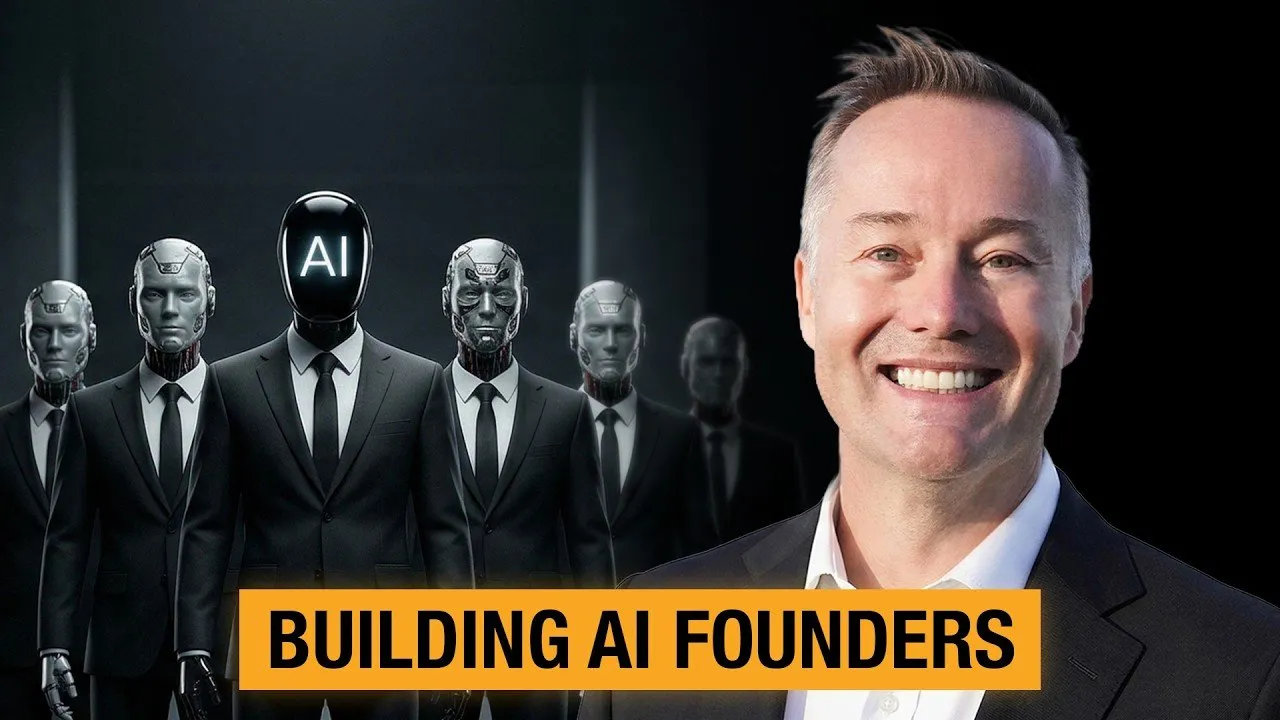
In the rapidly evolving landscape of 2026, the question of whether AI will replace human founders is no longer hypothetical. During a recent episode of This Week in Startups, host Jason Calacanis and Lon Harris sat down with Maureek Azison, CEO of FeltSense, to discuss a provocative experiment: using autonomous AI agents to rebuild the entire Winter 2026 batch of Y Combinator startups. While some saw this as a controversial stunt, the broader implication is clear—the barrier to building has dropped, and the era of the "un-defensible" commodity app is coming to a close.
Key Takeaways
- The Commoditization of Ideas: Roughly 10-20% of startup ideas today are highly replicable by AI, forcing founders to look deeper at their competitive moats.
- The "Human in the Loop" Necessity: Scaling businesses with AI agents without human oversight leads to disastrous marketing errors and regulatory risks.
- Value Creation vs. Capture: The most sustainable AI businesses are focusing on being "super-connectors" or platforms that create value for the ecosystem rather than just trying to own the entire market.
- Beyond Software: True defensibility now lies in hardware integration, proprietary data, or unique market access that AI cannot easily bypass.
The Rise of Agentic Founders
Maureek Azison’s decision to have AI agents replicate Y Combinator startups wasn't just performance art; it was a stress test for the modern tech ecosystem. By deploying agents to ideate, build, and launch products autonomously, FeltSense is proving that many "innovative" startups are simply wrappers on existing technologies.
Is Your Startup Defensible?
The experiment revealed that for a significant portion of early-stage companies, the technology is essentially commoditized. If an AI agent can build an 80% version of your product in an afternoon, you do not have a technical moat. Founders must ask themselves if their advantage lies in their unique execution, market access, or a physical component that AI simply cannot manufacture.
"The first goal for us is essentially trying to capture as much of the long tail of entrepreneurship as possible. That long tail continues to grow on a daily basis as the barrier to building comes down." — Maureek Azison
The Dark Arts of Scaling AI Startups
The show also highlighted the cautionary tale of Medv, a telehealth provider that scaled to massive revenue by utilizing AI agents to mass-produce marketing funnels and ads. The controversy serves as a stark reminder that automation without human judgment is a liability.
The "Human in the Loop" (HITL) Imperative
When you automate growth, you risk amplifying your worst mistakes. In the case of Medv, the use of AI to generate ads led to bizarre, potentially pornographic, and misleading content that drew FDA scrutiny. As Calacanis noted, the "dark art" of competitors ratting each other out to journalists is alive and well. If your business is moving at 100 miles per hour, you need a human team to act as the brakes.
The Future of Networking: Bordy and AI Connectors
Moving beyond simple automation, Andrew Duza introduced Bordy, an AI connector designed to act as a principled board member. Unlike static databases, Bordy uses conversation and relationship mapping to make high-value introductions, effectively operating as a "super-connector" for founders, investors, and talent.
Creating More Value Than You Capture
The business model behind tools like Bordy represents a shift in philosophy. By making the service free for the vast majority of the network, they build a massive, proprietary dataset of connections. They then monetize the top 1%—those seeking high-stakes outcomes like specialized hires or exclusive deals. This echoes the Tim O'Reilly philosophy: create more value than you capture.
Apple at 50: Innovation or Stagnation?
The conversation concluded with a critique of Apple’s current trajectory. Despite its massive market cap, there is a palpable sense that the company has lost its "Steve Jobs-ian" appetite for skating to where the puck is going. Critics argue that Apple has shifted from a tech-hardware innovator to a content-streaming studio, relying on the brilliance of 2008-era strategies—like the development of Apple Silicon—while failing to ship truly inspiring new hardware.
"If Steve Jobs were alive today, we would have Apple glasses right now. They would be on the fifth generation, not like the 1.x generation." — Jason Calacanis
Conclusion
The message for founders in 2026 is blunt: the era of hiding behind a slick landing page is over. Whether you are building an AI agent, a telehealth platform, or a networking tool, the market now rewards those who can pair data-driven insights with genuine human experience. As AI continues to commoditize the "how," your competitive advantage will increasingly depend on the "why"—the unique vision, taste, and lived experience that no algorithm can yet replicate.