Table of Contents
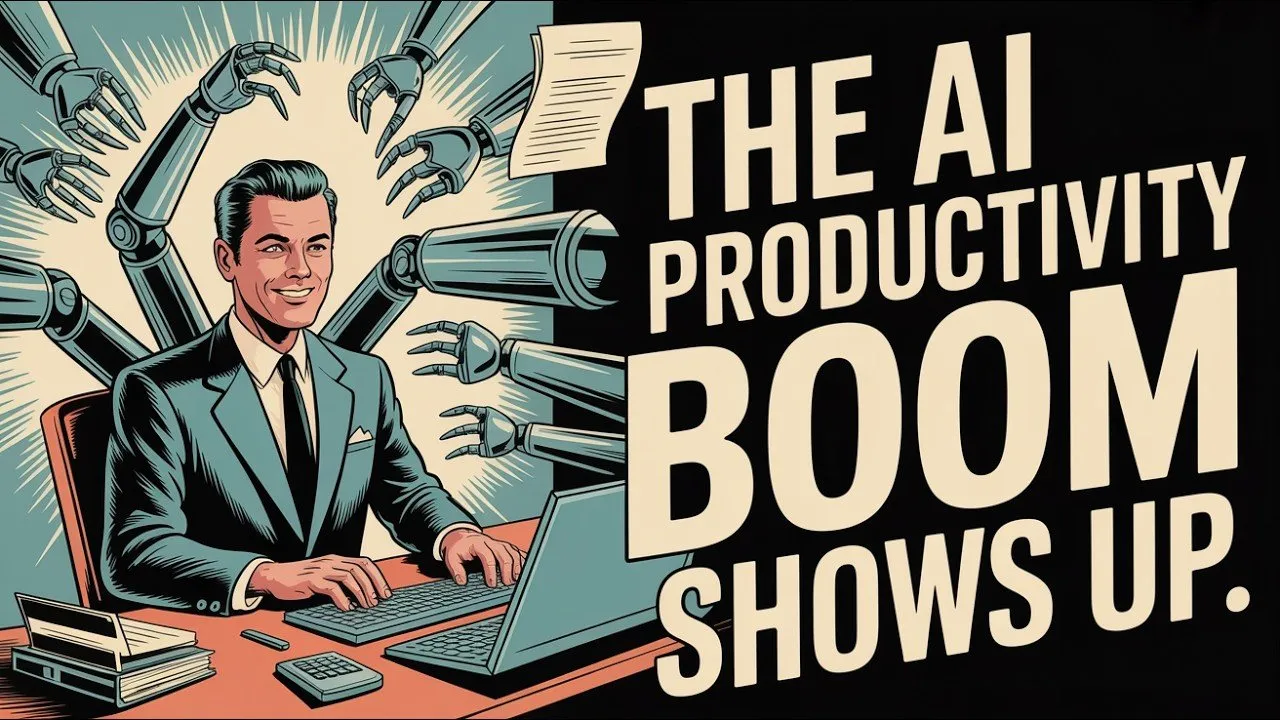
New analysis of revised U.S. labor statistics suggests the long-anticipated economic impact of artificial intelligence has officially materialized in macroeconomic data, with Stanford economist Eric Brynjolfsson arguing the nation is entering a significant productivity boom. Following a downward revision of 2025 employment figures alongside sustained GDP growth, experts believe the economy is transitioning from a period of AI investment to a "harvest phase" of measurable efficiency gains.
Key Points
- Productivity Surge: Revised Bureau of Labor Statistics data indicates U.S. productivity growth may have reached 2.7% last year—nearly double the decade’s average—driven by strong GDP output despite fewer workers.
- The "J-Curve" Effect: Economists suggest the lag between AI adoption and economic data is ending, as businesses move from experimental infrastructure building to structural utility.
- White-Collar Recession: Hiring in professional sectors has slowed to levels comparable to the 2008 financial crisis, with entry-level roles facing the highest exposure to displacement.
- Political Response: Lawmakers across the aisle, including Senator Elizabeth Warren and Rep. Jay Obernolte, are calling for urgent focus on workforce reskilling and safety nets.
Evidence of an Economic Inflection Point
For years, economists have debated the "Solow Paradox" regarding AI: the technology appears everywhere except in productivity statistics. However, recent data revisions from the Bureau of Labor Statistics (BLS) may finally resolve this discrepancy. The BLS adjusted last year's job creation numbers downward by approximately 400,000 positions, lowering net job gains to 181,000 compared to the previously estimated 584,000.
Despite this reduction in the workforce, U.S. economic output remained robust. Provisional statistics indicate GDP growth of 3.7% in the fourth quarter, following a strong 4.4% in the third quarter. According to Eric Brynjolfsson, a professor at the Stanford Digital Economy Lab, this divergence between labor input and economic output signals a massive jump in productivity.
"We are transitioning from an era of AI experimentation to one of structural utility. We must now focus on understanding its precise mechanics. The productivity revival is not just an indicator of the power of AI. It is a wake-up call to focus on the coming economic transformation."
Brynjolfsson estimates that based on these revised figures, productivity growth for the year hit 2.7%, a rate significantly higher than the historical trend of the last 20 years.
The "Harvest Phase" of Technology
The current data aligns with the Productivity J-Curve theory, a model developed by Brynjolfsson and colleagues in 2018. The theory posits that General Purpose Technologies (GPTs)—such as steam engines, computers, and now AI—do not deliver immediate economic gains. Instead, they require an initial investment period where resources are diverted to intangible assets like new business processes, organizational restructuring, and human capital.
During this investment phase, productivity often appears suppressed. It is only when these investments mature that the economy enters a "harvest phase," where output surges. The updated 2025 data suggests the U.S. economy has crossed this threshold. This shift challenges earlier skepticism from market analysts who argued the lack of immediate macro data indicated AI was overhyped.
Alex Imas, a professor at the University of Chicago, noted that while bottlenecks initially slowed the emergence of AI gains, the anticipated organizational restructuring has occurred faster than many predicted. "I guess sooner came pretty quickly," Imas commented regarding the new statistics.
Labor Market Disruption and White-Collar Strain
While the productivity boom paints a positive picture for macroeconomic efficiency, the implications for the labor market are stark. The "efficiency" driving productivity is partly the result of companies maintaining high output with fewer employees. Data from The Kobaisi Letter highlights a deepening "white-collar recession."
Current metrics indicate:
- Record Low Openings: There are just 1.6 job openings per 100 employees in the professional and business services sector, the lowest level in 11 years.
- Hiring Freezes: The hiring rate has dropped to 4.2%, aligning with levels seen during the 2008 financial crisis.
- Entry-Level Impact: Research from the Yale Budget Lab and Stanford Digital Economy Lab suggests that hiring slowdowns are disproportionately affecting younger workers in AI-exposed industries.
Andrew Yang, an early voice on automation displacement, described the current environment as "the end of the office," noting that tasks previously requiring teams of designers or analysts can now be completed by AI agents in minutes. This sentiment is echoed by broader hiring trends, where the ratio of unemployed workers to job openings in professional sectors is nearing pandemic-era lows.
Skepticism and Political Urgency
Despite the strong correlation between AI adoption and the productivity spike, some economists urge caution in attributing the shift entirely to technology. Economist Guy Berger pointed out that the BLS revisions largely removed jobs in government, mining, logging, and manufacturing—sectors not typically associated with immediate AI disruption. However, proponents argue that the broader slowdown in hiring across professional services supports the AI thesis.
The data has intensified political discourse regarding workforce protection. Representative Jay Obernolte (R), who holds a master’s degree in AI, acknowledged the inevitability of displacement.
"There will be job displacement. We need to reskill the workers that are in industries with that job displacement and equip them with the skills that they need to succeed in other industries. We are going to need a social safety net because there will be people that fall through the cracks."
Similarly, Senator Elizabeth Warren (D) voiced concern over potential widespread job loss, stating, "I'm deeply concerned about AI and what it's going to mean when people go out one day for lunch and come back and their jobs aren't there anymore."
As the U.S. economy enters the "harvest phase" of AI, understanding the precise mechanisms driving productivity—and their impact on labor—will be critical. With indicators pointing to significant changes, navigating this transformation will require adapting to both the potential economic boom and the disruption of traditional employment models.