Table of Contents
Most artistic movements begin as something shocking and eventually fade into the background as "wallpaper." According to Edward Saatchi of Fable Studios, the current integration of artificial intelligence into Hollywood is starting at the wallpaper phase. While studios scramble to use AI to cut VFX budgets and streamline production, Saatchi argues they are missing the point entirely. They are trying to force a radically new medium into the shape of an old one.
Cinema was not simply a way to make theater plays cheaper; it was a completely new medium that offered experiences the stage never could. Similarly, the true disruption of AI isn't in cost-savings, but in the creation of "playable media." In a recent in-depth discussion, Saatchi outlined a future where audiences don't just watch movies—they live in them, remix them, and generate new episodes on demand through deep simulation.
Key Takeaways
- The "Toy Story" Moment for AI: The industry is waiting for a breakthrough that defines the medium, moving beyond cheap VFX to fully interactive, playable stories.
- Simulation over Animation: True AI storytelling involves simulating an entire world (like Springfield) and letting stories emerge from character logic, rather than just prompting for video clips.
- Passive vs. Active Consumption: The future model involves releasing a movie on a Friday, and by Sunday, the audience has generated millions of new scenes and storylines.
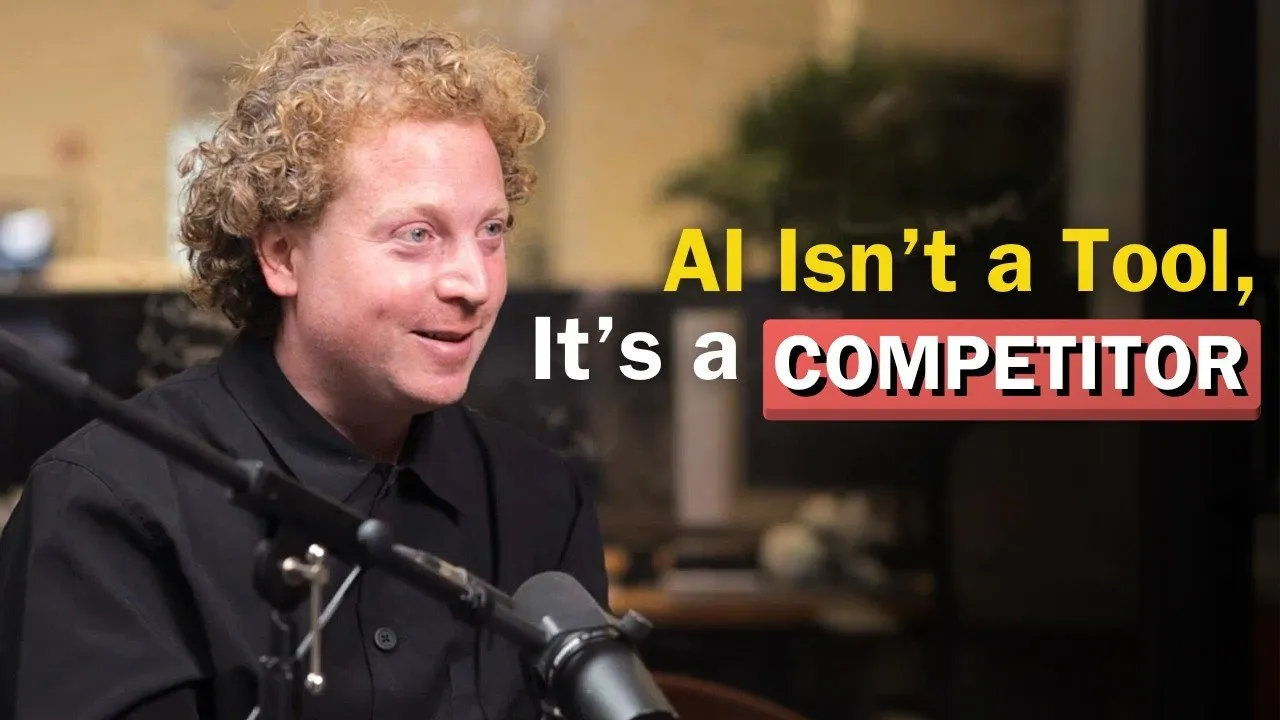
- AI as a Competitor: Saatchi challenges the "tool in the toolbox" narrative, suggesting AI is an intelligent competitor that will force human artists to evolve beyond cliché.
- The End of Human-Only Creativity: We are approaching a philosophical shift where humans are no longer the sole species capable of creative expression.
Defining a New Medium: Beyond Cheaper VFX
The current narrative in Hollywood regarding Artificial Intelligence revolves largely around efficiency. Executives and producers view AI as a mechanism to lower the bottom line—perhaps reducing a VFX budget or shrinking a writer's room. Saatchi describes this vision as incredibly boring. The idea that audiences would flock to cinemas simply because a studio saved money on production is a fundamental misunderstanding of art.
When a new medium arrives, it requires humility. Creators must listen to what the technology wants to become rather than forcing it to mimic legacy formats. Saatchi argues that AI media is innately interactive, personalizable, and remixable.
"I don't want to just smush it into the shape of the old medium. I want to listen to it and think, what does this thing want to become? ... Movies were not a way to make plays cheaper. It was a completely new medium."
The goal for Fable Studios is to find the "Toy Story" moment for AI—the proof of concept that validates the technology as an art form. For Saatchi, this is the "playable movie."
The Mechanics of Playable Entertainment
In this proposed future, the line between gamer and viewer blurs. Saatchi illustrates this with a hypothetical Star Wars release. In this model, the film premieres on a Friday. Simultaneously, the studio releases the "model" of the movie. By Sunday, the community has interacted with the model to generate thousands of new episodes and millions of new scenes.
This is not about the audience changing the ending of a film—a concept Saatchi dismisses as violating artistic integrity. Instead, it is about expanding the world. It allows a viewer to say, "Give me another episode," or "Show me what happened to this background character."
The Disruption of IP
This approach fundamentally scares traditional studio heads. It represents a loss of control. However, Saatchi points out that game designers have long understood this dynamic. In gaming, user-generated subversion is often desirable. In Hollywood, it is viewed as a threat.
The vision is a "massively multiplayer" narrative experience. Users aren't just watching; they are discovering hidden elements within the model, unlocking new narratives, and sharing their unique versions of the story with a community.
Simulation Theory: Building Worlds, Not Scripts
A critical distinction in Fable Studios’ approach is the difference between prompting and simulation. The current wave of generative video relies heavily on "prompt engineering"—stringing together disparate clips to form a coherent sequence.
Saatchi offers the example of creating an episode of The Simpsons. A standard AI approach would involve generating hundreds of clips of Homer Simpson and editing them together. Fable’s approach is to build a simulation of Springfield.
- Environmental Awareness: The model understands where the nuclear power plant is relative to the Simpson home.
- Relational Logic: The model understands the relationship between Homer and Ned Flanders.
- Emergent Storytelling: A story isn't written; it arises because the simulation calculates that if an event happens to Flanders, Homer will react in a specific way based on his character profile.
This method moves beyond visual mimicry. It requires the AI to understand the logic of the world it is depicting. This is the engine behind Fable’s Showrunner platform and their satire project, Exit Valley, which simulates Silicon Valley tech CEOs in a narrative sandbox.
The End of Human-Only Creativity
Perhaps the most controversial aspect of Saatchi’s philosophy is his stance on creativity itself. He openly states that the goal is "the end of humans as the only creative species." This is a concept that would have fascinated historical figures from Aristotle to Warhol: the creation of a work of art that can, in turn, create more art.
Critics often disparage AI art as having no point of view because it lacks human soul. Saatchi counters that an outside intelligence observing humanity offers a legitimate and potentially shocking artistic perspective. He defines art as something that disturbs us or wakes us up to reality.
"Someone looking at us and saying, 'Oh my god, all these layers of hypocrisy that you people have come up with... Let me show it to you as I see it.' That's completely a legitimate artistic point of view."
Just as the Dogma 95 movement stripped cinema down to its bare essentials to find truth, AI might introduce a new aesthetic—a "synthetic reality" that reflects the overwhelming, rapid-fire nature of modern digital life.
The North vs. The South: Silicon Valley’s True Ambitions
The tension between Silicon Valley (The North) and Hollywood (The South) is palpable. Tech companies have historically tried to disrupt Hollywood, often viewing content merely as data. Saatchi notes a disturbing trend among top AI researchers: they often stop talking about movies and start talking about robotics.
For many major AI labs, video generation is not about entertainment; it is about training robots to understand and simulate the physical world. Hollywood is merely a pit stop on the road to AGI and robotics. This disconnect suggests that while tech giants focus on data, the preservation of storytelling as an art form may fall to companies specifically dedicated to the medium of entertainment.
Competition Breeds Quality
Despite the existential threat, Saatchi remains optimistic about the impact on human creativity. He views AI not just as a tool, but as a competitor. If an AI can instantly generate a clichéd script or a generic action sequence, human artists will be forced to stop relying on clichés.
Just as photography forced painting to move toward impressionism and abstraction, AI will force human filmmakers to elevate their craft. The "wallpaper" of generic content will become automated, challenging artists to produce work that is undeniably unique.
Conclusion
We are witnessing a convergence of gaming, film, and artificial intelligence that will fundamentally alter the entertainment landscape. The future isn't just about higher resolution or better special effects; it is about the transition from a passive audience to an active participant within a simulated reality.
While the industry grapples with the legal and ethical ramifications of deep fakes and copyright, the technology is moving toward a horizon where TV shows are not just watched, but played. As Saatchi notes, society adapts to technological disruption shockingly fast. The "shock" of the new medium will eventually fade, leaving behind a new normal where the stories we love are living, breathing worlds waiting to be explored.