Table of Contents
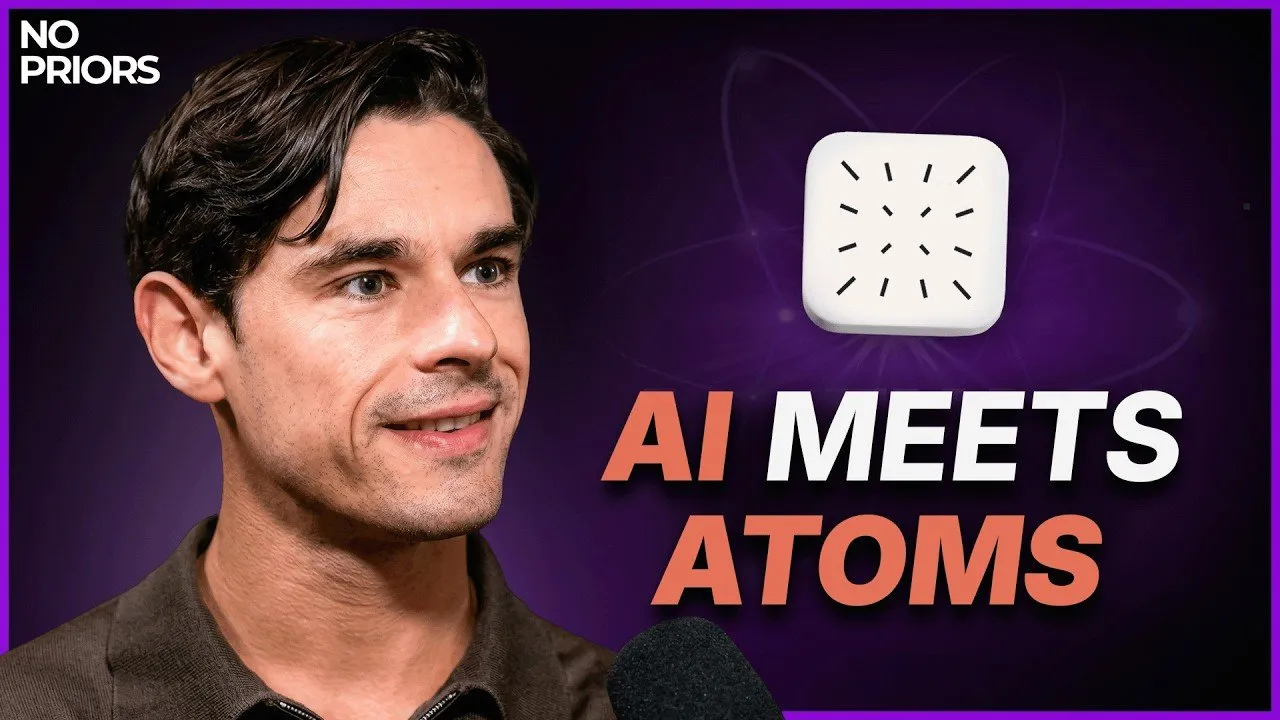
The field of artificial intelligence is currently witnessing a historic shift. While early breakthroughs focused on digital domains like text generation and software coding, the most profound frontier now lies in the physical world. Liam Fedus, former VP of post-training at OpenAI and a veteran of the pioneering days at Google Brain, is spearheading this transformation through his company, Periodic Labs. By building what he describes as an AI foundation lab for atoms, Fedus aims to bridge the gap between abstract machine intelligence and the tangible constraints of material science, chemistry, and engineering.
Key Takeaways
- Bridging the Digital-Physical Gap: Periodic Labs uses AI to accelerate material discovery, treating the physical world as the next great corpus for machine learning models.
- The Power of Closed-Loop Systems: Innovation in science requires more than just passive data analysis; it demands an interactive cycle of simulation, experimental execution, and iterative refinement.
- Interdisciplinary Synergy: The future of engineering lies in combining the principled, hard-nosed approach of physicists with the massive, data-driven scaling laws currently dominating AI research.
- The Role of Foundation Models: While language models serve as the orchestration layer, specialized neural networks tailored for quantum mechanical symmetry are essential for achieving breakthroughs in atomic rearrangement.
The Physics-to-AI Pipeline
The influx of physicists into the AI industry is no accident. Professionals trained in fields like high-energy physics bring a unique, principled mindset to problem-solving. Having spent years conducting dark matter research and working on particle reconstruction, Fedus views AI as the ultimate high-leverage tool. When the hardware required to reach the next energy frontier becomes bottlenecked, the most brilliant scientific minds naturally pivot to artificial intelligence, which offers a Cambrian explosion of research possibilities.
From Google Brain to OpenAI
Fedus’s career path mirrors the evolution of the field itself. His time at Google Brain saw the early development of distributed training strategies and the transformer architecture. Later, at OpenAI, his work on post-training for GPT-4 and the development of ChatGPT highlighted a crucial realization: once models gain the ability to reason and use tools reliably, they can be applied to the most complex problems in the physical sciences.
"Science ultimately isn't sitting in a room thinking really hard. You have to conduct experiments, you have to learn from them, you have to interface with reality."
Engineering Atoms with Data
Modeling the physical world presents a different set of challenges than language modeling. While internet data provides a broad foundation, material science requires grounded, verified experimental data. Periodic Labs addresses this by treating the company as customer zero. By generating its own high-quality, diverse data through closed-loop automated experiments, the team avoids the pitfalls of relying on inconsistent, manually extracted literature values.
Generalization Across Domains
One of the most promising aspects of Fedus’s approach is the degree of generalization possible in scientific AI. Because chemical synthesis and atomic interactions are governed by fundamental laws—such as quantum mechanics and van der Waals forces—models can be trained to understand these first principles. This allows for a level of sample efficiency that is far superior to simply training a randomly initialized neural network from scratch.
The Architecture of Discovery
At Periodic Labs, the architecture is designed to handle multiple layers of abstraction. Large language models (LLMs) act as the orchestration layer, functioning as a co-pilot that can read literature, design experimental sequences, and coordinate specialized models. These specialized neural nets are architected to be symmetry-aware, providing low-latency predictions specifically optimized for atomic systems.
"We do construct neural nets that are specially designed for atomic systems where there's like some symmetry awareness, and those have much lower latency."
This hybrid architecture—an intelligent manager directing specialized, high-performance tools—is becoming the industry standard for complex, domain-specific AI applications. It enables scientists to handle massive amounts of throughput that would be impossible to process using human intuition alone.
The Future of Material Synthesis
Looking ten years ahead, Fedus envisions a world where humanity possesses true agency over atomic rearrangement. Much like the agricultural revolution spiked productivity by breaking past land-use constraints, AI-driven materials engineering could shatter the bottlenecks currently holding back semiconductors, aerospace, and energy technology.
Scaling Capital and Intelligence
Just as the LLM revolution was fueled by massive capital investment and GPU scale, the revolution in physical sciences will require a similarly aggressive commitment. The costs involved are heavily weighted toward compute, but the returns are expected to be substantial. By bringing the "scaling law" mindset to physical experiments, Periodic Labs intends to make the pace of discovery in the physical realm keep step with the rapid evolution of digital software.
"We establish these scaling properties and bring that mindset. And so Periodic is really thinking about how do we bring much larger scale sets of experiments to bear."
Conclusion
The integration of AI into materials engineering is not merely an incremental improvement; it is a foundational shift in how we interact with the physical world. By treating matter as a system that can be optimized and generated through intelligent closed-loop control, visionaries like Liam Fedus are setting the stage for a new era of industrial and scientific capability. As these systems mature, the gap between the speed of software development and the development of physical matter will continue to narrow, ushering in a decade of profound innovation.