
Table of Contents
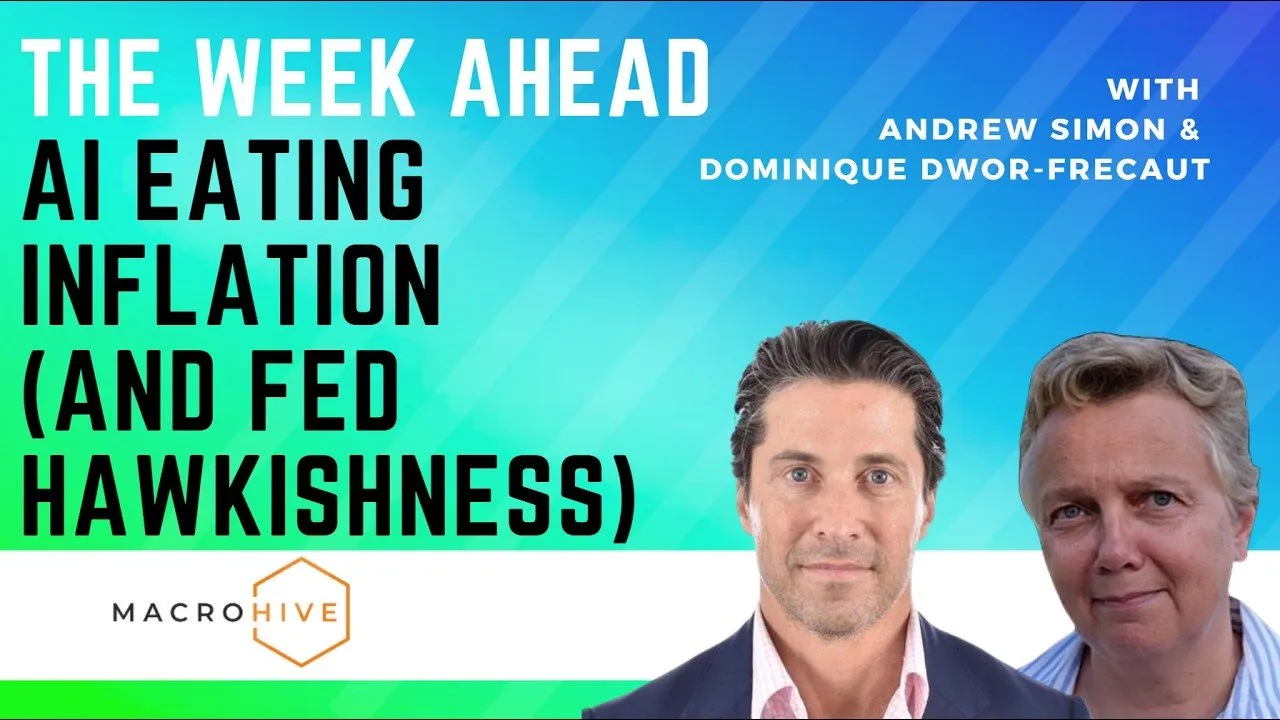
Financial markets are currently navigating a complex landscape of geopolitical tension and technological transformation. While headlines often focus on immediate volatility, the underlying structural shifts tell a more nuanced story. The recent performance of the S&P 500, particularly the divergence between the cap-weighted index and its equal-weighted counterpart, suggests that the market is beginning to price in a massive redistribution of profits. Central to this shift is the role of Artificial Intelligence (AI) as a primary driver of disinflation, challenging the long-held fears of persistent hawkishness from the Federal Reserve.
Key Takeaways
- AI as a Disinflationary Engine: AI is increasingly viewed as a structural force that lowers costs and redistributes profits, effectively "eating" inflation.
- Fed Timing: While three rate cuts are expected this year, they are unlikely to begin before mid-year as the FOMC remains focused on backward-looking data.
- Wobbly Labor Market: Despite stable unemployment figures, labor bargaining power is diminishing, leading to broad-based wage disinflation.
- Consumption Headwinds: Weakening retail sales and stagnant real household income point to a "wobbly" growth environment despite cooling inflation.
The AI Influence on Market Equilibrium
The recent lack of a massive market surge following Nvidia’s latest results has puzzled some observers. However, this lack of reaction highlights a significant trend: the market is maturing in its assessment of AI. Rather than viewing AI solely through the lens of a few high-flying tech stocks, investors are looking at the equal-weight S&P 500. This indicates a belief that AI will redistribute profits across various industries rather than just concentrating wealth at the top.
Disinflation and the Philips Curve
From a macroeconomic perspective, the integration of AI is proving to be heavily disinflationary. This aligns with a return to the pre-pandemic low-inflation regime, characterized by a flat Philips curve. Notably, workers currently possess limited bargaining power, which prevents the wage-price spirals that many economists feared in previous years.
"AI is going to redistribute profits across industries. But overall it's positive for profits. So positive for the market."
The Impact of Chip Prices
While Producer Price Index (PPI) data recently showed a pickup in chip prices—a negative supply shock—the impact on final goods prices remains muted. Given that modern goods, from appliances to automobiles, are essentially "computers on wheels," one might expect a spike in consumer costs. Instead, the trend for goods prices remains flat to gently falling, suggesting that inflationary pressures in the U.S. economy are virtually non-existent at the moment.
Monetary Policy: The Hawk-Dove Divide
Bond markets are already reacting to the disinflationary reality, with 10-year yields reaching three-month lows in several countries. Despite this, the Federal Reserve appears poised to remain cautious. The "hawks" within the FOMC are characterized by a backward-looking approach, requiring concrete evidence of falling inflation before committing to a pivot.
The Timeline for Rate Cuts
Expectations for three rate cuts this year remain intact, but the starting gun is unlikely to fire until mid-year. This delay is attributed to the need for the "tariff impact" and other temporary price shocks from last year to wash out of the year-over-year data. By the second half of the year, the shortfall of inflation relative to the target will likely become too obvious for even the most hawkish members to ignore.
Fed Speakers to Watch
Next week’s schedule includes critical appearances by New York Fed President John Williams and Cleveland Fed President Loretta Mester. Williams is often seen as a proxy for Chair Jerome Powell’s current thinking, while Mester represents the hawkish wing. Their commentary will provide the final "tone" before the FOMC enters its pre-meeting blackout period.
The Reality of a "Wobbly" Labor Market
On the surface, the labor market appears resilient, but a closer look at the "labor differential"—the gap between those who find jobs plentiful and those who find them hard to get—reveals underlying weakness. This decoupling suggests that the unemployment rate may be masking a less healthy reality for the average worker.
Wage Disinflation Across Quartiles
The decline in wage growth is no longer confined to specific sectors. Data from the Atlanta Fed Median Wage Tracker and the Employment Cost Index show broad-based weakness. Surprisingly, low-wage earners are losing ground relative to the top 25% of earners, a trend that runs counter to early post-pandemic expectations.
"The labor market is kind of stuck... I would agree with Governor Waller that this is not a super healthy job market."
White-Collar Vulnerability
While the data has not yet fully captured a collapse in white-collar wages, the lack of bargaining power is becoming evident. The "AI effect" is expected to hit these sectors particularly hard as automation begins to handle tasks previously reserved for high-income professionals. This structural shift supports the long-term case for continued disinflation.
Trade Policy and Consumption Trends
Trade dynamics are also shifting, particularly regarding Section 301 tariffs. The administration is currently looking to adjust these rates to maintain a 10% baseline for most partners while potentially increasing the burden to 15% for specific countries like China, Vietnam, and India. This tiered approach aims to penalize specific trade partners without causing a broad inflationary spike for the domestic consumer.
Sustainable Recovery Concerns
Retail sales data remains pessimistic, with a consensus forecast of -0.3% month-on-month. Consumption has been buoyed recently by a decrease in the savings rate, but this is not a sustainable long-term driver. For a true recovery to take hold, the economy requires higher real income growth—something that is currently lacking as wage growth slows faster than the cost of living in key sectors.
Conclusion
The current economic environment is best described as "wobbly." While the aggressive disinflationary trend—fueled largely by AI and a weakening labor market—is good news for those hoping for an end to high interest rates, it poses significant challenges for growth. As the Federal Reserve prepares for its mid-year pivot, the focus will shift from fighting inflation to preventing a broader economic slowdown. Investors should remain mindful of this transition, looking past the short-term jitters to the structural changes reshaping the global profit landscape.



)