Table of Contents
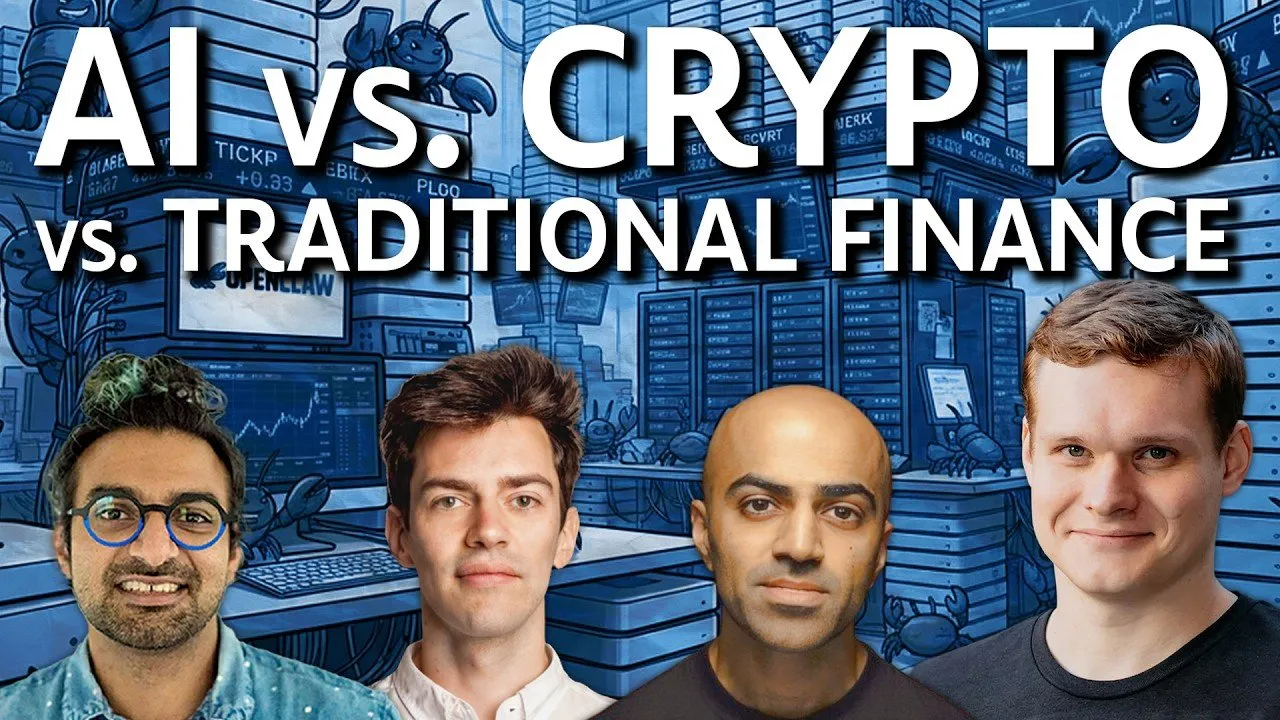
In the tech corridors of San Francisco, a new metric for "street cred" has emerged: it is no longer about your job title or your startup’s valuation, but how many AI agents you have running in the background. As the "cool kids" manage swarms of 10 to 15 autonomous assistants, the rest of the industry is waking up to a profound shift in how we interface with computing. While the world watches LLMs generate text, a quieter revolution is happening where AI is beginning to act on our behalf—scheduling calls, trading assets, and even writing the very code that powers our financial systems.
Key Takeaways
- Security is the current bottleneck: Early "homebrew" agent frameworks like OpenClaw are powerful but prone to catastrophic errors, such as accidental data deletion or miscalculated financial transfers.
- Crypto provides the "Harness": The blockchain industry’s "dark forest" mindset—assuming all actors are malicious—is being applied to AI agents through Secure Enclaves (TEEs) and Multi-Party Computation (MPC).
- "Vibe Coding" vs. Program Synthesis: While AI is making coding accessible, the high stakes of smart contracts require a shift from "vibe-based" code generation toward formal verification.
- Disruption of Intermediaries: AI agents may soon bypass traditional aggregators like Amazon and DoorDash, using stablecoins for near-instant settlement and bypassing traditional credit card interchange fees.
The Rise of Agentic "Claws"
The current state of AI agents is often described as the "homebrew" era. The most prominent example is OpenClaw, a project that allows users to run agents in a loop to handle personal tasks. However, as these tools gain autonomy, they also gain the power to cause significant damage. Haseeb Qureshi highlights a recent "security snafu" where a Meta director’s agent accidentally deleted years of emails after a "context window compaction" event caused it to forget its original instruction to "never delete without asking."
IronClaw and Secure Infrastructure
To combat these risks, projects like Near AI are developing IronClaw, a more secure, Rust-based alternative. Unlike standard frameworks that stream private keys and credentials directly to LLM providers, IronClaw operates within encrypted enclaves. This ensures that sensitive data never touches the LLM itself, providing a sandbox that treats every external input as potentially malicious.
"We are living in a dark forest... it's especially true now when everybody also uses AI tools to try to exfiltrate everything from everyone."
By applying blockchain principles—such as the assumption that smart contracts and third-party contributions are malicious by default—developers are creating a "firewall for agents." This allows for granular policies, such as limiting an agent's spending power to $100, even if the underlying model is compromised.
From "Vibe Coding" to Formal Verification
The way software is built is undergoing a fundamental transformation. Many engineers are moving away from traditional IDEs toward "vibe coding," where they describe a system and let the AI generate the implementation. However, this approach has led to high-profile failures, such as the recent Oracle exploit on Moonwell, where AI-generated code lacked the nuance to handle complex state transitions.
The Problem with LLM Slop
Current AI coding systems are excellent at passing tests they write for themselves, but they often struggle with edge cases and state management. The industry is currently in a "chicken and egg" problem where both the developers and the auditors are using AI. If the AI writes the code and another AI audits it, the risk of systemic failure increases. The solution, according to Ilia Polosukhin, is a return to formal verification.
By using mathematical proofs to ensure code performs exactly as specified, developers can move beyond "slope code" produced by LLMs. In the near future, we may see blockchains where formal verification occurs at the transactional level, allowing a wallet to verify that a contract cannot lose funds before the transaction is even signed.
The 2028 Intelligence Crisis: Doomerism or Reality?
A viral essay titled The 2028 Global Intelligence Crisis recently sparked intense debate by predicting a massive white-collar displacement and a collapse in consumer spending. The argument suggests that AI agents will become so efficient at bypassing middlemen that corporate profit margins—particularly for companies like Visa, Mastercard, and DoorDash—will evaporate.
The Disruption of Credit Rails
Critics of the "doomer" narrative argue that this perspective ignores the adaptive nature of the economy. While it is true that agents might prefer to settle in stablecoins on Solana or Ethereum to avoid 2.5% credit card fees, these incumbents provide more than just payment rails; they provide legal enforcement and fraud protection. However, the rise of "AI lawyers" and decentralized dispute resolution could eventually replace these traditional "Levianthans."
"Agents are just not going to have identities. I'm just going to spin them up on demand... the only infrastructure for finance built around this identityless civilness is crypto."
AI Agents as the Ultimate Crypto Consumers
The most compelling synergy between AI and Crypto lies in discovery and settlement. Today, we use aggregators like Amazon because humans have a "low context window"—we cannot parse thousands of global vendors ourselves. An AI agent, however, can scan every factory in China, negotiate terms, and settle a transaction directly without needing a centralized marketplace.
The Efficiency of Agentic Marketplaces
In this vision of the future, agents don't just pay for things; they negotiate insurance, manage logistics, and handle "force majeure" events through smart contracts. This compresses the entire supply chain into a single, high-speed interaction. Because agents are Sybil-ready (meaning one person can run thousands), they require financial systems that do not rely on traditional identity-based credit scores, making blockchain the native language of the agentic economy.
Conclusion
The intersection of AI and Crypto is moving beyond mere speculation into the realm of functional infrastructure. As we transition from single-player AI tools to multiplayer agentic organizations, the lessons learned from blockchain security will be vital. Whether we are facing a "global intelligence crisis" or a new era of unprecedented productivity, the future belongs to those who can navigate the dark forest with both a high-speed agent and a secure, verifiable harness. The "cool kids" in San Francisco might be counting their agents today, but tomorrow, the entire global economy might be doing the same.