Table of Contents
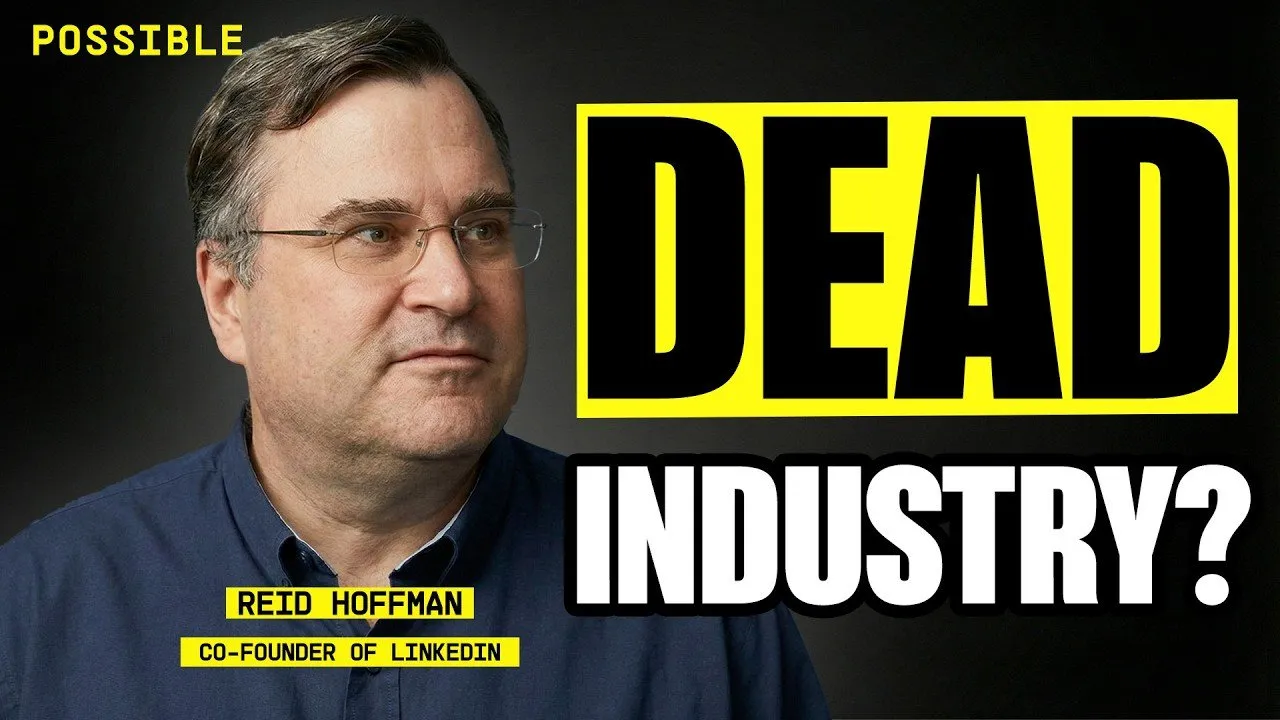
The software landscape is undergoing a seismic shift. For over two decades, the "Software as a Service" (SaaS) model defined how businesses operate, relying on seat-based pricing, ornate features, and deep, defensive moats. However, as generative AI becomes capable of writing code and orchestrating complex workflows, industry leaders are questioning whether the traditional SaaS playbook is headed for obsolescence. Is software truly dying, or is it simply evolving into something far more adaptive and personalized?
Key Takeaways
- The End of "One-Size-Fits-All": The traditional SaaS model, characterized by rigid, expensive product suites, is becoming unsustainable as businesses demand more tailored, AI-driven solutions.
- AI as the New Interface: Future software will not be a static product but a generative ecosystem where AI agents tune systems iteratively to specific organizational needs.
- The Changing Role of Engineers: Software developers are moving from manual coding to the roles of "directors" and "orchestrators," focusing on strategy, taste, and metacognition.
- New Economic Models: As seat-based pricing wanes, we are likely to see a shift toward consumption-based models, where the cost of compute and AI tokens becomes a central metric.
The Evolution of the SaaS Business Model
Critics of the current SaaS model argue that the era of the billion-dollar, "table stakes" software category is ending. Previously, companies thrived by building massive platforms that forced users into a specific way of working. Because these products were difficult and expensive to build, they naturally formed competitive oligopolies with high profit margins.
Today, the influx of generative AI tools—like Claude, Microsoft Copilot, and OpenAI—has shifted expectations. Users are no longer content with rigid, generic tools. They want software that adapts to their unique utilization. However, this does not mean the end of software sales. Instead, it demands that software providers integrate generative AI directly into the loop.
The sale of software now has to be AI... you have to have that AI generativity that you get from these coding agents as part of what you're doing.
A modern, successful software provider will not just sell a CRM or an HR tool; they will sell a system that comes with well-constructed AI agents capable of tuning that CRM iteratively to the specific context of a company. The "seat" model is struggling to survive, but a new model centered on continuous adaptation is beginning to take its place.
Redefining the Software Developer
The transition to an AI-native development environment is causing vertigo for many builders. Engineers are finding that their day-to-day work is moving away from syntax and API management toward goal setting and verification. When AI writes 70% to 90% of the codebase, the human element becomes focused on higher-level strategy.
From Coder to Orchestrator
In this new paradigm, developers function more like directors. They must possess the "taste" to determine what should be built and the metacognitive skills to identify when a system needs to be unblocked or redirected. The core challenge for modern builders is no longer the labor of writing a connector, but the strategy of what that connector should support—such as monitoring, safety protocols, and cybersecurity.
This shift triggers the Jevans Paradox: as the cost of producing software drops, the demand for sophisticated, reliable, and secure applications explodes. Developers who leverage these tools as a "modern mechanic" would use advanced diagnostics are the ones who will define the future of the industry.
The Future of Economic Moats
While the tools of the trade have changed, the fundamental principles of business strategy remain relevant. Many observers worry that AI lowers the barrier to entry, potentially destroying the moats that protected established software companies. Yet, legacy companies that adapt their workforce to be AI-heavy may find new ways to solidify their positions.
Token Economics vs. Seat Pricing
As the industry moves away from the predictable, seat-based subscription model, a new financial architecture is emerging. Business leaders are currently grappling with how to forecast expenses when costs are tied to AI compute and token usage. We are likely to see a hybrid approach, where organizations prepay for a "token budget" or compute capacity, shifting software from a fixed operational expense to a utility-like model.
I think almost always a bunch of the moats of the past will stay in certain ways, but the game gets really shifted with a platform shift like AI.
Success in this new era will depend on the ability to combine unique data sources with high-value AI output. The companies that thrive will not just be those that produce code, but those that understand how to manage the intersection of human ingenuity, compute capital, and energy resources.
Conclusion
The death of SaaS is not the death of the software industry, but rather the conclusion of its childhood. We are leaving behind the age of static, mass-produced tools and entering a period defined by fluidity and intelligent customization. For developers and business leaders, this transition requires embracing the discomfort of rapid change. By viewing AI not as a replacement for human work but as a powerful lever for orchestration, organizations can navigate this new, high-compute landscape and build the next generation of essential software platforms.