Table of Contents
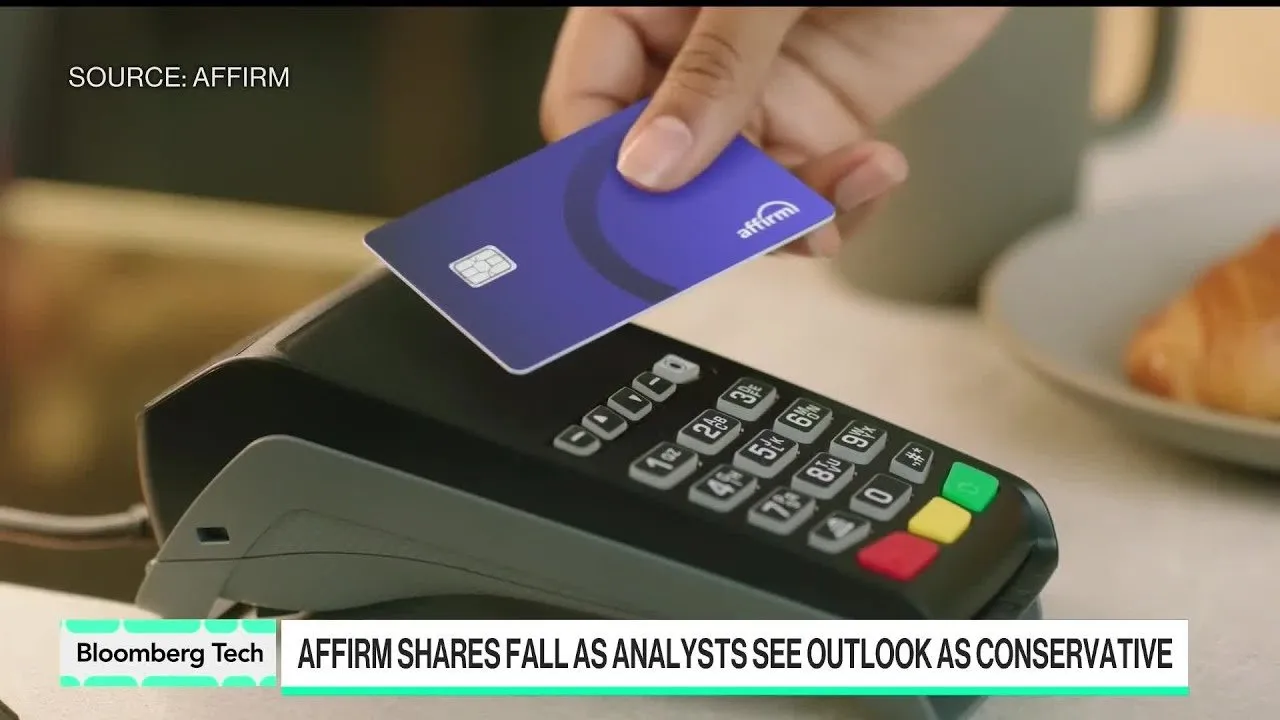
Affirm Holdings CEO Max Levchin defended the fintech company’s financial outlook strategies and highlighted the exponential adoption of the Affirm Card, signaling a strategic shift toward debit-based spending products. Speaking following the company's earnings release, Levchin addressed analyst sentiment regarding conservative guidance while outlining aggressive expansion plans in the United Kingdom and continental Europe.
Key Takeaways
- Product Acceleration: The Affirm Card is currently growing approximately four times faster than the rest of the business, driven by the integration of 0% interest deals.
- Global Expansion: Operations in the UK are now generating significant revenue, with a partnership with Shopify fully live and plans to expand into Continental Europe.
- Consumer Health: Levchin reports robust credit quality among 26 million active users, countering concerns about rising delinquencies.
- Regulatory Stance: Amidst discussions of federal interest rate caps, leadership emphasized upfront pricing transparency as the company's core differentiator.
Accelerating Product Adoption and Global Reach
The company’s growth narrative is increasingly defined by the performance of the Affirm Card. Levchin described the product's trajectory as shifting from a "gently super linear growth curve" to an exponential pace. This acceleration is attributed to product team innovations, specifically the integration of zero-percent financing deals directly into the debit card interface.
"The card grew something like four times the rest of the business. It is a rocket ship that we built a few years ago, and it just keeps going. The endgame is to get you to put away your credit card forever and use a debit card powered by Affirm."
Parallel to product innovation, Affirm is cementing its footprint outside the United States. Levchin confirmed that the company’s expansion into the United Kingdom has moved past the development phase into a viable business unit. The integration with major platforms like Shopify in the UK is now generating measurable sales lift for merchant partners. While the company remains focused on its North American stronghold, Levchin indicated that Continental Europe is the next target for market entry.
Addressing Guidance and Credit Quality
Addressing reports from analysts at firms such as TD Securities, Truist, and Bloomberg Intelligence regarding the company’s tendency to issue conservative financial guidance, Levchin emphasized reliability over speculation. He noted that the company’s strategy prioritizes delivering on promises consistently, regardless of external perceptions of conservatism.
This conservative approach contrasts with the company's bullish view on consumer credit health. Despite broader economic concerns, Affirm’s internal data regarding its 26 million active users suggests a resilient consumer base. Levchin pushed back against outside observers who underestimated the company's growth during the recent holiday season.
"Our consumer is healthy. They are paying us back. They're shopping... A lot of outside observers underestimated our growth over the holidays. We proved them wrong yesterday once again; the consumer, as we see her, is doing just fine."
Regulatory Landscape and Future Outlook
The executive leadership also touched upon the Biden administration’s recent initiatives regarding credit card interest rate caps. Rather than engaging directly in the legislative debate surrounding caps, Levchin positioned Affirm’s business model as the solution to the underlying issue: affordability through clarity.
Levchin argued that the primary issue for consumers is not just the rate, but the transparency of the financial product. By offering upfront pricing where the total cost is known before the transaction completes, Affirm aims to circumvent the "debt trap" mechanics often associated with traditional revolving credit lines.
Looking ahead, the company intends to maintain its long-term focus, leveraging the current momentum of the Affirm Card to capture a larger share of daily transactional spending while systematically entering new European markets.