Table of Contents
The landscape of software development is undergoing a radical transformation, driven not by a new programming language or framework, but by a shift in how humans interact with code itself. The rise of AI coding agents, particularly Command Line Interface (CLI) tools like Claude Code and OpenAI’s Codex, is challenging the dominance of traditional Integrated Development Environments (IDEs).
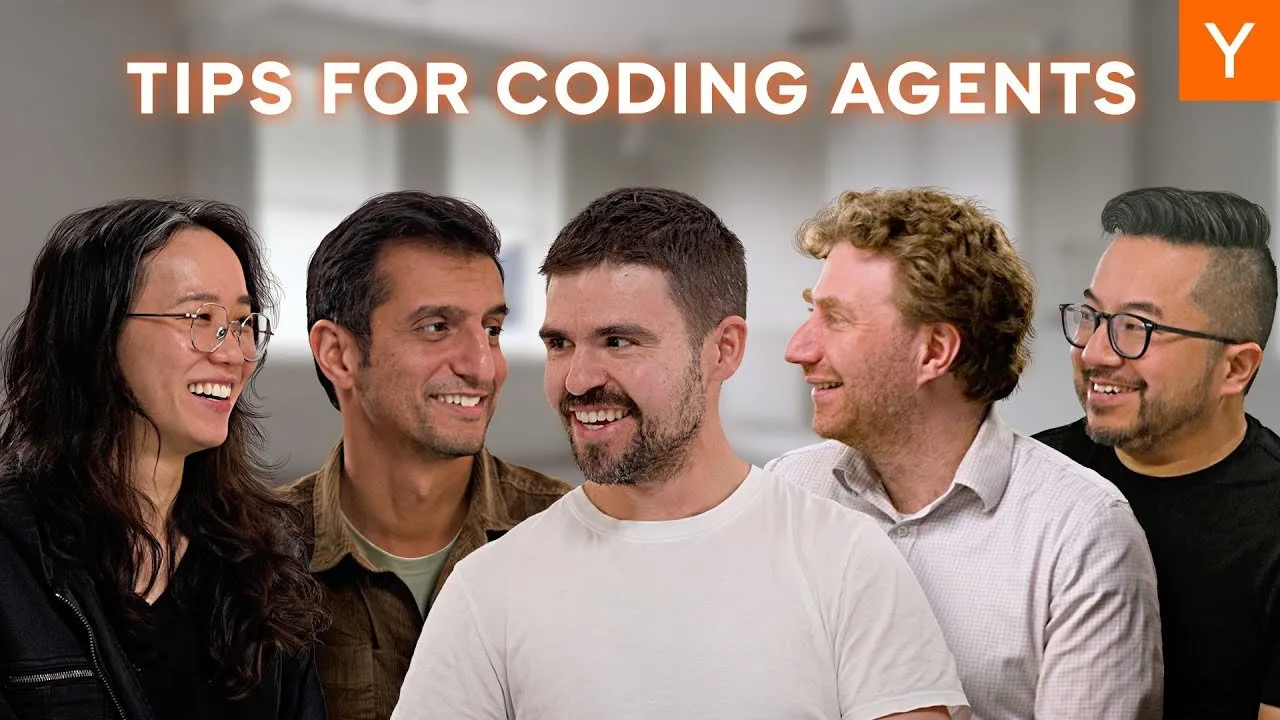
In a recent discussion, Calvin French-Owen, co-founder of Segment and a former member of the OpenAI Codex team, explored this "retro-future" where the terminal has once again become the center of the developer's world. The conversation reveals a paradigm shift where engineers are moving from writing syntax to managing intelligent agents—a transition that promises to exponentially increase productivity while demanding entirely new skill sets in context management and architectural oversight.
Key Takeaways
- The CLI is Superior for Agents: While IDEs are built for human memory and file exploration, CLIs allow AI agents to "fly" through code, managing state and execution more effectively than visual interfaces.
- Context is the New Bottleneck: The primary skill for using coding agents effectively is "context engineering"—knowing when to clear the agent's memory to prevent "context poisoning" and how to structure data for ingestion.
- Engineers are Becoming Managers: The role of the software engineer is shifting from a "marathon runner" (writing lines of code) to a manager (directing agents, reviewing work, and handling architectural decisions).
- Bottom-Up Distribution: The adoption of these tools is happening through individual engineers installing CLIs without permission, bypassing traditional top-down enterprise sales cycles.
The Unexpected Renaissance of the CLI
For the past decade, the trajectory of developer tooling has moved steadily toward sophisticated, visual IDEs. However, the emergence of advanced coding agents has reversed this trend, favoring the raw utility of the command line.
French-Owen argues that while IDEs like Cursor are designed to help humans keep state in their heads while exploring files, CLIs offer a level of freedom that aligns better with how Large Language Models (LLMs) operate. In an IDE, the code is front and center; in a CLI agent workflow, the action is front and center.
"I feel like when I'm using Claude Code, it's like I feel like I'm flying through the code. There's like little progress indicators... giving me status updates, but the code that's being written is not the front and center thing."
This shift allows for "composible atomic integrations." Unlike sandboxed development environments that often struggle with permissions and database connections, CLI agents running locally can access production databases, run debuggers, and execute tests directly. This "distribution mode" allows agents to debug complex, nested jobs deep within a system—tasks that would typically require a human to manually trace logic through multiple layers of the stack.
Context Engineering: The Skill of the Future
If syntax is no longer the primary barrier to building software, what is? The consensus points to context management. Building effective coding agents and being a top-tier user of them requires a deep understanding of how LLMs process information.
The "Dumb Zone" and Context Poisoning
LLMs suffer from a phenomenon likened to a tired student taking an exam. At the beginning of a session (the exam), the model is sharp and deliberate. As the context window fills up—reaching what is colloquially known as the "dumb zone"—performance degrades. The model may begin to hallucinate or double down on incorrect logic based on previous bad tokens.
To combat this, expert users employ specific strategies:
- Aggressive Context Clearing: Resetting the agent's memory when context usage hits 50% to ensure fresh, high-quality reasoning.
- Canary Testing: Inserting esoteric facts at the start of a session (e.g., "I drank tea at 8 AM") and periodically asking the agent to recall them. If the agent forgets, the context has likely degraded.
- Context Splitting: Tools like Claude Code spawn "sub-agents" to explore different parts of the file system independently, summarizing their findings to keep the main context window clean.
Grep vs. Semantic Search
Interestingly, while tools like Cursor rely on semantic search (embedding code to find similar concepts), Claude Code and Codex often rely on standard `grep` commands. This works because code is "context dense." A single line of code usually contains enough information within 80 characters to be meaningful, and searching for exact patterns often yields better results for agents than fuzzy semantic matching.
From Coder to Conductor: The "Manager Mode" Shift
The introduction of these tools is creating a bifurcation in the engineering discipline. Senior engineers, who possess deep architectural "taste" and system understanding, are finding themselves essentially promoted to management roles—managing AI agents rather than human reports.
French-Owen compares the pre-AI era to being a marathon runner, while the current era feels like operating with a bionic knee replacement. The focus shifts from the physical act of coding to directing resources.
"I think everyone who's experimenting with this stuff on a hobbyist level or at a very small startup, they're just pushing the coding agents as far as they can go because you don't really have time to figure out anything else."
However, this shift favors those with strong fundamentals. An engineer must still recognize when an agent is making a poor architectural decision, such as duplicating code rather than refactoring. The "Manager Mode" workflow involves:
- Specifying Intent: Clearly describing the desired outcome.
- Reviewing Output: utilizing automated code review bots and CI/CD pipelines to verify correctness.
- Orchestration: Directing multiple agents to handle different parts of the stack, from frontend implementation to database migrations.
The Future of Personalized Software
Looking forward, the capability of these agents suggests a radical change in how software is delivered. French-Owen posits a future where software becomes entirely personal. Instead of a monolithic SaaS application serving millions of users with the same codebase, we might see a return to forked, customized instances.
In this scenario, a company like Segment might provide a core codebase, but an AI agent would maintain a bespoke fork for every customer, implementing specific integrations or features requested by that client instantly. The agent acts as the bridge, merging upstream updates from the vendor while maintaining the customer's unique modifications.
This future relies on two diverging philosophies currently playing out in the AI market:
- The Tooling Approach (Anthropic): Building tools that amplify human capability, working alongside the engineer like a hyper-competent coworker.
- The AGI Approach (OpenAI): Training models to execute long-horizon tasks autonomously, potentially running for days to solve problems without human intervention.
Conclusion
We are currently strangers in a strange land, navigating a transition period where the rules of software development are being rewritten daily. The tools of the past—IDEs and manual syntax management—are being superseded by CLIs and context engineering.
For engineers today, the message is clear: the ability to write code is becoming secondary to the ability to direct it. Success in this new era requires embracing the role of the architect and the manager, using agents to multiply output while maintaining the rigorous standards of system design. As French-Owen notes, those who tinker and push these agents to their limits now will be the ones defining the workflows of the next decade.