Table of Contents
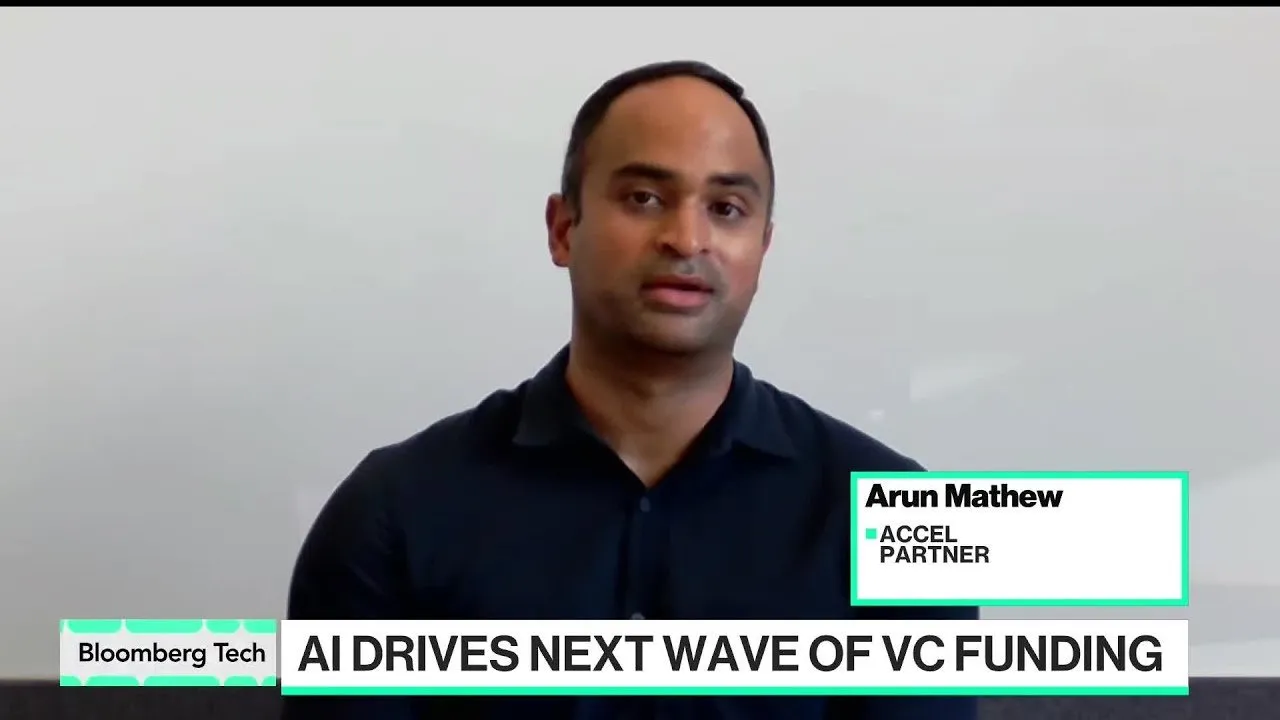
The artificial intelligence sector is currently navigating a period of intense scrutiny as market participants weigh the potential for a speculative bubble against the promise of a fundamental shift in global labor. Arun Mathew, a partner at the venture capital firm Accel, suggests that while bubble tendencies are emerging within the foundational model layer, the true, long-term value lies in the application layer—the segment responsible for integrating AI into workflows and transforming how work is executed.
Key Points
- Application Layer Opportunity: While significant capital has flowed into foundational models, the next phase of value creation will likely center on vertical-specific applications in sectors like legal, finance, and healthcare.
- Reinventing Work: AI is shifting from being a mere productivity enhancer to a paradigm of "agentic work," where software agents execute end-to-end tasks, potentially tapping into a trillion-dollar global labor market.
- Bubble Tendencies: Investors acknowledge that market corrections are inevitable, with a narrowing field of future winners likely to emerge from the current influx of funding.
- The "Last Mile" Challenge: Despite rapid model advancements, delivering reliable, secure, and compliant AI solutions to enterprises remains a complex engineering and operational hurdle.
The Shift from Productivity to Agency
For years, software evolution focused on increasing human productivity. However, Mathew posits that the current AI wave represents a distinct technological shift. By moving toward autonomous agents capable of completing complex tasks without constant human intervention, AI is effectively competing for a share of global labor expenditure, rather than just competing against legacy software tools.
In the legal sector alone, the total addressable market for traditional legal software is estimated at $5 to $10 billion. Yet, the total global spend on legal labor is approximately $1 trillion. By capturing even a small fraction of that labor-intensive market, application-layer AI companies represent a much larger economic opportunity than typical software-as-a-service (SaaS) businesses.
"I think often times investors and other people think about this as the next evolution of software. I actually think it's a different paradigm. It's the reinvention of work," says Accel partner Arun Mathew.
Navigating the Foundational vs. Vertical Debate
A central debate in venture capital is whether foundational model providers will capture the majority of the value or if independent vertical applications will dominate. Critics argue that specialized AI startups are merely "wrappers" built on top of robust models from companies like Anthropic. Mathew, whose firm holds investments in both foundational and application-layer companies, rejects this binary view.
He notes that the "last mile" of deployment—the process of ensuring accuracy, managing enterprise-level security, and facilitating organizational change—is significantly more difficult than building the model itself. As AI capabilities improve at an exponential rate, these operational complexities become the primary barrier to entry, shielding specialized companies that can successfully bridge the gap between model intelligence and real-world execution.
The Future of Agentic Ecosystems
The recent emergence of open-source agent platforms and hardware-integrated AI, such as NVIDIA's developments, signals a broader shift toward an "agentic" future. Rather than a "winner-take-all" scenario dominated by a single hardware or software giant, the industry is moving toward an ecosystem model.
Mathew draws a parallel to the dawn of the personal computer era, noting that just as the PC eventually became a ubiquitous utility, AI agents will likely become a standard tool for both personal and professional use. The trajectory of the market suggests that this ecosystem will be comprised of various layers, including hardware, foundation models, and specialized applications, all working in concert to automate increasingly complex processes. As the market matures, investors expect a consolidation phase where only the companies that successfully navigate the integration of AI into enterprise workflows will secure long-term sustainability.