Table of Contents
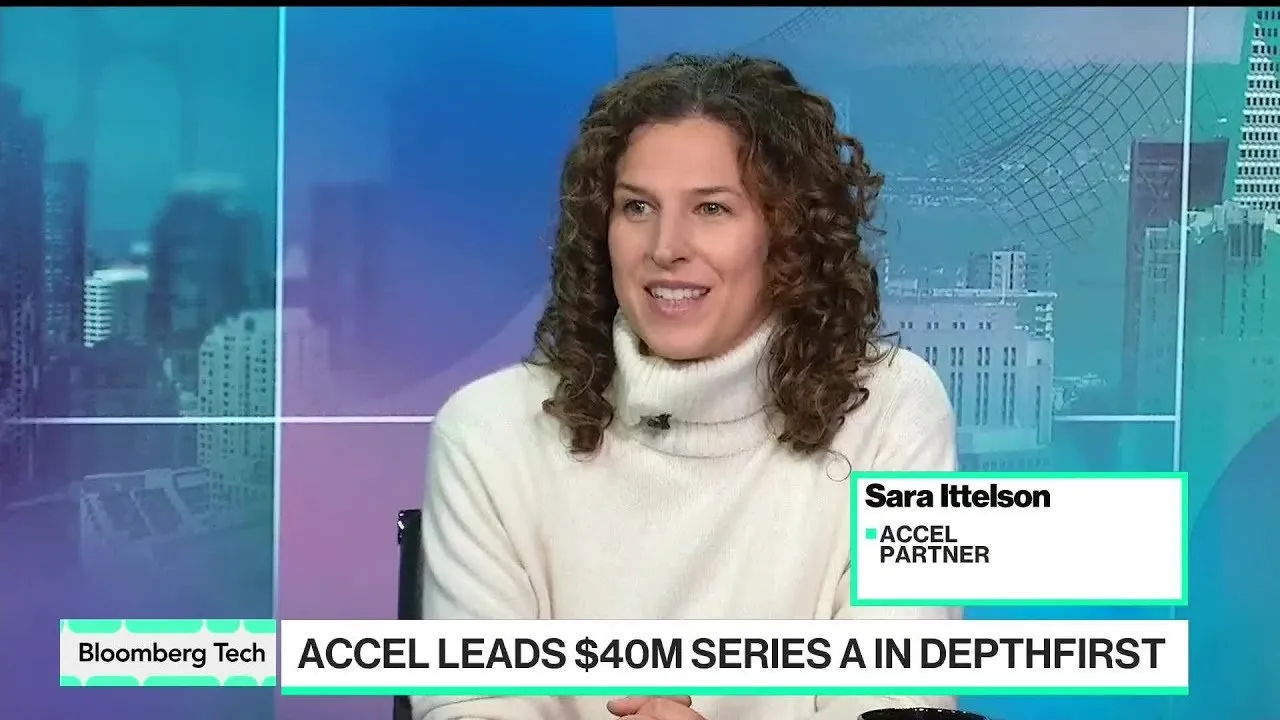
Venture capital firm Accel has led a $40M Series A funding round for an emerging AI security startup, betting on a new generation of "swarm-based agents" to revolutionize cybersecurity. The investment addresses a critical industry paradox: while artificial intelligence enables legitimate developers to ship software at unprecedented speeds, it simultaneously allows malicious actors to launch attacks faster than legacy tools can detect. By leveraging "agentic scanning" that analyzes business logic and architecture, the platform aims to drastically improve the signal-to-noise ratio for Chief Information Security Officers (CISOs).
Key Points
- Significant Funding: Accel backed the startup with a $40M Series A to drive long-term growth.
- Superior Detection: The platform reportedly finds eight times more verified vulnerabilities than current best-in-class solutions.
- Agentic Technology: Uses swarm-based AI agents to continuously scan code, architecture, and business logic on the offense.
- Elite Pedigree: The founding team comprises technical leaders from Google DeepMind, Databricks, and Meta’s FAIR.
- Market Shift: Accel views this as a foundational shift in security infrastructure, comparable to the rise of CrowdStrike or Netscape.
The AI Security Paradox
The core thesis behind the investment focuses on the changing nature of software development. As AI coding assistants become ubiquitous, the volume of code being shipped has exploded. However, existing application security (AppSec) tools—relied upon for static analysis—are struggling to keep pace with the volume and sophistication of threats.
According to Accel, the historical approach to security monitoring is failing to manage the "signal-to-noise" ratio required in the AI era. The firm notes that while companies are excited about shipping software quickly, threat actors are utilizing the same underlying technology to accelerate their offensive capabilities.
"What we have to realize in this moment is as we're all so excited about how AI is making it possible to ship software so much more quickly, that same AI tool is being used by the bad guys to ship attacks more quickly, and so the historical ratio of signal to noise just won't stand in the current era."
Offensive Defense and Verified Metrics
The startup distinguishes itself by moving beyond passive defense. It employs "swarm-based agents" that operate offensively, continuously scanning a company's codebase. Unlike traditional tools that often flag harmless anomalies, this AI-native platform analyzes the architecture and business logic to identify verified vulnerabilities.
Performance data played a decisive role in the funding decision. The platform demonstrated the ability to identify verified vulnerabilities at a rate eight times higher than previous market leaders. Furthermore, the technology offers automated remediation, allowing engineers to fix identified issues with a single button press—a feature already seeing mass adoption among early users.
"They're finding verified vulnerabilities eight times more than the previous best in class... They're not waving their hands about things that aren't really a problem. They're finding real problems."
Strategic Market Implications
Accel views this investment not as a short-term play but as a potential standalone public company. Drawing parallels to previous major technological shifts, the firm argues that every massive innovation cycle requires a replacement of the security apparatus. Just as CrowdStrike defined the cloud era and Netscape defined the early web, Accel believes this "agentic" security model is essential for the AI era.
The investment also highlights the intense competition for specialized talent. The startup’s team includes interdisciplinary experts from Google DeepMind, Databricks, and Meta’s FAIR (Fundamental AI Research). This combination of cybersecurity experience and deep AI research capabilities is considered rare and was a primary driver for the $40M valuation.
A Societal Imperative
Beyond the financial metrics, the investment is framed as a critical necessity for the broader adoption of autonomous systems. As software gains more autonomy—moving from simple code execution to reasoning and controlling physical devices like robots—ensuring the security of these systems becomes a matter of public safety.
"It's imperative for society that we get this right, that we ensure that all of this new AI generated code that's being shipped at increasing rates is all secure."
Moving forward, the company intends to use the capital to scale its engineering teams and expand its market reach, aiming to become the foundational security layer for the Fortune 50 and beyond as they integrate autonomous software agents.