Table of Contents
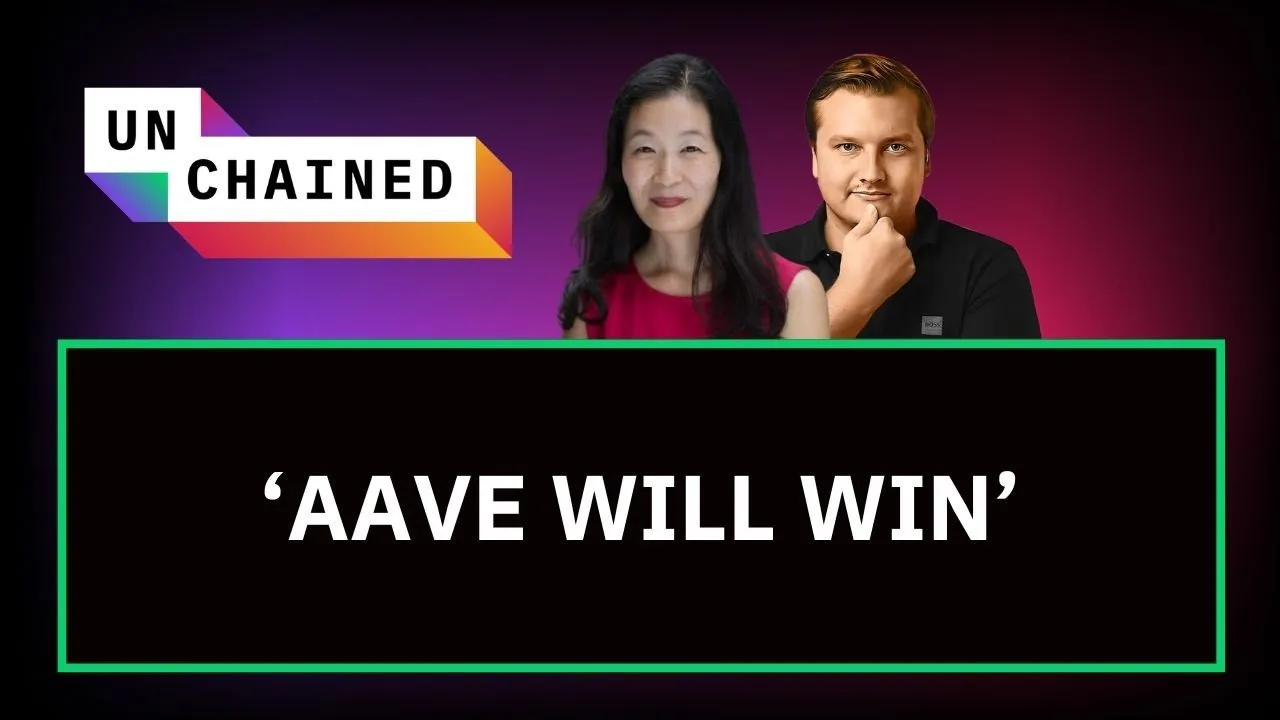
In a bold move signaling a deep commitment to decentralized governance, Aave Labs, the primary builder behind the Aave protocol, has put forth a groundbreaking proposal to the Aave DAO. Dubbed "Aave Will Win," this initiative seeks to fundamentally redefine the relationship between the development entity and the decentralized autonomous organization, aiming for a fully token-centric ecosystem. This post dives into the intricate details of the proposal, exploring its motivations, core components, and the robust community dialogue it has sparked, ultimately charting a course for Aave's future at the forefront of decentralized finance.
Key Takeaways
- Aave Labs proposes a radical shift to a fully token-centric model, directing 100% of its product revenue to the Aave DAO.
- The proposal outlines Aave Labs transitioning to a grant-funded model, seeking annual budgets from the Aave DAO.
- The upcoming Aave V4 protocol, with its innovative hub-and-spoke architecture, is central to expanding Aave's revenue streams and use cases.
- Plans include establishing an independent Aave Foundation to control the brand and trademarks, ensuring long-term community ownership.
- Aave's long-term vision extends beyond crypto, aiming to integrate real-world assets (RWAs), particularly "abundance assets" like solar power, into DeFi.
The Genesis of "Aave Will Win": A Vision for Clarity
The "Aave Will Win" proposal emerges from a period of intense community discussion and a desire for greater clarity in the Aave ecosystem's value capture mechanisms. Previously, a controversy arose when fees from a decentralized exchange (DEX) aggregator, initially directed to the Aave DAO, were later redirected to Aave Labs following a technical upgrade. This incident underscored the need for a definitive framework regarding revenue distribution and the roles of various entities within the Aave landscape.
Stani Kulichov, founder of Aave Labs, highlighted the core motivation behind the proposal:
"The big thing about the Aave Will Win proposal is that we want to ensure that we send an extremely strong signal that the value capture is going to the token-centric model."
Historically, Aave Labs, as the progenitor of the Aave protocol, operated with a model where protocol-level revenues flowed to the DAO, while application-layer products developed by Aave Labs could generate their own revenue streams. While this fostered sustainability for Aave Labs, it created a degree of uncertainty for AAVE token holders regarding the ultimate destination of value. The "Aave Will Win" proposal directly tackles this by aiming to unify value capture under the AAVE token, removing the ambiguity of a dual model.
Evolving the Aave Ecosystem's Structure
The Aave ecosystem has evolved significantly since its inception, moving towards a decentralized service provider model. Unlike simpler protocols, Aave's lending infrastructure requires active risk management and dynamic adjustments to market conditions. This necessitates a network of service providers, funded by the DAO's protocol revenue, to ensure the protocol's health and security.
Kulichov emphasized the transparency inherent in this decentralized model:
"A lot of the reasons why we know about what's basically happening in the Aave DAO or what kind of parameters are being proposed or asset listings are happening is because there's this wide set of transparency that anyone can actually go and understand what is going on."
This transparency, combined with active community participation, builds resilience, a critical characteristic for a leading lending protocol. The "Aave Will Win" proposal seeks to solidify this decentralized structure by further aligning Aave Labs with the DAO's long-term interests.
Redefining Value Capture: A Token-Centric Future
At the heart of the "Aave Will Win" proposal is a fundamental shift in how value is accrued and distributed within the Aave ecosystem. Aave Labs is proposing to surrender 100% of its application-level product revenue directly to the Aave DAO. This means that revenue generated from products built by Aave Labs will directly benefit AAVE token holders, enhancing the token's value capture surface.
Aave Labs: From Self-Sustaining to DAO-Funded
With this significant change, Aave Labs would transition from a self-sustainable entity generating its own revenue to a service provider funded by grants from the Aave DAO. This aligns Aave Labs' financial incentives directly with the success and growth of the Aave protocol and its token holders. Kulichov clarified that the 100% revenue commitment accounts for necessary deductions like user incentives or revenue-sharing agreements with integrators, ensuring that the net revenue flows to the DAO.
Establishing the Aave Foundation for Brand Stewardship
Another crucial element of the proposal is the establishment of an independent Aave Foundation. This entity would assume ownership and stewardship of Aave's trademarks and brand assets, which are currently held by Aave Labs. The creation of a dedicated foundation aims to provide a neutral, legal entity capable of enforcing brand protection and ensuring that these critical assets serve the broader Aave community and token holders.
Despite the crypto industry's evolving perspectives on foundational structures, Kulichov defended the foundation model as a proven and robust solution, especially for brand enforcement and legal clarity, when compared to newer, less battle-tested alternatives like Decentralized Unincorporated Nonprofit Associations (DUNAs).
"Getting something fast off the ground that is proven model, the foundation is still the strongest way to do that because that's just a proven model."
Aave V4: Powering the Next Evolution of Lending
The success of the "Aave Will Win" proposal is intrinsically linked to the upcoming Aave V4 protocol. Aave Labs views Aave V4 as state-of-the-art in lending protocols, designed to create new revenue streams and significantly expand Aave's use cases, which are essential for growing the overall DeFi pie.
The Hub-and-Spoke Architecture
Aave V4 introduces a revolutionary hub-and-spoke architecture, providing unparalleled flexibility and modularity. The "hubs" will store assets, acting like central banks, while "spokes" will represent various lending strategies with custom logic and collateral requirements. These spokes can range from traditional cross-collateralized markets to innovative setups where users can borrow stablecoins against assets like Ethereum or Bitcoin without lending out the underlying collateral.
This design allows for:
- Liquidity Concentration: Centralizing liquidity in the hubs.
- Risk Isolation: Capping exposure to individual spokes, preventing systemic risk.
- Scalability: Enabling developers to create and deploy their own customized spokes, expanding Aave's reach into diverse risk categories and use cases.
Kulichov emphasized the potential for innovation:
"Our goal is here to not only see sort of innovation coming out of the Aave community by the core developers but also third party developers that have a really exciting ideas when it comes to DeFi but maybe they have lack of liquidity."
This modularity is also future-proof, allowing Aave to integrate non-ERC20 collaterals, direct lending to qualified custodians, or even abstract DeFi for mainstream consumer applications.
The Reinvestment Feature
Another key innovation in Aave V4 is the "reinvestment feature." This mechanism will enable the efficient management of idle funds within Aave pools, which can range from hundreds of millions to over a billion dollars. By reinvesting this "float" in a risk-mitigated manner into opportunities like risk-free rates in traditional finance or Aave's native stablecoin (GHO) savings, the protocol can enhance capital efficiency without introducing additional risk.
Aave V4 is currently in testnet, having undergone extensive security hardening and public audits over the past two years, with a launch targeted for "as soon as possible."
Addressing Community Concerns: Funding, Governance, and Independence
The "Aave Will Win" proposal, while largely praised for its vision, has also generated constructive criticism and suggestions from the community, highlighting the active nature of Aave DAO governance. Key areas of discussion include the definition of revenue, the size of the funding request, and the independence of the proposed foundation.
Clarifying Revenue Definition
Critics like Mark Zeller of the Aave-Chan Initiative and Multicoin Capital raised concerns about the definition of "100% of product revenue." They argued that Aave Labs retaining discretion to redirect portions of product inflows for user incentives could lead to ambiguity and potential conflicts of interest. Stani Kulichov clarified that the 100% commitment refers to all net revenue flowing to the DAO, with Aave Labs facilitating revenue-sharing agreements (e.g., with FinTech integrators) as part of expanding the ecosystem. He welcomed such feedback as a healthy part of the transparent governance process, noting that the proposal is a "temp check" and will be refined based on community input.
The Size of the Ask
The proposal's request for approximately $50.7 million as an annual budget for Aave Labs also drew scrutiny, with some noting its significant size relative to the DAO's treasury. Kulichov robustly defended the figure, pointing to the DAO's annual earnings of around $140 million and emphasizing that Aave Labs is foregoing its own potential revenue streams, which could be between $10-30 million annually from fees alone (e.g., from Cow Swap). He further contextualized the request by comparing it to the annual budgets of other major DeFi protocols:
"If you think about Uniswap and unification proposal they were asking 120 million annual budget. Sky is operating between 75-90 million annualist budget. Brave raised 250 million."
This funding, he explained, is an investment in comprehensive protocol development, innovation, research, security, and product development across multiple applications (Aave App, Aave Pro, Aave Kit), aimed at competing not just within DeFi but also with established FinTech companies.
Ensuring Foundation Independence and Governance Integrity
Concerns were also raised about ensuring the true independence of the Aave Foundation and transparency around Aave Labs' token holdings and voting behavior. Kulichov agreed on the critical need for independence, stating it must be "arms-length to every single person in the Aave DAO," and capable of effectively enforcing trademarks for the benefit of token holders.
Regarding a prior contentious proposal requiring wallet disclosures, Kulichov acknowledged voting against it, clarifying that it was "rushed and done really quickly" and overly broad, potentially doxing even users receiving benefits. He asserted his right to vote based on having "skin in the game," but notably agreed with the suggestion that Aave Labs would not use any newly granted AAVE tokens for voting purposes, ensuring that those funds are solely for development and growth.
Bundling the Proposal's Elements
Finally, some community members suggested unbundling the various components of the "Aave Will Win" proposal (revenue redirection, V4 approval, foundation establishment, funding request) for separate votes. Kulichov argued against this, stating that the components are inherently interconnected:
"It breaks down the structure of the proposal because everything is tied into whether V4 is approved as a direction and if that's approved as a direction then those revenue streams would actually apply there."
He explained that Aave Labs giving up its revenue stream is contingent on receiving DAO funding, which in turn relies on the ability to deliver on Aave V4's promises to generate new revenue for the DAO.
Beyond Crypto: The Vision for Abundance Assets
Beyond the immediate implications of the "Aave Will Win" proposal, Stani Kulichov articulated a broader, long-term vision for Aave and decentralized finance: scaling beyond native crypto assets. This "DeFi mullet strategy" involves a polished front-end user experience (like the Aave App for direct consumers or Aave Kit for FinTech integrations) powered by robust DeFi infrastructure on the backend.
The ultimate goal is to connect DeFi's superior capital aggregation and cost structures with real-world assets (RWAs). While traditional assets like T-bills will likely be tokenized for efficiency, Kulichov sees an even bigger opportunity in "abundance assets"—resources that are becoming increasingly cheap and plentiful due to technological advancements. He specifically highlighted solar power:
"Scarcity no longer is the is the sort of a construction of our society. It's based on the abundance."
By tokenizing capital-intensive but operationally low-cost assets like solar farms, and using them as collateral within Aave V4's flexible framework, DeFi can accelerate the transition to an "abundance economy." This vision aims to tap into multi-trillion-dollar markets, bringing new, future-proof collateral into DeFi and distributing the generated yield across the Aave ecosystem.
Conclusion
The "Aave Will Win" proposal represents a pivotal moment for Aave, embodying a profound commitment to decentralization and community empowerment. By proposing to redirect all product revenue to the Aave DAO and transition to a grant-funded model, Aave Labs is making a significant and transparent move to align its destiny with that of the AAVE token holders. Coupled with the transformative potential of Aave V4's modular architecture and a bold long-term vision for integrating abundance-driven real-world assets, this proposal lays the groundwork for Aave to not only strengthen its position as a DeFi leader but also to expand its influence far beyond the existing crypto ecosystem. The ongoing transparent dialogue within the Aave DAO underscores the vibrant, resilient nature of decentralized governance, as the community collectively shapes the future of this pioneering protocol.