Table of Contents
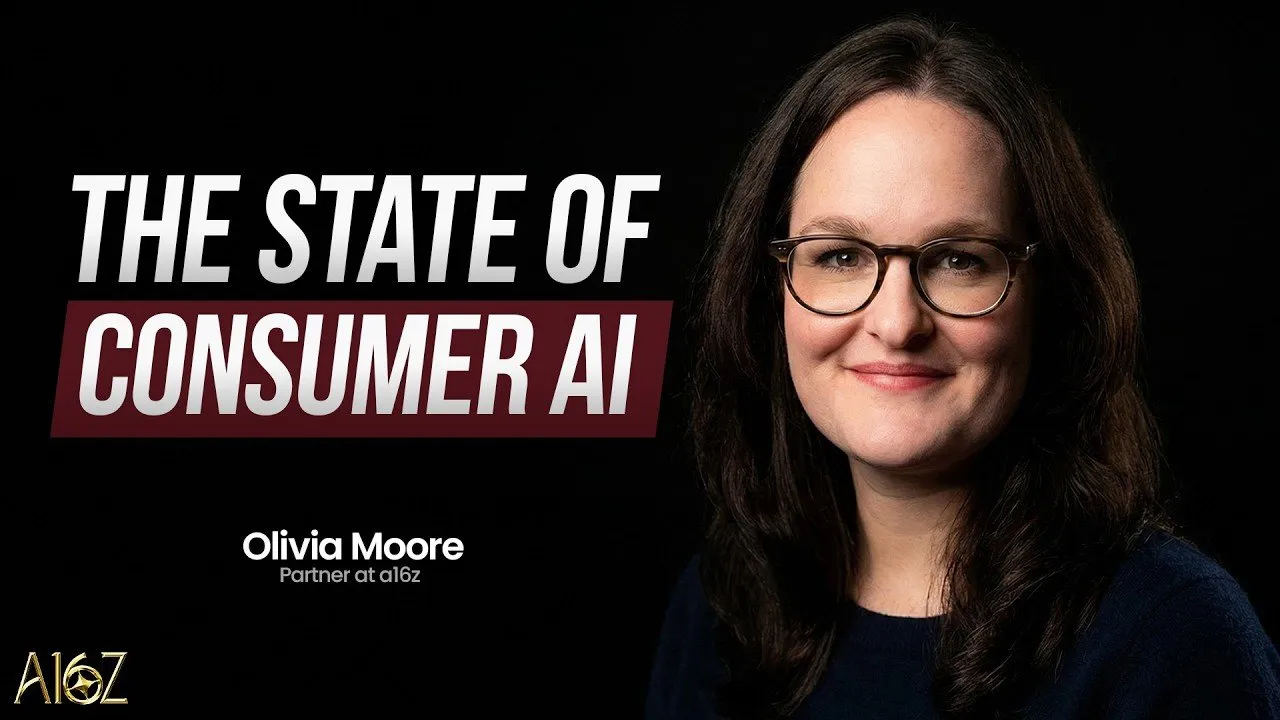
Artificial intelligence is evolving at a breakneck pace, and according to the latest a16z Top 100 AI Apps report, we are still only in the earliest chapters of this technological shift. While household names like ChatGPT dominate the discourse, the underlying ecosystem is shifting toward specialized agents, multimodal creative tools, and integrated desktop experiences. Olivia Moore, an expert at a16z, recently sat down to unpack the findings of the latest report, highlighting how AI is moving beyond the simple chat box and into the fabric of our daily workflows.
Key Takeaways
- The Consumer Race Heats Up: While ChatGPT remains the market leader in traffic, competitors like Claude and Gemini are carving out distinct niches by focusing on specialized use cases and creative integrations.
- Beyond the Prompt Box: AI is increasingly living in dedicated desktop applications like Cursor and voice-focused tools, rather than just web browsers.
- The Rise of Agents: Agentic AI—tools capable of executing tasks across multiple platforms—is transitioning from a technical niche to a mainstream consumer requirement.
- Global Adoption Patterns: AI usage is heavily influenced by regional culture and regulation, with countries like Singapore and South Korea leading in per capita adoption.
The Shifting Landscape of Foundation Models
The competition between the major foundation models—ChatGPT, Claude, and Gemini—has evolved from a zero-sum game into a strategy of specialization. While ChatGPT holds a significant lead in web and mobile traffic, the market is beginning to segment based on user needs.
Niche Specialization
Claude has focused heavily on the proumer (professional consumer) segment, doubling down on research tools, financial data, and academic support. Conversely, Gemini has thrived by leveraging Google’s massive distribution, particularly through its creative tools and deeper integrations with productivity suites like Gmail and Sheets. As Moore notes, the market is less about one model replacing another and more about users selecting the best tool for specific, compounding workflows.
"If you look at the app stores that are emerging on Claude and ChatGPT, they both have 200+ apps, but there’s only 11% overlap."
The Strategic Value of the "App Store" Model
A major focus of the a16z report is how companies are attempting to build long-term lock-in. OpenAI’s approach with its app directory is designed to position ChatGPT as the AI for everyone. By acting as a gateway for travel, nutrition, and finance, the company aims to move beyond simple subscriptions toward a transactional monetization model.
Compounding Context and Authentication
One of the most significant developments is the future of authentication. OpenAI has hinted at a system where a user’s identity—and more importantly, their "memory"—can travel with them across third-party applications. This creates a powerful flywheel effect: the more a user interacts with the platform, the more intelligent and personalized their AI experiences become across the entire internet.
Global Trends and the Cultural Divide
Usage patterns reveal that AI adoption is not monolithic. While the United States is the primary hub for model development, its per capita adoption lags behind countries like Singapore, Hong Kong, and the UAE. Moore suggests that cultural optimism plays a massive role in how quickly these technologies are integrated into daily life.
Outliers: The Parallel Ecosystems
Russia and China remain significant outliers in the global landscape. Due to geopolitical sanctions and strict regulatory environments, these nations have built parallel, domestic AI ecosystems. Products like DeepSeek and Yandex are seeing massive adoption, proving that where access to western models is restricted, localized alternatives will emerge to fill the void.
The Evolution of Creative and Agentic AI
The "creative" sector of AI has moved past basic image generation. As foundational models become better at producing generic graphics, the remaining standalone winners are those that offer high levels of aesthetic control or complex, professional-grade workflows.
From Content Generation to Task Execution
The conversation is now dominated by AI agents. Whether it is OpenClaw’s dominance in the technical community or the rapid growth of consumer-grade agents like Manis, the trend is clear: users want tools that do things, not just tools that say things.
"I think ultimately every AI company and every tech company is going to be an agentic company because that’s just where the models are headed."
The Future of Ambient AI
As AI moves into desktop environments—integrated into browsers and voice tools—the friction of starting a task will effectively vanish. Moore predicts that within a few years, any software that does not immediately "know" the user’s preferences and history will feel fundamentally broken.
Conclusion
The trajectory of AI is moving toward deeper integration and greater agency. As these tools evolve from simple chatbots into sophisticated assistants that understand our professional context and personal identity, the "onboarding" process as we know it will likely disappear. For users and developers alike, the next few years will be defined by how effectively these models can bridge the gap between complex technical capabilities and seamless, ambient utility. The rapid evolution of the ecosystem ensures that whatever we define as the "standard" today will look entirely different by this time next year.