Table of Contents
South Korean robotics developer A-Tech is advancing the waste management sector with the introduction of AI-driven sorting systems designed to automate recycling for both industrial facilities and commercial real estate. Following successful deployments in Korea and a recent entry into the Japanese market, the company has confirmed plans to expand its operations to the United States later this year, leveraging technology that won a CES Innovation Award.
Key Highlights
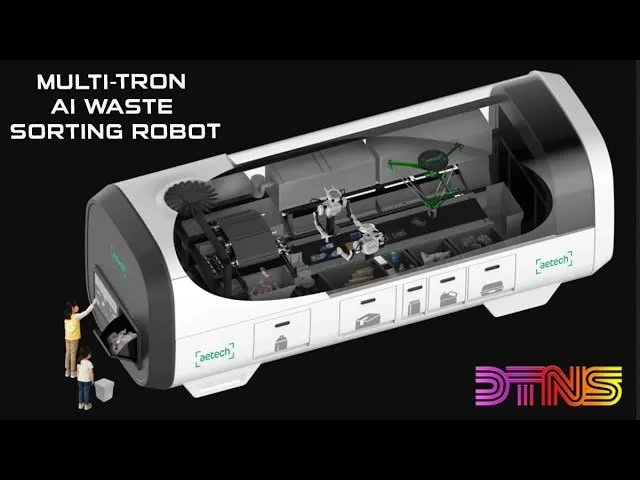
- Dual Product Line: The company offers Atron for industrial recycling centers and Multitron for commercial venues like department stores and apartment complexes.
- Advanced Sensing: Robots utilize a combination of RGB cameras and hyperspectral sensors to identify waste by material composition, not just shape.
- Market Traction: A-Tech has sold approximately 40 units domestically and began exporting to Japan in December.
- US Expansion: The firm is actively seeking pilot projects in the US, with a required lead time of one to two months for local data calibration.
AI-Driven Sorting Architecture
A-Tech’s solution addresses the labor-intensive bottleneck of recycling through a two-step hardware system: a "vision box" for analysis and a robotic arm for physical separation. The technology is designed to eliminate the need for human sorting at the source, particularly in consumer-facing environments.
According to Minjuk Kim, a representative for A-Tech, the system relies on sophisticated computer vision algorithms. While standard RGB sensors identify items by color and size, the company integrates hyperspectral sensors to analyze material composition. This allows the robots to distinguish between items that share similar shapes but are made of different substances, a common challenge in waste management.
"We have two types of grippers. First is a suction gripper for fast and strong gripping, and another is a finger gripper which is for precise gripping. Customers can customize their robots based on their needs."
The industrial model, Atron, is currently installed in recycling centers to replace manual labor. The consumer-facing model, Multitron, allows users in high-density buildings to dispose of mixed waste without presorting. The unit automatically segregates materials internally, a feature that earned the company a CES Innovation Award. Multitron is scheduled for a broader launch in the second half of this year.
Global Market Trajectory
The company has established a foothold in South Korea with roughly 40 operational units. In December, A-Tech marked its first international milestone by exporting units to Japan. The company is now pivoting its focus toward the American market.
Kim noted that international expansion requires a brief calibration period. Because waste composition varies significantly by region and building type, the AI requires specific datasets to operate effectively.
"We have to prepare the situation of data because every country or every building has different types of waste. To prepare for this, we need about one or two months, and after that, we can use the whole system of our technology."
Looking ahead, A-Tech is preparing for Proof of Concept (PoC) projects with apartment complexes and department stores in Korea while simultaneously pursuing export opportunities in the US. The company aims to secure partnerships in major metropolitan areas to demonstrate the efficacy of automated sorting in reducing landfill waste and operational costs.