Table of Contents
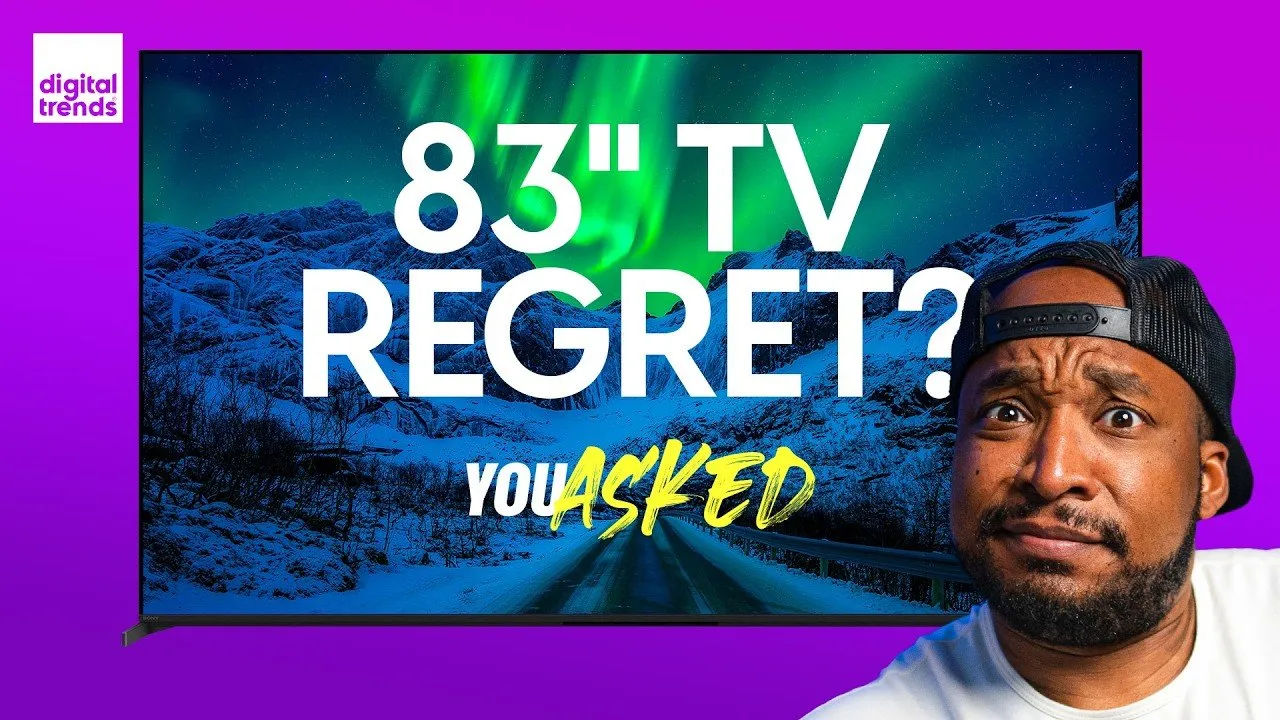
In the latest installment of Digital Trends’ "You Asked," industry experts addressed critical consumer dilemmas ranging from the physical strain of oversized 83-inch displays to the viability of professional OLED calibration for aging hardware. As home cinema technology reaches new peaks in brightness and scale, many enthusiasts are discovering that larger screens and older premium panels require specific technical adjustments to maintain a comfortable and high-quality viewing experience.
Key Points
- Visual Comfort: Large-format 83-inch TVs can cause eye strain at close distances; switching to Filmmaker or Movie modes can mitigate discomfort by reducing blue light.
- Upgrade Cycle: Consumer electronics experts recommend replacing decade-old LED televisions, as modern budget models now outperform older mid-range sets in both processing and panel contrast.
- OLED Longevity: Professional calibration, typically costing between $200 and $500, serves as a cost-effective alternative to purchasing a new TV for users with aging premium OLED panels.
- Panel Technology: When selecting budget upgrades, the choice between VA panels (better contrast) and IPS panels (wider viewing angles) remains a critical factor for room-specific performance.
Managing the Challenges of Oversized Displays
While the trend in home entertainment favors increasingly larger screens, the jump to an 83-inch display can introduce unexpected physiological challenges. Viewers have reported significant eye fatigue and discomfort due to the sheer volume of light output, even when the set is not at maximum brightness. Experts suggest that for viewing distances between 10 and 12 feet, an 83-inch screen may be excessive, noting that 65-inch or 77-inch models often provide a more balanced experience.
To remedy brightness issues without replacing the hardware, the report suggests moving away from "Vivid" or "Dynamic" picture modes, which often utilize a cool, blue-heavy color temperature. Switching to a warmer Filmmaker Mode or Movie Mode reduces harsh light. Additionally, lowering local dimming settings can soften high-contrast highlights that contribute to visual exhaustion during HDR playback.
"If you’re within 10 to 12 ft, 83 in feels like a little bit of overkill. At that distance, 65 in should be fine... and both should save you a considerable amount of money," the report states.
The Case for Retiring Decade-Old Hardware
For consumers holding onto LED televisions from 2014 or earlier, such as the LG UH6150, the performance gap compared to modern entry-level sets has become vast. Beyond the degradation of internal components like Wi-Fi and Ethernet modules, older sets lack the smart TV interface efficiencies and high-dynamic-range (HDR) capabilities found in current budget-friendly models like the TCL Q6 or Hisense QD7.
Choosing Between Budget Contenders
When upgrading to a modern budget model, the choice of panel type is paramount. The TCL Q671G (the Canadian equivalent of the Q651G) utilizes a VA panel, which offers superior contrast for dark-room viewing. Conversely, the Hisense QD7 typically features an IPS panel, providing wider viewing angles suitable for bright rooms with off-center seating. Experts emphasize that even these "budget" options will provide a noticeable leap in "pop" and operational speed over hardware that has been in service for ten years.
Revitalizing Premium OLED Panels
Owners of older premium OLEDs, such as the Sony A8G, may notice a loss of "luster" or brightness as the organic pixels age. While it is tempting to replace the unit with a newer LED model like the Sony X90L, the superior black levels of an older OLED often remain preferable to discerning eyes. In these instances, professional calibration is the recommended next step.
"A professional calibration is the next logical choice... It’s not cheap, but it is less expensive than a new Sony OLED," the report advises.
A certified calibrator can tune color accuracy, black levels, and peak brightness to suit the specific lighting conditions of a user's home. However, with professional services ranging up to $500, consumers must weigh this against the price of new entry-level OLEDs. For example, the LG B5 series has recently seen retail prices drop to approximately $1,000 for a 65-inch model, making the "replace vs. repair" decision increasingly difficult for those on a mid-range budget.
As the market approaches major sales cycles, consumers should monitor the pricing of current-year OLED models like the Sony Bravia 8. For those with aging sets, the coming months will likely present a pivotal moment to decide between investing in professional calibration or transitioning to the latest generation of panel technology.