Table of Contents
Every day, traders step into a chaotic arena of high-speed data, split-second mental math, and relentless market noise. To survive and thrive, professional traders cannot rely on gut feeling alone. Instead, they require anchors—proven criteria that provide the conviction needed to put capital at risk. Without these, the noise becomes overwhelming; with them, the chaos turns into actionable opportunity.
Key Takeaways
- Must-Have Signals: Successful breakout trading hinges on seven non-negotiable "checks in favor," including the pink line (a high-quality price level), volume confirmation, and hidden relative strength.
- Categorization Matters: Breaking trade criteria into Setup, Context, and Timing allows traders to evaluate opportunities logically rather than emotionally.
- Conviction vs. Necessity: While some factors like news catalysts or market tailwinds add confidence, they are not always required for a winning trade if the technical setup is superior.
- The Power of Narrative: Understanding the "why" behind a price move—whether it is a short squeeze, a thematic shift, or institutional accumulation—is critical for holding through volatility.
The Framework: Organizing the Chaos
Trading professional-grade breakouts requires more than just identifying a price level. It requires a systematic approach to grading potential. By categorizing trade criteria into three distinct buckets—Setup, Context, and Timing—traders can filter out sub-par opportunities and focus only on the setups that offer the highest probability of success.
Setup: Does it belong on the watch list?
The "Setup" category focuses on the objective structure of the chart. The goal here is to answer the question: Does this stock deserve my attention? A crucial element here is what traders call the pink line—a significant price level, whether daily or intraday, where the stock has previously failed or consolidated. This serves as the launchpad for the breakout.
Context: Does it have a reason to move?
Context is the "why." You might have a perfect technical setup, but without a underlying driver, the move may lack longevity. This category looks for narratives, themes, or sector-wide strength that provides the wind at the trader's back.
Timing: Is it happening now?
The "Timing" category is often the difference between a profitable trade and a "trap." It addresses whether the stock is primed to move immediately. As the saying goes, having the right idea is only half the battle; if the timing is wrong, the trade may fail before it ever gains momentum.
"There is something so incredibly powerful about the moment you know your checks in favor like the back of your hand, then you're seeing your checks in favor in real time."
The 7 Must-Have Trading Signals
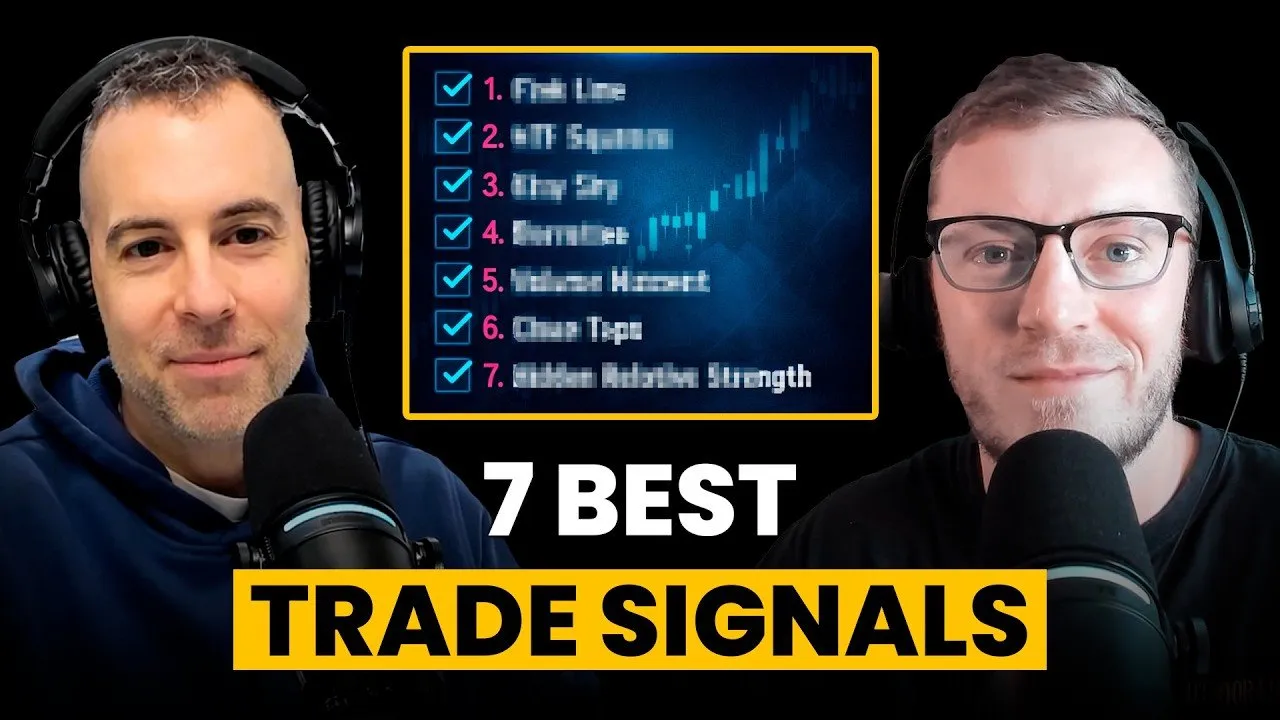
After filtering 15 potential criteria, professional traders identify seven specific "must-haves." If a trade is missing one of these, it is often best to pass or reduce position size significantly.
- The Pink Line: A well-tested, high-quality breakout level that dictates where the change in market character should occur.
- Higher Time Frame Squeeze: Significant energy built up through a period of compression on a daily or weekly chart.
- Blue Sky: Lack of overhead resistance, allowing the stock to trade into uncharted territory with room to run.
- Narrative: A clear, compelling reason for the stock to move, such as a sector theme, high short interest, or an "unexpected" fundamental shift.
- Volume Moment: An outlier spike in volume as the stock clears the breakout level, confirming institutional participation.
- Clean Tape: Price action that is logical, orderly, and respects technical levels without excessive "noise" or erratic wicks.
- Hidden Relative Strength: The ability for a stock to hold or tick higher when the broader market or sector is pulling back.
Why Conviction Trumps Intuition
Many retail traders fall into the trap of overtrading "maybe" setups. Professionals, by contrast, treat their checks in favor as mantras. When the market is moving fast and the tape is buzzing, these seven criteria quiet the mind. They turn the complex act of trading into a simple question: Do these seven factors align?
"Volume is fuel meaning like the more volume that comes in the more volatility that can come in which is what we want of a level."
When the criteria align, the trade is no longer just a "setup"—it becomes a moment of conviction. This shift in mindset is what allows a trader to size up correctly and hold through the inevitable intraday pullbacks that shake out less prepared participants.
Conclusion
Mastering the art of the breakout is not about finding a magic indicator; it is about building a disciplined framework of checks and balances. By focusing on your must-have signals and learning to distinguish between essential technical requirements and secondary "extra credit" factors, you gain a significant edge. In the world of high-stakes trading, the noise will always be there, but with the right anchors, you can navigate it with professional focus and clarity.