Table of Contents
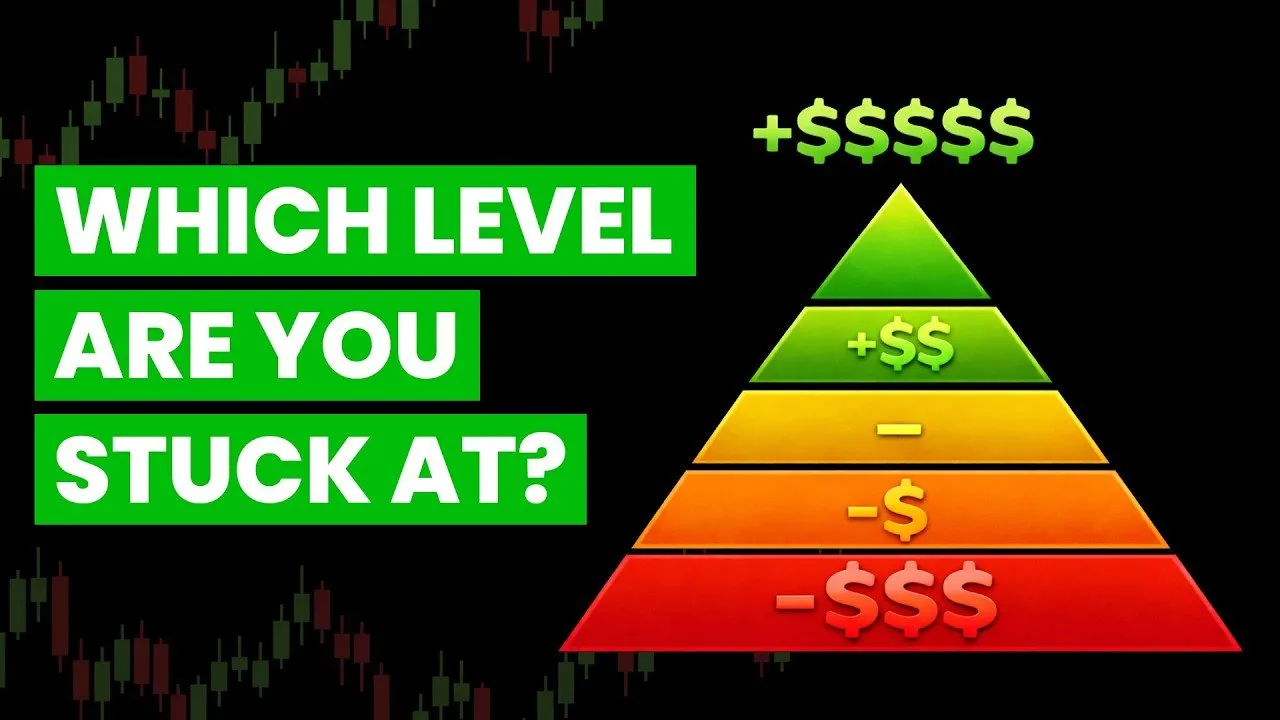
Trading is often portrayed as a fast-paced game of intuition, but at the professional level, it is a structured journey of discipline. Many traders find themselves stuck in a loop of inconsistent results, never understanding why they cannot seem to break through to sustained profitability. At SMB Capital, traders are evaluated through five distinct levels of competence. Recognizing where you currently stand is the first step toward evolving your strategy and ensuring your career growth does not stall.
Key Takeaways
- Brutal Honesty: Progress is impossible if you lie to yourself about your current trading level or performance.
- The Trap of Level Three: Many traders get stuck at the "breakeven" stage for years because they lack a quality filter for their setups.
- Sequential Growth: You cannot skip levels; each phase provides essential skills—such as rule-setting, consistency, and risk management—required for the next.
- Bet Sizing as a Tool: Mastery involves moving from arbitrary sizing to sizing based on market opportunity, starting with a default of zero risk.
Level One: The Gambler
The Gambler operates on intuition rather than a defined plan. These traders enter positions based on gut feelings or the hope that a stock will finally start to move. When a trade goes well, they believe they have a "knack" for the market; when it fails, they lack an explanation for why.
How to Graduate
The chaotic P&L pattern of a Level One trader—marked by significant, random swings—can only be fixed through extreme structural discipline. You must write down your entry and exit rules for every trade and commit to following them strictly for 30 days. This creates the foundational habit of objective decision-making, moving you away from "hope-based" trading.
Level Two: The System Seeker
Level Two is defined by the "strategy tourist" mindset. These traders are well-read, understand indicators, and have likely taken multiple courses. However, they frequently abandon strategies the moment they encounter a losing streak, looking for a "perfect" system that does not exist. Their P&L is more controlled than a gambler’s, but they remain net-negative or stagnant.
Moving to Level Three
To graduate, you must stop switching strategies. Choose one single strategy and commit to 20 focused, disciplined repetitions. This process shifts your focus from searching for the "magic" strategy to mastering your own execution. The goal here is to learn the language of the market without being distracted by the shiny object of a new setup.
Level Three: The Breakeven Grinder
This is the most dangerous stage in a trading career. Level Three traders are technically proficient: they follow rules, manage risk, and conduct reviews. Yet, their P&L remains flat. They often suffer from "good week, bad week" cycles that leave them at zero.
"Your rules tell you when to enter and exit. Your standards tell you which setups are worth taking."
The breakthrough occurs when you introduce a quality filter. By requiring every trade to meet specific criteria—such as a 3:1 risk-reward ratio—you stop taking "C-grade" setups that cannibalize your account. Implement a grading system where you start with zero risk and only size up (5% to 80% of your stop) based on the strength of the market opportunity, not your personal desire to "make money back."
Level Four: The Consistent Earner
At Level Four, trading stops being a struggle and starts becoming a process. You no longer worry about individual trade outcomes because you trust your edge. You trade selectively, acting as a sniper rather than a shotgun, and your P&L begins to reflect consistent monthly growth.
Scaling Your Success
This is the first level where you have earned the right to scale your risk. Before reaching this point, increasing your daily stop is merely adding more weight to a faulty process. Once you are consistently profitable at this baseline, the primary challenge becomes maintaining discipline while dealing with larger dollar amounts.
Level Five: The Master Trader
Master traders are the elite of the industry. They trade less frequently than Level Four traders because they are waiting for the "big pitch." Their P&L is exponential, not because they take wild risks, but because they have mastered the ability to concentrate their size into A+ opportunities.
"Trading sort of becomes boring most days. They're not really excited, they're not stressed, it's just kind of work."
These traders protect their routine with religious fervor. They treat trading as a rigorous business, knowing their statistics intimately. They often risk less than 1% of their account on most days, yet instantly scale up to 80% when the opportunity aligns perfectly with their thesis. For the Master Trader, the focus is entirely on capital preservation until the moment of high-probability execution arrives.
Conclusion
Understanding these five levels is about more than just labeling your current status; it is about providing yourself with a clear roadmap. If you find yourself in the "danger zone" of Level Three, do not be discouraged. It is often the final hurdle before achieving consistent profitability. By embracing brutal honesty, you can identify exactly which habits are holding you back and shift your focus from random activity to high-quality execution. Whether you aspire to be a consistent earner or a master of the markets, remember that progress is not a race—it is a result of staying in the game and leveling up your discipline one step at a time.