Table of Contents
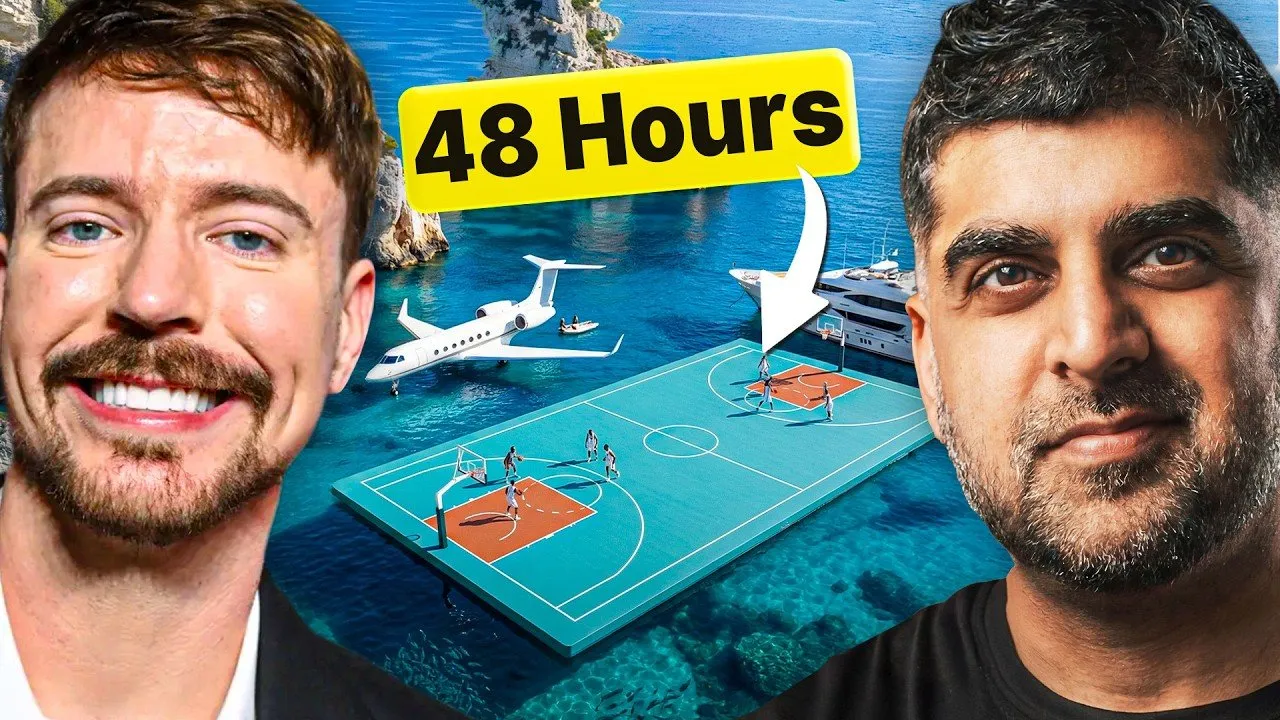
Imagine a room where the net worth of the attendees rivals the GDP of a small nation. This isn't Davos, and it isn't a stiff corporate boardroom. It is an invite-only gathering at MrBeast’s production campus in Greenville, North Carolina. The premise is simple but disruptive: remove the suits, the panels, and the forced networking of traditional conferences. Replace them with pickup basketball, competitive sports, and raw, off-the-record "TED Talks" delivered by industry titans.
For 48 hours, a group of 25 founders—including NBA team owners, tech moguls, and CPG giants—gathered to share what actually works at the highest levels of business. The goal was to strip away the public relations veneer and understand the mechanics of outlier success. What follows is a distillation of the most critical lessons learned from spending a weekend with the world’s most successful entrepreneurs.
Key Takeaways
- Intensity surpasses vision: The most successful operators are not just high-level visionaries; they are obsessed with the microscopic details of their business.
- Culture requires demonstration: You cannot instill values through a handbook. You must stage experiences that show employees exactly how to treat customers.
- Reinvention is essential: To achieve sustained greatness, you often have to abandon what made you successful to pursue a completely new "beginner's mind" challenge.
- Survival is a skill: Outlier companies share a common trait of surviving "multiply by zero" events—moments that should have killed the business but didn't.
1. Intensity is the Strategy
There is a pervasive myth that as a CEO scales a company, they must retreat to the "30,000-foot view," focusing solely on strategy and delegation while leaving the day-to-day operations to others. The reality observed among billionaires suggests the exact opposite. The most effective leaders maintain a borderline obsession with the details.
The 1,000-Problem Framework
Matt Ishbia, owner of the Phoenix Suns and CEO of United Wholesale Mortgage, provided a masterclass in granular leadership. Ishbia took a family side hustle with 12 employees and transformed it into a juggernaut generating billions in profit. His approach contradicts the "hands-off" leadership style.
Ishbia walks the floor of his company daily, engaging with everyone from janitors to senior executives. He is not just socializing; he is hunting for friction.
"I walk the floor every day looking for three problems. If I find a problem, I fix it on the spot. If I do three problems a day for 365 days, I'm solving a thousand problems that are stopping my company from growing."
This creates a compounding effect. By removing a thousand bottlenecks annually, the organization moves faster and more efficiently than competitors who let small issues fester. It is not enough to have a strategy; the intensity with which you execute the details is the strategy.
Scrappiness at Scale
This "in the weeds" mentality was echoed by other attendees, including founders of massive board game and CPG empires. These are individuals who could easily retire, yet they are found crawling on the floors of Target and Walmart, physically restocking their own products because the store employees didn't do it correctly. This combination of high-level vision and entry-level scrappiness makes a founder dangerous to competitors.
2. Culture is an Action Word
Most corporate culture is aspirational text written on a lobby wall—"Integrity," "Excellence," "Customer First." These words rarely translate into behavior because they are abstract. To create a world-class culture, you must move from telling to showing.
The Savannah Bananas Method
Jesse Cole, founder of the viral baseball phenomenon the Savannah Bananas, shared how he radicalized his organization's culture. The Bananas sell out 80,000-seat stadiums and have a waitlist in the millions because they prioritize a "fans first" experience. But how do you get a new, seasonal employee to care as much as the founder?
Cole’s solution is to treat the employees exactly how he wants the employees to treat the fans. During the player orientation—usually a boring day of paperwork—Cole orchestrated a spectacle. When the new players came downstairs, they were met not by a shuttle van, but by a luxury bus with a police escort. As they arrived at the stadium (a mere 1,200 feet away), they were greeted by fireworks, the entire front office staff cheering, and a serenade.
The message was unspoken but clear: "You are a star. We are putting on a show for you, so you know what it feels like to put on a show for them."
This investment creates an emotional ROI that spreadsheets cannot track. When employees feel the magic of the brand personally, they instinctively know how to replicate it for the customer.
3. You Can’t Top Pigs with Pigs
One of the most profound discussions centered on the trajectory of a career. After a massive success, what comes next? Walt Disney famously faced this after the success of his short film The Three Little Pigs. Distributors demanded sequels, shouting, "More pigs!" Disney refused, reportedly saying, "You can't top pigs with pigs."
This philosophy divides successful people into two camps: the Exploiters and the Reinventors.
The Exploiters vs. The Reinventors
Exploiters stick to what they know. If they sold a software company for $300 million, their next venture is likely a similar software company aiming for $3 billion. They leverage their specific domain expertise to compound wealth. There is financial logic to this, but it often lacks creative fulfillment.
Reinventors, however, choose to return to the bottom of the mountain. Joe Gebbia, co-founder of Airbnb, exemplifies this. After building a company that changed global travel, he didn't start another travel tech firm. instead, he pivoted to documentary filmmaking and founding Samara, a company focused on accessory dwelling units (ADUs). Furthermore, he took a role as a "chief design officer" for projects involving the U.S. government, applying user experience principles to things like national park websites and veteran retirement paperwork.
Similarly, the founder of Brex attended the event just hours after selling a company for $5 billion. Rather than celebrating or resting, he was already discussing how he was using AI to relearn coding from scratch. He had voluntarily adopted the "beginner’s mind" again. The lesson is that true fulfillment often comes from the struggle of learning something new, not just repeating a profitable pattern.
4. The Mathematics of Outliers
Beyond the specific tactics of culture and operations, distinct variables emerged that separated the moderately successful (millionaires) from the outliers (billionaires). It wasn't just about working harder; it was a combination of endurance, survival, and selection.
Endurance and "Multiply by Zero"
Many founders sell too early. The difference between a $100 million outcome and a $5 billion outcome is often just the willingness to stay in the game for another decade. However, staying in the game requires surviving "multiply by zero" events.
Almost every billionaire in the room shared a war story where their company was days or hours away from total collapse—running out of cash, losing a key retailer, or facing a regulatory shut down. These are moments where the probability of failure is nearly 100%. The outliers are simply the ones who refused to let the number hit zero, often through sheer will, personal guarantees, or last-minute pivots.
Project Selection
Finally, the scale of the outcome is heavily determined by the market selected at the start. James Clear, author of Atomic Habits, noted that his book could have been about "deliberate practice." It would have been the same core content. But by packaging it as "Habits"—a massive, universal desire—rather than "Practice"—which sounds like work—he unlocked a global market.
Outliers intuitively understand that if you want a big number at the end of the equation, you must choose variables with high multipliers.
Conclusion
Spending 48 hours with billionaires reveals that there is no secret society magic to their success. Instead, there is an unusual combination of high-level project selection and low-level obsession with details. They possess the endurance to survive near-death business experiences and the humility to reinvent themselves once they have won.
However, an important distinction remains between wanting the life and wanting the lifestyle. It is easy to envy the private jets and the billion-dollar exits. It is much harder to envy the lifestyle of walking a factory floor every day for 20 years, solving the same small problems over and over. The ultimate lesson is to find the game where you love the "lifestyle" of the work enough to endure until the "life" of the reward catches up.