Table of Contents
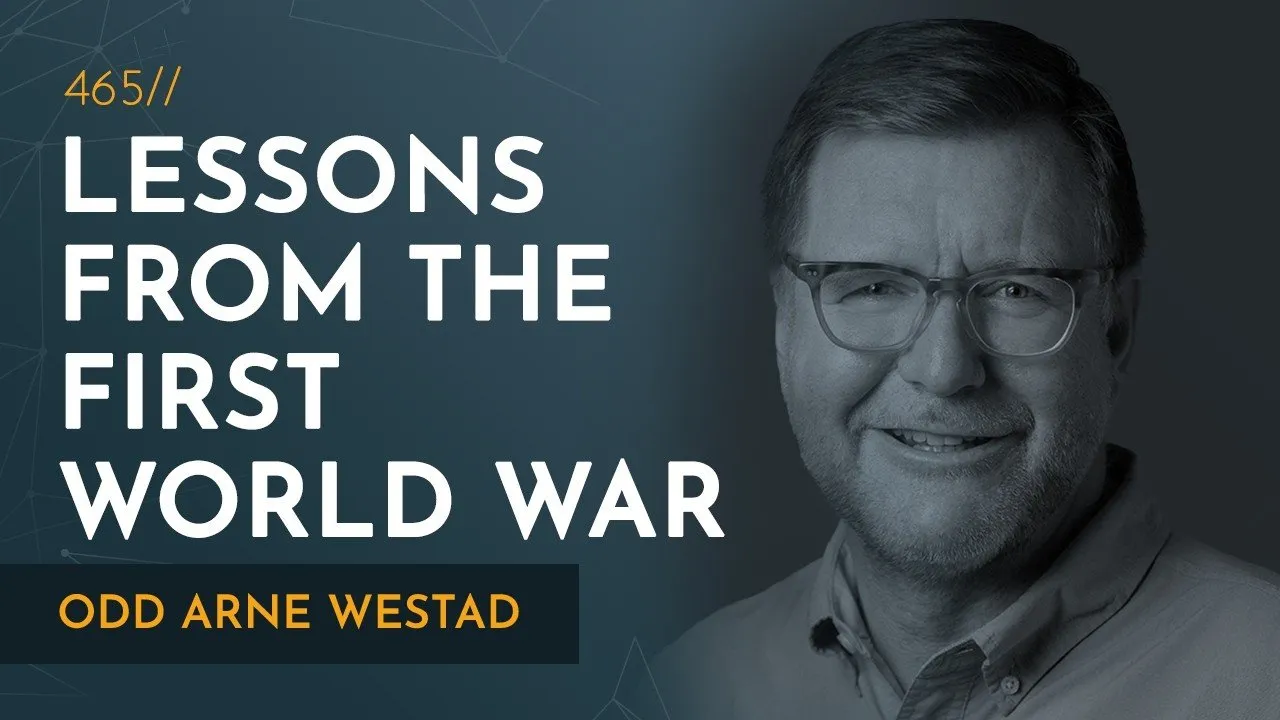
The modern international order is showing cracks that look uncomfortably familiar to historians. While many analysts cling to the Cold War as a roadmap for today's geopolitical tensions, Yale historian Odd Arne Westad argues this is a profound misunderstanding. Instead, the current era of multipolarity, rapid globalization, and imperial instability bears a striking resemblance to the decades preceding the outbreak of World War I. By analyzing the structural failures of 1914, we can better identify the flashpoints threatening our own stability.
Key Takeaways
- Beyond the Cold War: The Cold War model of bipolar ideology is a poor fit for today’s complex, interconnected multipolar system.
- Structural Parallels: Modern tensions mirror the pre-1914 era, specifically in the struggle to integrate rising powers like China into existing security frameworks.
- The Trap of Economic Resentment: Just as in the early 20th century, globalization has triggered domestic backlashes, fueling nationalism and political constraints that limit leaders' room to maneuver.
- The Failure of Alliances: History suggests that war arises not from the strength of alliances, but from their perceived fragility and the miscalculation of deterrents.
Why the Cold War Lens Fails Us
Much of today’s discourse incorrectly frames US-China competition as a second Cold War. Westad argues that this is fundamentally flawed because the 20th-century standoff was defined by rigid, bipolar ideological camps. Today’s world is far more chaotic, defined by fluid trade relationships and a lack of clear-cut moral division. Relying on an outdated framework blinds policymakers to the actual mechanics of modern conflict.
The Economic Shift
The collapse of the Bretton Woods system in the 1970s effectively ended the era of centralized economic control. This shift encouraged the rapid internationalization of capital, which was a prerequisite for China’s meteoric economic rise. Attempting to manage current global rivalries using institutions designed for the post-WWII era ignores these fundamental changes in how power and influence are now distributed globally.
The 1914 Analogy: A Warning from History
The period leading up to 1914 provides a cautionary tale about how systems fail when they cannot accommodate new power dynamics. The rapid rise of Germany within a world dominated by the British Empire created a structural friction that the existing order proved unable to absorb.
The Challenge of Integrating Rising Powers
"The establishment powers didn't really act in ways that could meaningfully incorporate this entirely new and powerful Germany into the system that had existed before."
Today, the West faces a similar dilemma with China. The failure to integrate China within a meaningful international security framework—both globally and within East Asia—mirrors the diplomatic failures of the early 20th century. When established powers refuse to accommodate the aspirations of emerging states, or when those states perceive themselves as encircled, the result is an environment primed for miscalculation.
The Role of Domestic Constraints and Nationalism
Great power competition is rarely just about external strategy; it is heavily influenced by internal political pressures. In the lead-up to 1914, political leaders across Europe were often "boxed in" by nationalist fervor and domestic economic grievances. This prevented the kind of pragmatic diplomacy that could have averted disaster.
Public Opinion as a Barrier
Westad notes that modern politicians are similarly constrained by domestic populations that are increasingly wary of globalization and wary of the influence of foreign powers. This creates a dangerous feedback loop: leaders fear that appearing conciliatory will lead to political suicide, forcing them into escalatory stances that make conflict more likely. Just as with the assassination of the Archduke in 1914, it is often these internal, unpredictable triggers that ignite systemic volatility.
Avoiding the Coming Storm
If we are to avoid the path taken in 1914, the focus must shift from purely military deterrence to active, intelligent de-escalation. Deterrence remains necessary, particularly regarding Taiwan, but it is not sufficient if it is not paired with meaningful reassurance.
Strategies for Stabilization
- Active Diplomacy: Rather than exacerbating conflicts, powers should involve rivals in regional problem-solving to build habits of communication.
- Security Reassurance: Avoiding the perception of complete encirclement is key to preventing the kind of "now or never" strategic mindset that plagued pre-1914 leaders.
- Recognizing Alliances: Policymakers must realize that alliances function only if they are perceived as stable and committed; ambiguity regarding support for allies can actually invite aggression.
Conclusion
The history of 1914 is not a pre-ordained script, but a set of warnings. The structural similarities between our time and that era—the rapid growth of a dominant new power, the breakdown of globalization, and the tightening of internal political constraints—are undeniable. However, history is shaped by human agency. By acknowledging these parallels and prioritizing structural integration over zero-sum confrontation, it is still possible to chart a course that avoids the catastrophe of a global conflict.