Table of Contents
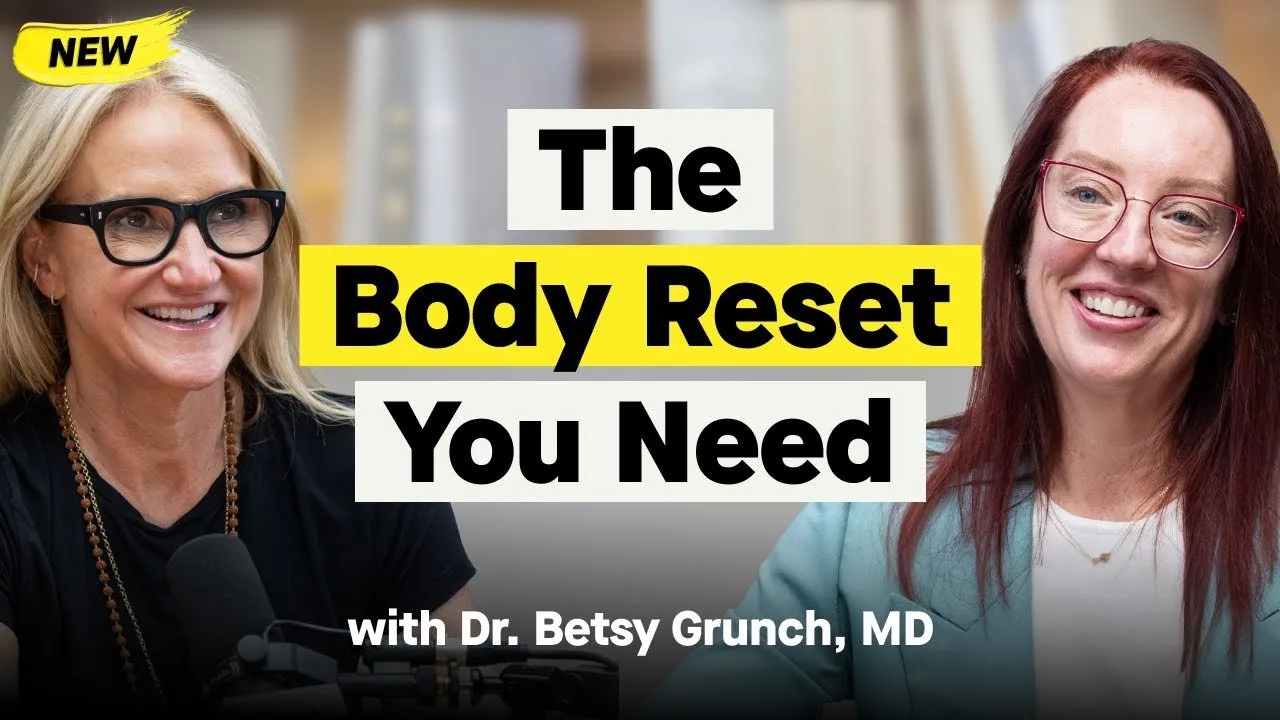
If you have ever felt stuck, overwhelmed, or disconnected from your body, you are not alone. It is a feeling that even the most accomplished professionals experience, including Dr. Betsy Grunch. As one of the top spine surgeons and neurosurgeons in the world, Dr. Grunch spends her days repairing the human body. Yet, she found herself overweight, in chronic pain, and disconnected from the very health principles she advised her patients to follow. Her journey from a stressed, pain-ridden surgeon to a beacon of sustainable health offers a roadmap for anyone looking to take control of their life.
Back pain affects 80% of people at some point in their lives. Whether you are dealing with a specific injury, post-partum recovery, or the cumulative effects of a sedentary lifestyle, the path to a stronger spine and a healthier body is rarely about quick fixes. It requires sustainable, structural changes to how you eat, move, and sleep.
Key Takeaways
- Nicotine is a spinal killer: Beyond lung health, nicotine restricts blood flow to the spine, accelerating degeneration and preventing healing.
- Neutral spine is non-negotiable: Whether sleeping or sitting, maintaining a neutral spine alignment is critical to preventing long-term injury.
- "Tech Neck" adds massive weight: Tilting your head forward to look at a phone increases the pressure on your spine from 10 pounds to 60 pounds.
- Protein is the building block of support: Your spine relies on muscle for support; without adequate protein intake (0.8g to 1g per pound of body weight), those muscles atrophy.
- You are the driver: Medical professionals can help, but you must take the driver’s seat in your own health journey to see lasting results.
The Neurosurgeon Who Ignored Her Own Advice
It is easy to assume that doctors are the epitome of health. However, Dr. Grunch’s story reveals a relatable struggle. Following a devastating accident that paralyzed her mother, Dr. Grunch used food as a coping mechanism for stress. By the time she was a practicing neurosurgeon, she was overweight and relying on sugary sodas and processed snacks to get through grueling shifts.
The turning point came not in the operating room, but at home. While leaning over to clean up a mess made by her newborn, she felt a knife-like pain in her back that brought her to her knees. She had blown a disc. In that moment of vulnerability, crawling across the floor in agony, she realized the disconnect between her professional knowledge and her personal lifestyle.
"I wanted to lose 100 pounds. At the time of my heaviest, I was 260 lbs... I was a smart fat girl, so I didn't get asked to prom. I didn't get asked to go do the fun stuff, but I did get asked to help with the homework."
This crisis forced her to acknowledge that sustainable change was necessary. She realized that while she knew anatomy, she knew very little about nutrition—a gap common in medical training. This humility led her to research, experiment, and eventually lose 100 pounds by focusing on sustainable changes rather than crash diets.
4 Habits That Are Destroying Your Back
As a spine surgeon, Dr. Grunch identifies four specific lifestyle factors that are non-negotiable if you want to avoid the operating table.
1. Nicotine Use
Most people associate nicotine with lung cancer or heart disease, but it is also one of the leading accelerators of degenerative disc disease. Nicotine is a vasoconstrictor, meaning it shrinks blood vessels.
Your blood vessels have tiny muscles that expand (vasodilation) and contract (vasoconstriction). When you consume nicotine—whether through cigarettes, vapes, or gums—you trigger a sympathetic nervous system response that constricts these vessels. This cuts off the blood supply and nutrients to the spine. If you tweak your back, your body cannot deliver the necessary oxygen to heal the tissue, leading to accelerated degeneration over time.
2. A Sedentary Lifestyle
Movement is medicine for the spine. A sedentary lifestyle leads to muscle atrophy, removing the structural support your spine needs to function. You do not need to be a marathon runner, but you must move every day to keep joints lubricated and blood flowing.
3. Improper Lifting Mechanics
The cliché "lift with your legs, not your back" exists for a reason. Many injuries occur during mundane tasks, like picking up an Amazon box from the porch. Bending at the waist transfers the load directly to the lumbar discs. Bending the knees engages the glutes and legs, protecting the spine.
4. Poor Sleeping Positions
We spend roughly one-third of our lives in bed. Sleeping in a position that compromises spinal alignment causes cumulative damage over decades. Dr. Grunch advises strictly against stomach sleeping, as it twists the neck and strains the lower back.
The Fix for Sleep:
- Back Sleepers: Place a pillow under your knees. This relaxes the psoas muscle and maintains the natural curve of the lower back.
- Side Sleepers: Place a pillow between your knees to keep the hips aligned and the spine neutral. Ensure your head pillow fills the gap between your shoulder and neck so your head doesn't tilt up or down.
The Silent Epidemics: Tech Neck and Sitting
Modern life is engineered to destroy spinal health. Two of the most pervasive issues are "Tech Neck" and prolonged sitting.
The Math of Tech Neck
In a neutral, upright position, the human head weighs between 10 and 15 pounds. However, the moment you tilt your head forward to look at a smartphone or a laptop, gravity changes the equation. At a 45-degree angle, the force on your neck increases to roughly 60 pounds.
Sustaining this weight for hours a day weakens the neck muscles and accelerates arthritis. The solution is simple but requires mindfulness: raise your phone to eye level and elevate your computer monitor so you are looking straight ahead, not down.
The Architecture of the Spine
Dr. Grunch compares the body to a building. The spine is the rebar and foundation, but the muscles are the concrete and walls that hold it upright. When you sit for 10 hours a day, the core, back, and pelvic floor muscles atrophy. You are essentially stripping the building of its walls and expecting the rebar to stand alone against gravity.
To combat this, set a timer. Every 30 to 60 minutes, stand up. Use a standing desk converter if possible, or simply walk around to engage the stabilizing muscles that go dormant while sitting.
Nutrition and Movement for Spinal Longevity
Exercise alone is not enough; you cannot out-train a bad diet. Dr. Grunch emphasizes that weight loss and spinal health start in the kitchen.
Eat to Reduce Inflammation
Chronic pain is often fueled by chronic inflammation. To support your back, eliminate inflammatory foods like sugary sodas, high-fructose corn syrup, and processed snacks. Instead, focus on:
- Antioxidants: Blueberries and leafy greens help combat cellular stress.
- High Protein: Muscle is the support system for your skeleton. Dr. Grunch recommends aiming for 0.8 to 1 gram of protein per pound of body weight. Without adequate protein, your body will break down muscle tissue for energy, further weakening your back.
The "Big Two" Exercises
If you are overwhelmed by the gym, Dr. Grunch suggests starting with two simple movements that target the core and glutes—the primary stabilizers of the back.
- Glute Bridges: Lie on your back with knees bent and feet flat on the floor. Thrust your hips upward, squeezing the glutes. This strengthens the posterior chain.
- Bird Dogs: Start on all fours. Extend one arm forward and the opposite leg backward. This forces the core to stabilize the spine against rotational forces.
"Women lifting heavy weights is going to change your life. It's going to make you stronger. It's going to make your muscles stronger. It's going to help your bones."
When Back Pain Becomes an Emergency
While most back pain can be managed with lifestyle changes, it is vital to recognize "Red Flag" symptoms that require immediate medical attention. Dr. Grunch warns against ignoring the following:
- Loss of Bowel or Bladder Control: If you cannot urinate or cannot hold it, this is a medical emergency requiring an immediate trip to the ER.
- Progressive Weakness: If you cannot lift your foot (drop foot) or extend your arm, a nerve is significantly compromised.
- Numbness: Loss of sensation in the "saddle area" (groin/glutes) or down the limbs indicates severe nerve compression.
If you experience pain that shoots down the arm or leg (often referred to as sciatica), it signals that a nerve is being pinched or irritated. While not always a surgical emergency, it requires professional evaluation if it persists for more than a few weeks.
Conclusion
Your body is designed for success. It is designed to heal, adapt, and carry you through life, but it requires you to take ownership of its care. You are the driver of your life, not a passenger. Whether you are 20 or 70, the spine has an incredible ability to stabilize if given the right environment.
Start with the small, sustainable changes. Put a pillow under your knees tonight. Lift your phone to eye level tomorrow. Swap the soda for water. As Dr. Grunch proves, you can rewrite your health story at any stage, transforming from a place of pain to a place of power.