Table of Contents
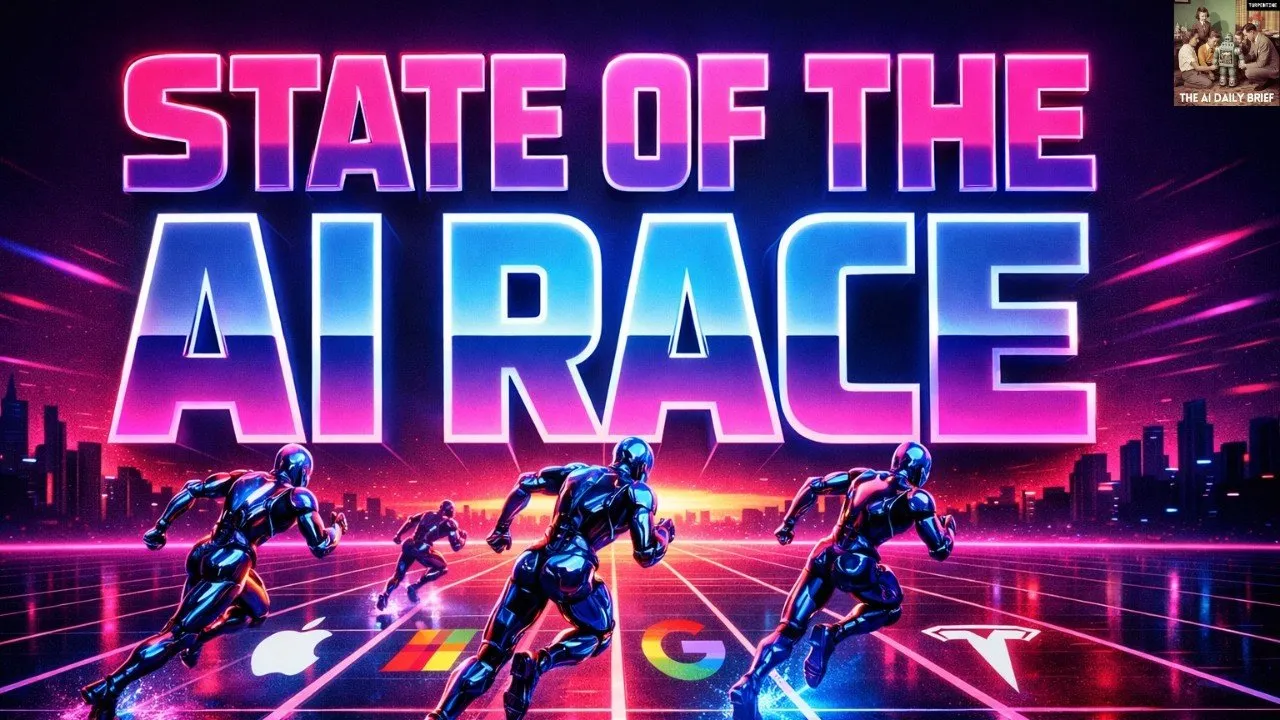
As the technology sector advances further into 2026, the artificial intelligence landscape is undergoing a radical transformation defined by massive capital consolidation and aggressive strategic pivoting. In a flurry of developments marking the start of February, Apple has executed its second-largest acquisition in history to bolster its hardware capabilities, while Amazon is reportedly negotiating a staggering investment in OpenAI. Simultaneously, the race to the public markets has intensified, with both OpenAI and Anthropic targeting end-of-year IPOs, and Elon Musk is exploring a mega-merger to unify his disparate tech ventures.
Key Points
- Apple Acquires QAI: Apple has purchased stealth startup QAI for reported $2 billion, focusing on "silent speech" technology rather than large language models (LLMs).
- Amazon's $50 Billion Bet: Reports indicate Amazon is in talks to invest $50 billion in OpenAI, potentially securing a 6% stake while simultaneously cutting 16,000 corporate jobs.
- IPO Showdown: OpenAI and Anthropic are both accelerating plans for Q4 2026 IPOs, vying for first-mover advantage in the public markets.
- Musk's Empire Consolidation: SpaceX and xAI are reportedly exploring a merger, a move that would streamline resources and provide liquidity to early investors.
- Apple Earnings: iPhone revenue hit a record $85 billion, though services and Mac sales missed expectations, reinforcing the company's reliance on hardware.
Apple's Hardware-First AI Strategy
Contrary to market speculation that Apple would acquire a major LLM provider like Perplexity or Anthropic, the tech giant has doubled down on its hardware roots. According to the Financial Times, Apple has acquired QAI for $2 billion, marking its largest acquisition since the $3 billion purchase of Beats. QAI, a company operating in stealth, specializes in interpreting facial skin micro-movements to detect speech without audio.
This acquisition signals that Apple may be bypassing the race to build foundation models, opting instead to partner with companies like Google for backend intelligence while focusing on the consumer interface. The technology holds significant implications for future iterations of AirPods and Vision Pro glasses, potentially enabling silent communication with AI assistants.
The deal comes alongside Apple’s record-breaking quarterly earnings, driven by $85 billion in smartphone revenue. However, CEO Tim Cook faced scrutiny regarding the company's vague AI monetization roadmap.
"We're bringing intelligence to more of what people love, and we're integrating it across the operating system in a personal and private way... it creates great value, and that opens up a range of opportunities across our products and services." — Tim Cook, Apple CEO
Industry analysts interpret the QAI purchase as a long-term play for ambient computing. Robert Scobble noted that this technology could be central to a future ecosystem where cameras, headphones, and glasses function as a unified AI interface.
Amazon's Infrastructure Play and Workforce Reduction
Amazon appears to be structuring a "win-win" scenario for itself in the AI arms race. The Wall Street Journal reports that the company is negotiating a $50 billion investment in OpenAI. If finalized at OpenAI’s targeted $830 billion valuation, this would grant Amazon a roughly 6% stake. This move follows an existing $8 billion investment in Anthropic, positioning Amazon Web Services (AWS) as the primary infrastructure beneficiary regardless of which model provider dominates the market.
However, this aggressive capital allocation coincides with significant internal restructuring. Amazon confirmed it is cutting an additional 16,000 corporate roles, following a 14,000-person reduction in October 2025. While the company cites bureaucracy reduction, the timing has fueled debate regarding the role of AI in displacing high-level workers.
"When replacement is cheaper than retention, the decision gets framed as strategy instead of consequence. AI becomes the excuse, not the cause." — Lee Plum, Congressional Candidate and former Amazon Executive
This juxtaposition of record investment in AI and mass layoffs highlights a growing trend in the tech sector: companies are achieving record revenue and growth while simultaneously reducing headcount, a phenomenon also observed this week with chip-equipment manufacturer ASML.
The Race to the Public Markets
The battle for capital is shifting from private fundraising to the public exchange. Reports suggest that OpenAI has accelerated its IPO plans, targeting the fourth quarter of 2026. This urgency is reportedly driven by the fear that rival Anthropic may go public first, thereby capturing the bulk of investor appetite and dominating the narrative.
The stakes for being the first mover are incredibly high. If Anthropic launches a successful IPO first, OpenAI risks launching into a saturated market or, worse, a market where the "AI bubble" sentiment has soured. Conversely, if the first major AI IPO underperforms, it could freeze the window for subsequent listings, forcing companies to return to private markets at potentially lower valuations.
Consolidating the Musk Empire
In a move to streamline operations across his ventures, Elon Musk is reportedly exploring a merger between SpaceX and xAI. Reuters indicates that new holding companies have already been established to facilitate the transaction. This consolidation would likely accelerate xAI’s path to the public markets via a potential SpaceX IPO later this year.
The strategic logic involves deep integration: xAI’s models could power the Optimus robots designed by Tesla, while SpaceX’s orbital data centers could provide unique compute advantages. Furthermore, this structure offers a liquidity path for investors who backed Musk’s acquisition of Twitter (now X), effectively converting their equity into exposure to SpaceX and xAI.
As 2026 progresses, the focus has clearly shifted from technological experimentation to corporate restructuring and financial engineering. The coming months will determine whether these massive bets on hardware, infrastructure, and consolidation will yield the returns investors expect, or if the market is approaching an efficiency plateau.